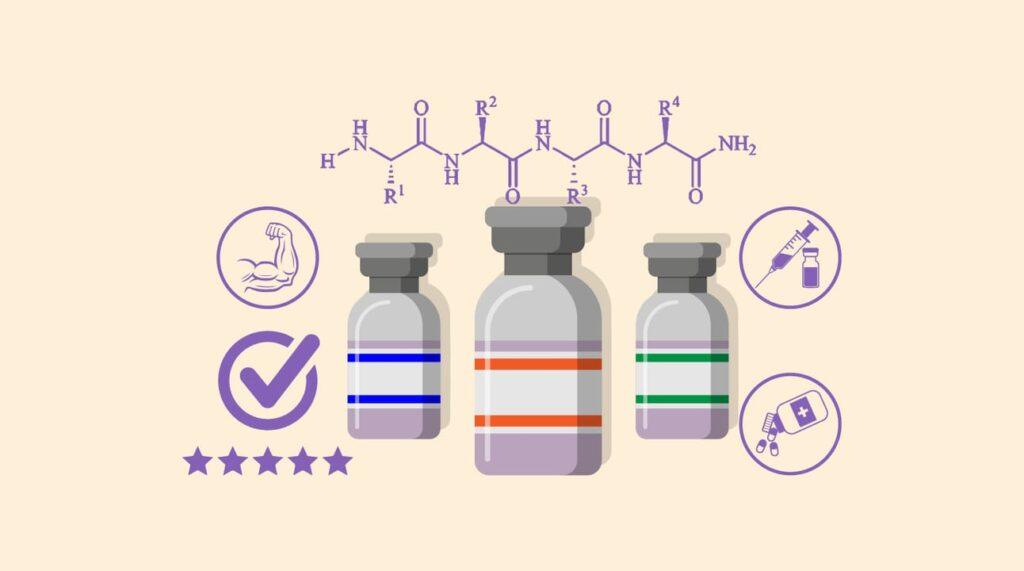

Welcome to The Morning Dose – Peptide Edition, your Tuesday deep-dive into one topic worth knowing inside out. This week: peptides. Whether you’re just getting started or refining your stack, these three guides cover the essentials.
In this week’s Peptide edition:
🔬 Retatrutide Availability: Everything You Need To Know
🧬 Strongest Peptides For Fat Loss, Muscle Gain & Healing
🌿 Bioregulators And Their Benefits For Health & Wellness
☕️ First time reading? I’m James, and this is The Morning Dose. Every week, our team scours hundreds of sources to bring you need-to-know news and insights you won’t find elsewhere. All in 5 minutes.
Did someone forward you this email? Sign up here.
Summer starts here (free gummies!)
The sun is here and we’re back outside!
Longer days, lighter hangs, and THC gummies that fit the vibe. Grab a free pack of gummies from Cycling Frog! Just cover $4.99 shipping. Fruity, perfectly dosed, and made for campfires, park days, and whatever summer turns into.
Must be 21+ and only valid on 10ct bags of gummies.
NOT VALID IN OH, CA, CO, AL, LA AND NJ.
🔬 Retatrutide Availability: Everything You Need To Know

Retatrutide is one of the most closely watched investigational compounds in metabolic research right now. Unlike single-pathway GLP-1 compounds, retatrutide is being studied as a triple-receptor agonist, targeting GLP-1, GIP, and glucagon receptors at the same time.
This gives researchers a broader framework for studying appetite regulation, glucose control, fat oxidation, energy expenditure, and body composition markers.
What’s Covered:
🔬 Mechanism of Action
Retatrutide activates three metabolic pathways: GLP-1 for appetite and glucose signaling, GIP for insulin and lipid metabolism support, and glucagon for increased energy expenditure and fat oxidation.
📊 Clinical Research Data
Phase 2 research showed up to 24% body weight reduction over 48 weeks at higher studied doses, making it one of the most discussed compounds in next-generation obesity and metabolic research.
⚠️ Availability & Regulatory Status
Retatrutide remains investigational and is not currently approved by major regulatory authorities. Phase 3 trials are underway, and future data will determine how the compound develops.
🧬 Strongest Peptides For Fat Loss, Muscle Gain & Healing

Not all peptides are studied for the same purpose. Some are researched for growth hormone signaling, others for tissue repair, fat metabolism, muscle recovery, or cellular regeneration.
This guide breaks down some of the strongest peptides by research category, helping readers understand how different compounds are grouped by mechanism and intended study focus.
What’s Covered:
💪 Muscle Growth Research
Peptides such as MGF, PEG-MGF, IGF-1 LR3, CJC-1295, and Ipamorelin are commonly discussed in relation to anabolic signaling, satellite cell activation, GH release, IGF-1 pathways, and lean mass research.
🔥 Fat Loss Research
Compounds like Tesamorelin and IGF-1 LR3 are explored for their relationship with metabolic markers, visceral fat research, nutrient partitioning, and body composition pathways.
🩹 Healing & Recovery Research
TB-500 and similar repair-focused peptides are studied for soft tissue recovery, inflammation signaling, cellular repair, flexibility, and injury-related research models.
🌿 Bioregulators And Their Benefits For Health & Wellness

Bioregulators are gaining more attention in longevity and cellular health research because they focus on regulation rather than forceful stimulation. Some peptide bioregulators are short amino acid chains that act as signaling molecules, helping guide processes connected to gene expression, tissue function, and cellular repair.
This makes them especially interesting in research areas related to aging, stress response, immune regulation, circadian rhythm, and organ-specific function.
What’s Covered:
🌿 What Bioregulators Are
Bioregulators are compounds that help regulate biological systems. Some are peptide-based, while others may involve hormones, neurotransmitters, or adaptogenic compounds.
🧬 How Peptide Bioregulators Work
Peptide bioregulators are studied for their ability to interact with specific DNA sequences and influence gene transcription related to cell function, tissue repair, and protein synthesis.
🧠 Research Areas of Interest
Current discussion around bioregulators often includes immune function, stress recovery, neurological balance, circadian rhythm support, and age-related cellular decline.
-The Morning Dose
PS – Have questions or suggestions? Hit reply and let us know what you think.
Disclaimer: This content is NOT medical advice. The information included in these emails is intended for entertainment and informational purposes only.