Contents11 sections
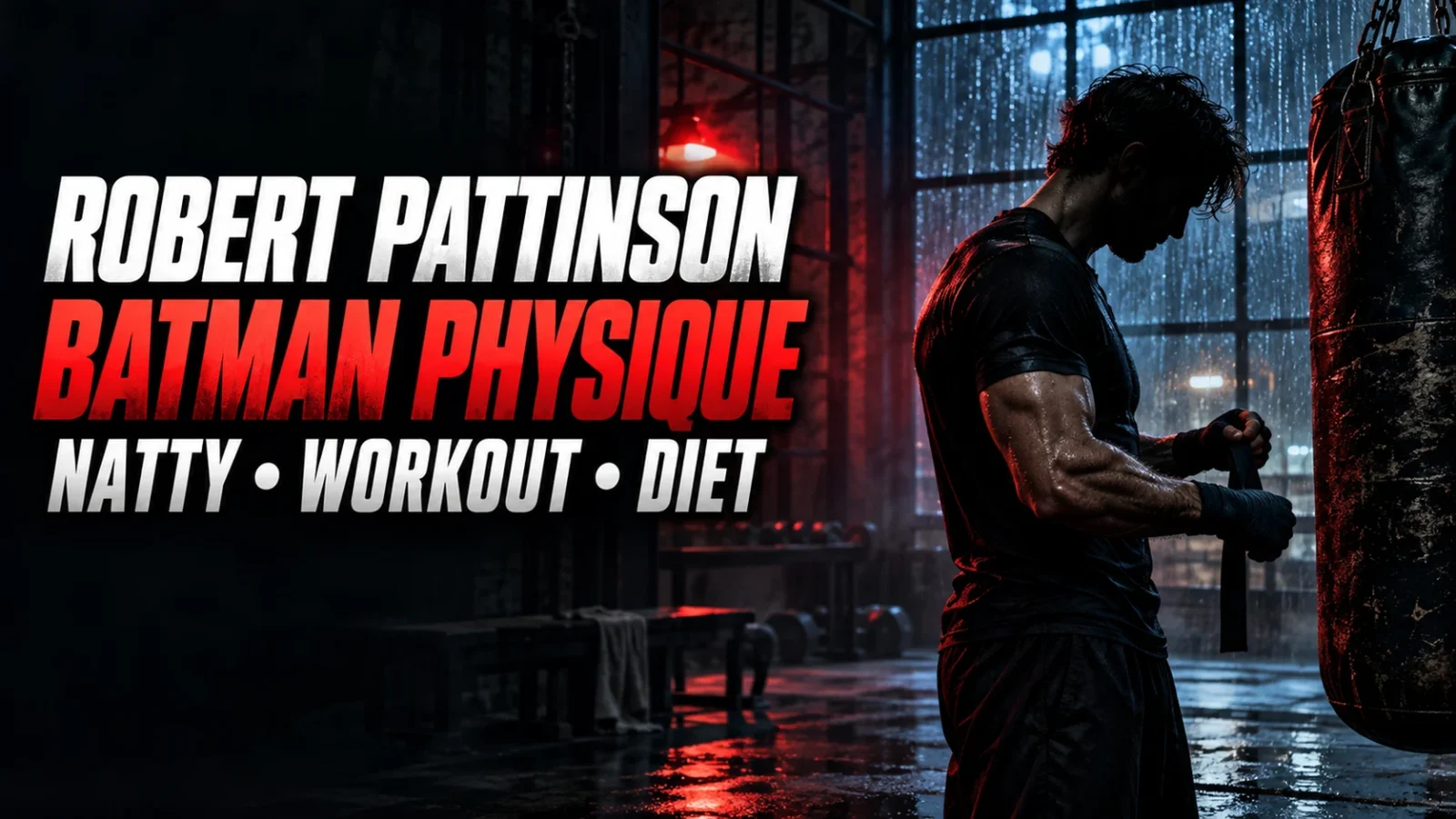
Robert Pattinson’s Batman physique looks consistent with natural training. In The Batman (2022) he carried a lean, athletic build with moderate muscle, the kind a naturally slim man can build with consistent lifting and conditioning, and there is no credible public evidence that he used performance-enhancing drugs for the role.
Unlike the heavier Batmen played by Christian Bale and Ben Affleck, Pattinson’s version fits a younger, street-level Bruce Wayne: lean, mobile and fight-ready rather than bulky. The look matched the grounded tone of the film.
Below we look at the natty question, separate what is known about his training and diet from what is only reported, and lay out a practical plan for building a similar physique.
Key Takeaways
- Pattinson’s Batman physique is lean and athletic rather than bulky, and much of the on-screen size comes from the armored suit.
- Based on public evidence, his look is consistent with natural training, but only testing can confirm anyone’s natural status.
- His training is usually described as compound lifting, bodyweight work, running and boxing-style conditioning; no full program has been published.
- Exact figures that circulate online, such as his body-fat percentage or pounds of muscle gained, are unsourced estimates.
- You can build a similar look with consistent strength training, conditioning, high protein and a modest calorie balance; whey and creatine help but are optional.
Robert Pattinson Stats and Batman Role
| Detail | Information |
|---|---|
| Full name | Robert Douglas Thomas Pattinson |
| Date of birth | May 13, 1986 |
| Birthplace | London, England |
| Height | About 6’1″ (185 cm), reported |
| Best known for | Twilight, Good Time, The Lighthouse, Tenet, The Batman |
| Batman film | The Batman (2022), directed by Matt Reeves |
| Physique for the role | Lean, athletic, moderately muscular |
Pattinson has never published official body measurements for the role. Figures you may see elsewhere for his weight, body fat or muscle gain are estimates, not numbers from Pattinson or his team.
Robert Pattinson Batman Physique Overview

Pattinson’s Batman is defined by realism rather than size. Instead of the bodybuilder-style superhero look of earlier films, he played a gritty, functional vigilante who relies on endurance and fighting ability as much as strength.
Keep in mind that Batman spends most of the film in the suit. The armored costume adds visible bulk, so the on-screen impression of size is partly costume. What can be judged from public appearances and promotional material points to the following.
Lean and Athletic Build
He looked lean but not stage-shredded. That level of leanness gives:
- Visible shoulder and arm definition
- A sharp, angular look that suits the role
- Strong but not oversized proportions
Upper-Body Development
He did not bulk up dramatically, but compared with his slimmer earlier roles he appeared to carry more muscle through the shoulders, upper back, chest and arms. It was enough to look powerful without looking inflated.
Strong Core and Midsection
His fight scenes call for a stable torso and good rotational strength. The goal is a lean, athletic midsection rather than a shredded six-pack, which fits the boxing and conditioning work usually described in reports of his prep.
Functional Strength Over Size
Compared with the heavier Batman portrayals before him, Pattinson’s version was built for speed, agility and close-quarters fighting. It is a “fighter” frame rather than a “superhero bulk” frame.
| Actor | Batman films | Physique approach |
|---|---|---|
| Christian Bale | Batman Begins (2005), The Dark Knight (2008), The Dark Knight Rises (2012) | Bulked up heavily after losing a large amount of weight for The Machinist |
| Ben Affleck | Batman v Superman (2016), Justice League (2017) | Heavy, bodybuilder-style mass for an older, brawler Batman |
| Robert Pattinson | The Batman (2022) | Lean, athletic and mobile for a younger, street-level Batman |
Natty or Not: Could Robert Pattinson Achieve This Physique Naturally?
Any superhero transformation raises the same question: was it natural, or did the actor get help? Hollywood prep can involve performance-enhancing drugs, so the question is fair. In Pattinson’s case, the public evidence points toward natural training.
Modest Muscle Gain
Pattinson did not pack on large amounts of muscle. The change from his slimmer earlier roles is visible mainly in his shoulders, chest, arms and upper back. There is no reliable figure for how much lean mass he added; popular numbers online are guesses. A change of this size is realistic for a naturally slim man over a long, professionally coached prep. For context on what natural lifters can expect, see our guide to realistic muscle gain per month. For press coverage of his preparation, see Men’s Health UK.
No Common Steroid Markers
In public photos he shows none of the markers people usually point to in natty-or-not debates: no sudden jumps in size, no unusually full, dense muscle, no disproportionate traps and shoulders, and no bloated or distended midsection. His physique stayed lean and proportionate. This is not proof of anything, because low-dose use can leave few visible signs, but nothing in his appearance suggests enhancement. Our guide to steroids vs natural bodybuilders explains these markers in more detail.
Within the Natural Range
The fat-free mass index (FFMI) is a common way to judge natural limits. A 1995 study by Kouri and colleagues found that drug-free lifters rarely exceeded an FFMI of about 25. Without reliable weight and body-fat data no exact FFMI can be calculated for Pattinson, but his moderate muscularity is nowhere near the level of lifters who sit close to that ceiling.
A Slim Frame Shows Small Gains
Pattinson has a naturally slim build. On a frame like his, even a modest amount of new muscle makes a visible difference, especially at a low body fat. That makes the change look bigger than the actual gain.
Hollywood Training Support
A lead actor in a major film has access to trainers, nutrition guidance, stunt coordinators and a long preparation window. The Batman’s production began in early 2020, was paused for months by the pandemic and wrapped in 2021, which left plenty of time to build and hold a lean, athletic physique.
Natty Verdict
Everything visible about Pattinson’s Batman physique fits natural, attainable progress: modest muscle, normal leanness and no common steroid markers. We are not aware of any credible report that he used performance-enhancing drugs. On the public evidence, he is very likely natural, but appearance alone cannot settle the question; only testing can.
How Robert Pattinson Trained for The Batman
Pattinson has not published a training plan, and we have not found an interview in which he or a trainer lays out his full program. The descriptions below are the elements most commonly reported for his prep. Treat them as a general picture of the approach, not a confirmed routine.
Compound Strength Training
Reports describe a base of multi-joint lifts: squats, bench presses, deadlifts, rows, pull-ups and overhead presses. These movements build muscle across the whole body while keeping the silhouette athletic. For a look like this, movement quality and steady progressive overload matter more than chasing maximal weights.
Bodyweight Work
Push-ups, pull-ups, dips, planks and core circuits are also commonly listed. They train the chest, shoulders, arms and core without much equipment and build the muscular endurance that long fight takes demand.
Conditioning for Stamina
Fight choreography and long shoot days require good cardiovascular fitness. Running, intervals and circuit-style workouts are the usual tools, and they also help keep body fat low.
Boxing and Fight Work
An action lead rehearses fight choreography with the stunt team, and boxing drills, pad work and footwork are commonly described as part of his prep. This kind of work builds speed, coordination and conditioning, and it shows in how he moves on screen.
Mobility and Recovery
Mobility work and stretching between sessions help keep joints healthy and the body ready for physically demanding scenes. If heavy training leaves your joints sore, our guide to the best joint supplements covers what the evidence supports.
What Is Not Confirmed
Some online write-ups add specifics such as morning sandbag sessions on the beach, runs of 3-6 miles four times a week and reverse-pyramid lifting. We could not trace these details to an interview with Pattinson or a trainer, so treat them as unconfirmed. They are reasonable training methods, but they are not proven to be his program.
Diet and Nutrition Approach
Pattinson’s exact diet has not been published either; see the South China Morning Post for press coverage of his fitness prep. What the role called for is clear, though: a lean, athletic look with no big bulk. That points to a high-protein diet at or slightly above maintenance calories, with carbohydrates to fuel training. The table below shows how that approach is usually built.
| Nutrient | Role | Example foods |
|---|---|---|
| Protein | Builds and keeps muscle while calories stay moderate | Chicken, turkey, lean beef, eggs, tuna, protein shakes |
| Carbohydrates | Fuel for training and long days, best placed around workouts | Oats, rice, sweet potatoes, whole grains, fruit |
| Fats | Overall health and hormone production | Nuts and seeds, olive oil, avocado, fatty fish |
| Fluids and electrolytes | Hydration for endurance and recovery | Water, plus electrolytes on long or sweaty days |
Keeping processed food and alcohol low makes it easier to stay lean. The overall calorie level decides whether you end up lean like Pattinson or heavier like earlier Batmen; we cover that in the practical section below.
Supplements That Can Support a Similar Physique
Pattinson has not said which supplements, if any, he used. None are needed to build this look, but a few basics can make training and recovery easier. They will not replace consistent training and a good diet.
1. Whey Protein
Whey is simply a convenient way to reach your daily protein target. What matters is total intake: a 2018 meta-analysis in the British Journal of Sports Medicine found that gains from resistance training levelled off at about 1.6 g of protein per kg of body weight per day, with an upper range near 2.2 g/kg (about 0.7-1 g per lb).
2. Creatine Monohydrate
Creatine is the most researched supplement for strength training. Taken at 3-5 g a day, it reliably improves strength and lean-mass gains when combined with lifting. See our pick of the best creatine monohydrate powders.
3. L-Citrulline
Citrulline is a common pre-workout ingredient. Some studies using 6-8 g of citrulline malate before training found small improvements in repetitions and less soreness, but results are mixed. It is optional.
4. Omega-3 Fish Oil
Omega-3 fats support general health, and they are most useful if you rarely eat fatty fish. Evidence that they speed up recovery from training is limited.
5. Multivitamin
A multivitamin can cover micronutrient gaps, especially while calories are controlled. It does not improve performance on its own.
6. Electrolytes
Electrolytes help on long, sweaty sessions such as boxing rounds or extended conditioning work. For a typical one-hour gym session, water and normal meals are usually enough.
Check with a healthcare professional before starting any supplement, especially if you take medication or have a medical condition.

Pros
- Catalog is specifically organized around muscle building, fat loss, testosterone support, and workout performance.
- Range includes creatine, protein, EAAs, beta-alanine, and L-citrulline alongside more specialized formulas.
- Orders of $99+ qualify for free US shipping.
Cons
- Features several strong claims around muscle growth, testosterone, fat loss, and metabolic effects that should be distinguished from independently demonstrated clinical outcomes
- Heavily oriented toward bodybuilding and performance rather than broader nutritional supplementation.
How to Get Robert Pattinson’s Batman Look: Workout and Diet
The goal is to look sharp, athletic and functional, not to bulk. Here is a practical framework built on the same principles.
1. Train for Lean Strength, Not Size
To match Pattinson’s proportions, build muscle while keeping body fat low. That means strength training paired with conditioning rather than a hypertrophy-only routine.
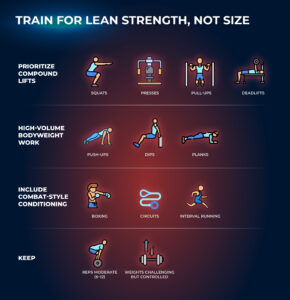
Key principles:
- Prioritize compound lifts (squats, presses, pull-ups, deadlifts).
- Add bodyweight work for muscular endurance (push-ups, dips, planks).
- Include combat-style conditioning (boxing, circuits, interval running).
- Keep reps moderate (6-12) and weights challenging but controlled, adding weight or reps over time.
Consistency matters more than maxing out. This look comes from balanced training over months, not from extreme numbers. For a similar actor-style approach, see the Henry Cavill workout routine.
2. Follow a Structured Weekly Plan
Use a schedule that balances strength, conditioning and mobility.
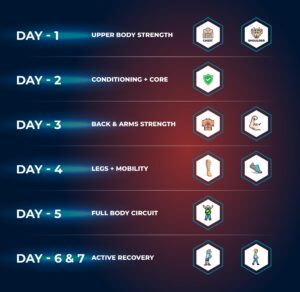
| Day | Focus |
|---|---|
| Day 1 | Upper body strength (chest and shoulders) |
| Day 2 | Conditioning and core |
| Day 3 | Back and arms strength |
| Day 4 | Legs and mobility |
| Day 5 | Full-body circuit (athletic, fight-style movement) |
| Days 6-7 | Active recovery (light cardio, stretching, walking) |
This structure trains every muscle group while leaving room to recover, which suits a functional, athletic look.
3. Stay Lean With Smart Nutrition
Staying lean is as important as building muscle. You do not need a big calorie surplus, just enough to fuel training while keeping definition.
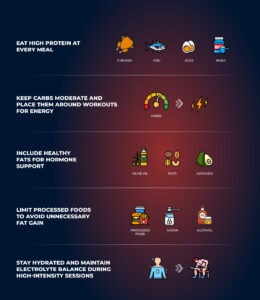
Diet rules to follow:
- Eat protein at every meal (chicken, fish, eggs, whey), aiming for about 1.6-2.2 g per kg of body weight a day.
- Keep carbs moderate and place them around workouts for energy.
- Include healthy fats (olive oil, nuts, avocado).
- Limit processed foods, sugar and alcohol to avoid unnecessary fat gain.
- Stay hydrated, and add electrolytes on long, high-intensity sessions.
Think of it as a performance diet, not a bulking diet.
4. Match Your Calories to Your Goal
Your calorie intake decides whether you end up lean like Pattinson or bulkier like other Batman actors.
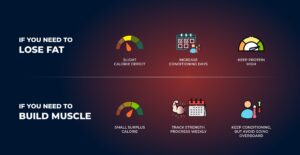
| Goal | Calories | Training and diet focus |
|---|---|---|
| Lose fat | A slight deficit, about 200-300 calories below maintenance | Add conditioning days and keep protein high to protect muscle |
| Build muscle | Maintenance or a small surplus, about 150-250 calories above | Track strength progress weekly and keep conditioning moderate |
Pattinson’s physique sits between “lean model” and “functional athlete”, so a tight energy balance is key. Adjust based on how your weight and waist change over two to three weeks.
5. Recover Like an Athlete
Recovery directly affects how you look and perform. Focus on:

- 7-8 hours of quality sleep
- Enough protein spread across the day, including after training
- Mobility sessions 2-3 times a week
- Managing stress and caffeine intake
Good sleep and recovery let you train harder week after week, and that consistency is what builds this kind of physique.
The Bottom Line
Robert Pattinson’s Batman physique is lean, functional and, on the public evidence, very likely natural, though only testing can confirm anyone’s status.
- He carries moderate muscle at normal leanness with no common steroid markers, and much of Batman’s on-screen bulk is the suit.
- His exact program and diet were never published; the reported mix of compound lifts, bodyweight work, running and boxing is a sound template anyway.
- To build a similar look, train 4-5 days a week, keep protein high, hold a tight calorie balance and prioritize sleep; supplements are optional.
Frequently Asked Questions
Disclaimer
Please read carefully
The information on this site is for educational and informational purposes only, and is not medical advice. Always consult a qualified healthcare professional before using any supplement or medication, or making changes to your health, fitness, or nutrition routine.
Not medical advice
Content here is not a substitute for professional medical advice.
Consult your doctor
Talk to your doctor before starting any supplement or new routine.
Use at your own risk
We are not responsible for adverse effects from acting on this.
Do your research
Make informed decisions about your own health.
No guarantees
Individual results vary. No claims about outcomes.
Important — Never disregard professional medical advice or delay seeking it because of something you read here. If you think you may have a medical emergency, call your doctor or your local emergency number right away.