Contents16 sections
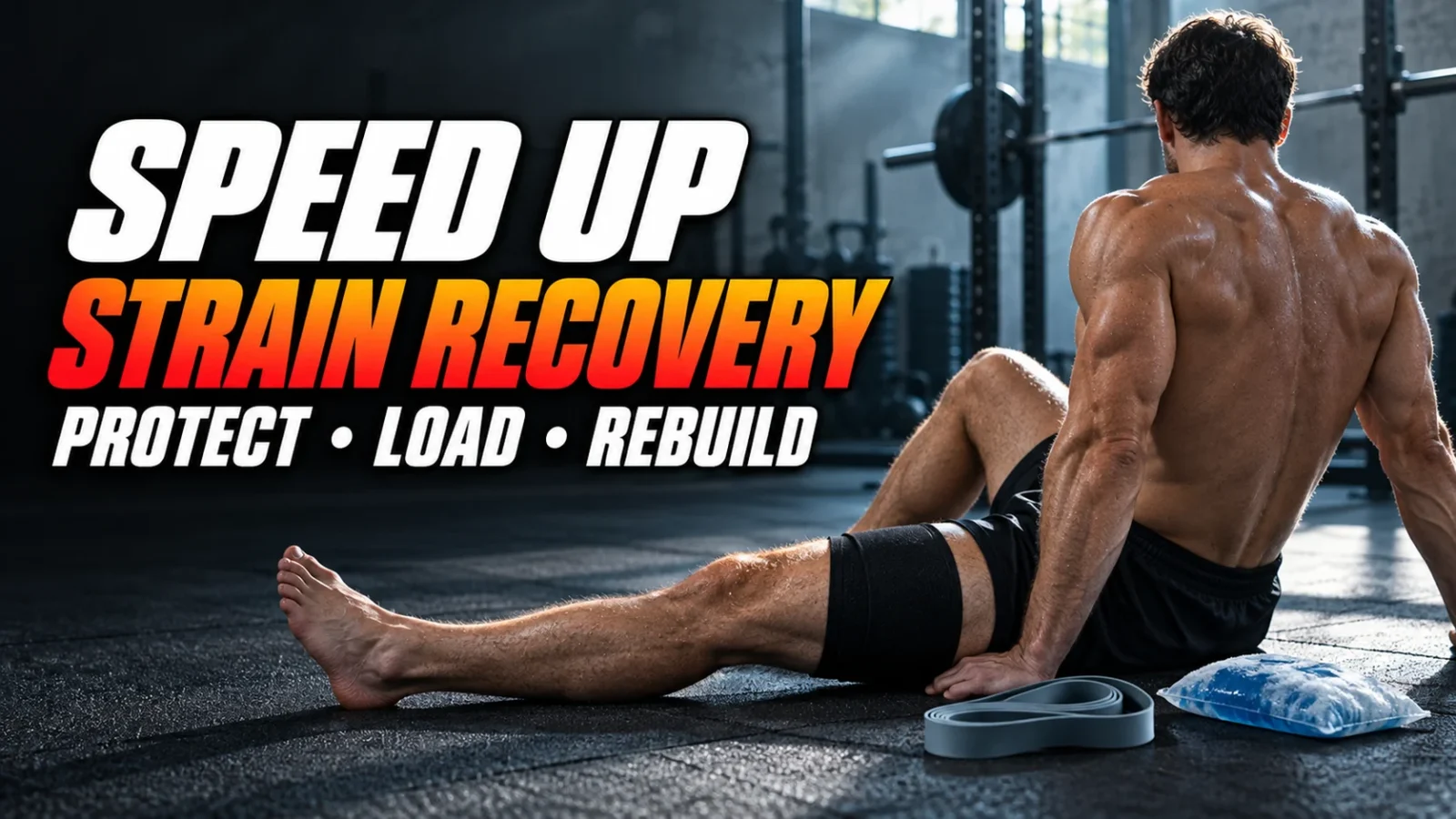
Muscle strains are among the most common training injuries. A sudden sprint, a heavy rep after a poor warm-up, or plain accumulated fatigue can overstretch or tear muscle fibers and stall your progress for weeks.
The good news is that most strains heal well with good management. You cannot force tissue to heal faster than biology allows, but you can avoid the things that slow it down and give the muscle what it needs at each stage.
If you’re wondering how to speed up muscle strain recovery, this guide covers the current sports-medicine approach (POLICE and PEACE & LOVE), progressive loading, nutrition and sleep, and the warning signs that mean you should see a doctor instead of managing it yourself.
Key Takeaways
- In the first one to three days, protect the muscle and control swelling with compression and elevation, but avoid complete immobilization: gentle, pain-free movement helps.
- Progressive loading is the core of rehab. Returning to full intensity before strength is back raises the risk of re-injury.
- Enough protein (about 1.6-2.2 g per kg of body weight a day) and enough total calories support repair; supplements come second.
- Good sleep and lower overall stress support recovery; sleep loss has been shown to reduce muscle protein synthesis.
- A pop at the moment of injury, heavy bruising, a visible dent or marked weakness can mean a severe tear: get it checked rather than treating it at home.
Understand What You’re Recovering From
A muscle strain happens when muscle fibers are overstretched or partly torn, most often near the point where the muscle joins its tendon. Strains are usually graded in three levels:
- Grade I (mild): a small number of fibers are damaged. You feel tightness and pain, but strength and movement are mostly intact.
- Grade II (moderate): a partial tear. Clear pain, swelling, often bruising, and a noticeable loss of strength.
- Grade III (severe): a complete tear of the muscle or its tendon. Often a pop, major weakness and sometimes a visible gap. These need medical assessment, and some need surgery.
Most gym strains are Grade I or II and heal within weeks when they are managed well.
How fast you recover depends on the grade, which muscle is injured (injuries that involve the tendon tend to take longer), your age, sleep, nutrition, and how well you manage the next few weeks.
When to See a Doctor Instead
Self-management is fine for most mild strains. Have a doctor or sports physiotherapist assess the injury promptly if you notice any of the following:
- You heard or felt a pop or snap at the moment of injury.
- You can’t bear weight, walk normally or use the limb.
- There is a visible dent, gap or bunched-up bulge in the muscle.
- Bruising is heavy or spreads quickly, or the swelling is large.
- The muscle is clearly weak, or you can’t contract it at all.
- You have numbness, tingling, or a cold or pale limb.
- The pain is not improving after a few days, or it is getting worse.
Some complete tears and tendon avulsions, such as a proximal hamstring tear near the sit bone, do better when they are repaired early, so a quick diagnosis matters. Severe pain that keeps rising in a tight, swollen limb, or a calf that becomes swollen, warm and red, needs urgent care the same day: these can be signs of compartment syndrome or a blood clot.
Phase One: Control Inflammation Without Shutting It Down
The first one to three days are about limiting extra damage and bleeding inside the muscle.
Inflammation is a normal part of healing; it starts the repair process. The aim is not to switch it off, but to keep swelling and pain manageable while you protect the injured fibers.
For years the standard advice was RICE (rest, ice, compression, elevation). In 2012, Bleakley, Glasgow and MacAuley proposed POLICE in the British Journal of Sports Medicine, replacing “rest” with “optimal loading”:
- Protection: avoid movements that strain the injured muscle for the first few days.
- Optimal Loading: very gentle, pain-free movement instead of complete immobilization.
- Ice: can ease pain when applied for 15-20 minutes at a time, with a cloth between the ice and your skin.
- Compression: a wrap or sleeve to limit swelling.
- Elevation: raise the limb above heart level when you can.
A newer framework, PEACE & LOVE (Dubois and Esculier, British Journal of Sports Medicine, 2019), goes a step further. For the first days, PEACE stands for Protect, Elevate, Avoid anti-inflammatories, Compress and Educate. It leaves ice out, because there is little high-quality evidence that icing helps tissue heal, even though it can help with pain. After the first days, LOVE stands for Load, Optimism, Vascularisation (pain-free cardio) and Exercise.
In practice, both frameworks agree on the main points: protect the muscle briefly, control swelling, and start gentle movement early. Reviews of muscle injury biology also favor a short period of protection followed by early mobilization over long immobilization (Järvinen et al., American Journal of Sports Medicine, 2005).
Avoid aggressive stretching, deep massage, heat and hard training of the injured muscle during this window. They can increase bleeding and swelling and set recovery back.
Once the acute swelling stops increasing, the focus shifts.
Phase Two: Restore Blood Flow and Controlled Mobility
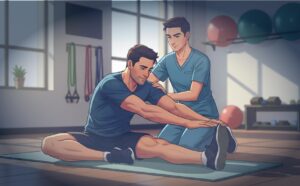
After roughly two to three days, light movement becomes more important.
Too much rest leads to stiffness and muscle loss. Animal research suggests that early, controlled movement helps new muscle fibers and scar tissue line up better than long immobilization does, and it keeps blood flowing to the area.
Start with simple range-of-motion exercises. Add isometric contractions (tensing the muscle without moving the joint) at low effort. Then progress to light dynamic mobility drills within a pain-free range.
Movement should feel productive, not sharp or unstable. If pain rises during a session or the muscle feels worse the next morning, scale back. The goal is circulation and control, not intensity.
Pain-free cardio such as walking, cycling or swimming keeps blood flowing and maintains your fitness. This is the “vascularisation” part of LOVE.
Phase Three: Fuel the Repair Process
Muscle repair needs building material and energy. If recovery feels slow, nutrition is a common bottleneck.
For protein, a large meta-analysis found that muscle gains from resistance training level off at around 1.6 g per kg of body weight a day, with the upper end of the estimate at about 2.2 g/kg (Morton et al., British Journal of Sports Medicine, 2018). That is roughly 0.7 to 1 gram per pound. Amino acids, particularly leucine, drive muscle protein synthesis, so spread your protein over three to five meals built around meat, fish, eggs, dairy or whey.
Total calories matter too. Reviews on nutrition for injured athletes advise against a large calorie deficit during recovery, because reduced training already pushes the body toward muscle loss and healing itself costs energy (Tipton, Sports Medicine, 2015). Eating around maintenance is a sensible target; save hard cutting phases for later.
Supplements: Helpful Extras, Not the Main Event
- Creatine: in a small human study, creatine taken during rehab after two weeks of leg immobilization helped the thigh muscles regain size and strength faster (Hespel et al., Journal of Physiology, 2001). Our guide to creatine monohydrate powders covers the basics.
- Collagen or gelatin with vitamin C: one small study found that 15 g of gelatin with vitamin C, taken an hour before short bouts of exercise, raised a blood marker of collagen synthesis (Shaw et al., American Journal of Clinical Nutrition, 2017). This is most relevant to tendons and connective tissue, and the evidence is still early. Our joint supplements guide covers the options.
- Omega-3 fatty acids: may help regulate inflammation, but there is little direct evidence that they speed up strain healing.
None of these make up for too few calories or too little protein.

Pros
- Catalog is specifically organized around muscle building, fat loss, testosterone support, and workout performance.
- Range includes creatine, protein, EAAs, beta-alanine, and L-citrulline alongside more specialized formulas.
- Orders of $99+ qualify for free US shipping.
Cons
- Features several strong claims around muscle growth, testosterone, fat loss, and metabolic effects that should be distinguished from independently demonstrated clinical outcomes
- Heavily oriented toward bodybuilding and performance rather than broader nutritional supplementation.
Phase Four: Prioritize Sleep and Hormonal Recovery
Repair does not only happen at night, but sleep is one of the most important and most neglected parts of recovery.
The largest growth hormone pulse of the day usually comes early in the night, during deep (slow-wave) sleep, and growth hormone supports tissue repair and collagen synthesis. Sleep loss also works against you directly: in one study, a single night without sleep lowered muscle protein synthesis by about 18% in healthy young adults (Lamon et al., Physiological Reports, 2021).
Aim for seven to nine hours a night. Keep your sleep schedule consistent, and keep the bedroom dark and cool.
Regularly getting five or six hours may feel manageable, but it is likely to slow your recovery and add to overall stress. Treat sleep as part of the rehab plan, not an optional extra.
Phase Five: Progressive Loading, the Real Turning Point
Once pain has settled and mobility has returned, progressive resistance training becomes the most important part of recovery.
Rest alone does not restore a strong, resilient muscle. Gradually increasing load does.
After a strain, the muscle is not only weaker but less coordinated. The nervous system has to relearn control and timing, and this is where careful progression matters most.
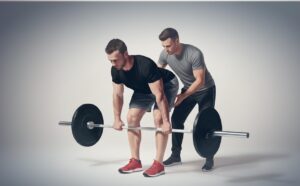
Start with bodyweight movements and light resistance bands. Then add slow eccentric (lengthening) work, where the muscle lengthens under control, such as slow Romanian deadlifts with a light weight after a hamstring strain. The evidence is strongest for hamstrings: in a randomized trial in Swedish elite footballers, a rehab program built on lengthening exercises returned players to play in an average of 28 days, compared with 51 days on a conventional program (Askling et al., British Journal of Sports Medicine, 2013).
Avoid the common mistake of jumping back to heavy loads as soon as the pain fades. Pain-free is not the same as fully healed, and a previous strain is one of the strongest risk factors for another strain in the same muscle. Many re-injuries happen when intensity goes up too fast.
Increase the load only when movement quality stays good and the muscle feels no worse the next day. Before a return to full training, clinicians typically look for:
- Full, pain-free range of motion.
- Strength close to that of the uninjured side.
- Pain-free lifts or sport movements at full speed and normal loads.
Supporting Circulation Without Overstress
A few other tools can support healing if you use them in the right place:
- Light walking or cycling raises blood flow without straining the injured muscle.
- Compression garments can help control swelling, especially early on.
- Gentle massage after the acute phase may ease tightness and make the area feel better.
- Contrast showers (alternating hot and cold) may feel good and can reduce general soreness after hard training, but there is no good evidence that they speed up strain healing.
These are supporting tools, not the main treatment. Structured, progressive rehab always comes first.
What Commonly Slows Recovery
When muscle strain recovery stalls, the cause is often something you can change:
- Returning to full training too soon: one of the most common setbacks.
- Training through pain with painkillers: masking pain removes a useful warning signal. Anti-inflammatory drugs such as ibuprofen may also blunt parts of the healing response, although the evidence in muscle injuries is mixed, and PEACE & LOVE advises avoiding them in the early days. Ask a doctor or pharmacist which pain relief suits you.
- Too little protein or too few calories: this limits the material available for rebuilding.
- Short or poor sleep: it compounds everything else on this list.
- High ongoing stress: in studies of skin wounds, psychological stress slowed healing. The effect on muscle is less studied, but managing stress is still worth it; our guide to supplements to reduce cortisol looks at what has evidence.
- Heavy drinking: alcohol is best avoided in the first days after the injury, and heavy drinking after exercise has been shown to reduce muscle protein synthesis.
Hydration matters for health and training, but there is little evidence that mild dehydration changes muscle elasticity or how fast a strain heals. Drinking to thirst is enough for most people.
Healing depends on the condition of your whole body, not just the injured spot.
The Mental Component
Injury downtime tests discipline. Frustration builds, and the urge to test the muscle early gets strong.
Mindset is part of recovery. PEACE & LOVE includes optimism for a reason: fear of movement and expecting the worst are linked with poorer recovery from musculoskeletal injuries.
Use this phase productively: improve your mobility, strengthen your core, train the uninjured parts of your body, refine technique with lighter loads, and maintain your cardiovascular conditioning within safe limits.
The people who recover best are usually the ones who stay engaged with their rehab without becoming reckless.
How Long Does Muscle Strain Recovery Take?
Recovery time depends on the grade, the muscle involved and whether the tendon is affected. These are typical ranges, not guarantees:
| Grade | What it means | Typical recovery |
|---|---|---|
| Grade I | Mild; a small number of fibers damaged | About 1-3 weeks |
| Grade II | Partial tear with pain, swelling and weakness | About 3-8 weeks; longer if the tendon is involved |
| Grade III | Complete tear of the muscle or tendon | Several months; sometimes surgery |
Consistency matters more than impatience. Healing cannot be forced, but you can stop slowing it down.
Sources
- Bleakley CM, Glasgow P, MacAuley DC. PRICE needs updating, should we call the POLICE? British Journal of Sports Medicine, 2012.
- Dubois B, Esculier JF. Soft-tissue injuries simply need PEACE and LOVE. British Journal of Sports Medicine, 2019 (online first).
- Järvinen TA, et al. Muscle injuries: biology and treatment. American Journal of Sports Medicine, 2005.
- Askling CM, Tengvar M, Thorstensson A. Acute hamstring injuries in Swedish elite football: a prospective randomised controlled clinical trial comparing two rehabilitation protocols. British Journal of Sports Medicine, 2013.
- Morton RW, et al. A systematic review, meta-analysis and meta-regression of the effect of protein supplementation on resistance training-induced gains in muscle mass and strength in healthy adults. British Journal of Sports Medicine, 2018.
- Tipton KD. Nutritional support for exercise-induced injuries. Sports Medicine, 2015.
- Shaw G, et al. Vitamin C-enriched gelatin supplementation before intermittent activity augments collagen synthesis. American Journal of Clinical Nutrition, 2017.
- Hespel P, et al. Oral creatine supplementation facilitates the rehabilitation of disuse atrophy and alters the expression of muscle myogenic factors in humans. Journal of Physiology, 2001.
- Lamon S, et al. The effect of acute sleep deprivation on skeletal muscle protein synthesis and the hormonal environment. Physiological Reports, 2021.
The Bottom Line
Speeding up muscle strain recovery is mostly about timing: protect the muscle briefly, then load it back up step by step while nutrition and sleep support the repair.
- Protect the muscle and control swelling for the first one to three days, then start gentle, pain-free movement and light cardio.
- Make progressive loading, including slow eccentric work, the core of your rehab, and return to full intensity only when range of motion and strength are back.
- Support repair with enough protein and calories and seven to nine hours of sleep; supplements are optional extras.
- See a doctor for a pop, heavy bruising, a visible dent, marked weakness or pain that is not improving.
Frequently Asked Questions
Disclaimer
Please read carefully
The information on this site is for educational and informational purposes only, and is not medical advice. Always consult a qualified healthcare professional before using any supplement or medication, or making changes to your health, fitness, or nutrition routine.
Not medical advice
Content here is not a substitute for professional medical advice.
Consult your doctor
Talk to your doctor before starting any supplement or new routine.
Use at your own risk
We are not responsible for adverse effects from acting on this.
Do your research
Make informed decisions about your own health.
No guarantees
Individual results vary. No claims about outcomes.
Important — Never disregard professional medical advice or delay seeking it because of something you read here. If you think you may have a medical emergency, call your doctor or your local emergency number right away.