Contents10 sections
NAC and NAD sound alike, but they do very different jobs. NAC (N-acetylcysteine) is a form of the amino acid cysteine that the body uses to make glutathione, its main internal antioxidant. NAD+ (nicotinamide adenine dinucleotide) is a coenzyme that every cell needs to turn food into energy and to run its DNA-repair and sirtuin enzymes.
NAC is an approved medicine for acetaminophen (paracetamol) overdose and is also widely sold as a supplement. NAD+ levels tend to fall with age in many tissues, and NAD+ supplements mostly try to raise them with precursors such as nicotinamide riboside (NR) and nicotinamide mononucleotide (NMN).
This guide compares what each one does, separates the human evidence from the animal data, and covers the doses used in studies, side effects, and whether it makes sense to take both.
Key Takeaways
- NAC supplies the cysteine the body needs to make glutathione. It is the standard antidote for acetaminophen overdose and is used to thin mucus in lung disease.
- NAD+ is a coenzyme needed for energy (ATP) production and for DNA-repair and sirtuin enzymes. Because NAD+ itself is poorly absorbed, oral products usually supply the precursors NR or NMN.
- Human trials show NR and NMN raise NAD+ in the blood, but most of the anti-aging benefits so far come from animal studies.
- Doses commonly used in studies: NAC 600-1,200 mg a day; NR or NMN mostly 250-1,000 mg a day.
- The two act on different pathways and have no known interaction, but there is little research on taking them together. Check with a doctor first, especially if you take nitroglycerin or other medication.
What Is NAC?
N-acetylcysteine (NAC) is a derivative of the amino acid cysteine. Its main value is as an antioxidant precursor: it provides the cysteine the body needs to make glutathione, one of its most important defences against oxidative damage.
NAC also loosens mucus, which is why it is used in lung conditions such as chronic obstructive pulmonary disease (COPD). Clinically, it is best known as the antidote to acetaminophen (paracetamol) overdose, where it replenishes glutathione and prevents liver injury. See our NAC compound profile for more detail.
After a period of regulatory uncertainty in the U.S., NAC remains widely sold as a dietary supplement in capsule and powder form. Its oral bioavailability is low (roughly 10% or less), because much of it is used up in the gut wall and liver.
How NAC Works
Boosting Glutathione Production
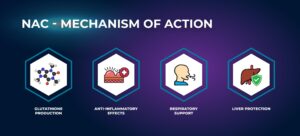
Cysteine is the rate-limiting building block for glutathione synthesis. By supplying it, NAC helps the body keep glutathione levels up and maintain a balanced cellular redox environment. The effect is clearest in people whose glutathione is depleted, for example after an acetaminophen overdose.
Antioxidant and Anti-Inflammatory Effects
Through glutathione, NAC helps neutralise reactive oxygen species (ROS). In lab and some human studies it also lowers pro-inflammatory markers such as TNF-α and interleukins, partly by dampening NF-κB signalling.
Mucolytic Action and Respiratory Support
NAC breaks the bonds that make mucus thick, which helps clear the airways. In COPD, NAC use has been shown to reduce flare-ups (exacerbations). COPD trials have commonly used 600 mg once or twice a day, and the benefit looks more consistent at the higher dose.
Liver Protection and Detoxification
After an acetaminophen overdose, the liver runs out of glutathione and a toxic by-product called NAPQI builds up. NAC restores glutathione so NAPQI can be neutralised, preventing liver cell damage. This treatment is given in hospital, at doses far above supplement doses.
What Is NAD+?
Nicotinamide adenine dinucleotide (NAD+) is a coenzyme found in every living cell. It shuttles electrons in the reactions that produce cellular energy (ATP), and it is used up by enzymes involved in DNA repair, gene regulation and cell signalling. The body makes it from forms of vitamin B3 and from the amino acid tryptophan.
NAD+ levels tend to decline with age. In animal research this decline is linked to mitochondrial dysfunction, weaker DNA repair and age-related disease, which is why NAD+ has become a popular target for healthy-aging research.
NAD+ itself is poorly absorbed when swallowed, so most people try to raise it with precursors the body converts into NAD+: nicotinamide riboside (NR) and nicotinamide mononucleotide (NMN). These are the best-studied oral options.
How NAD+ Works
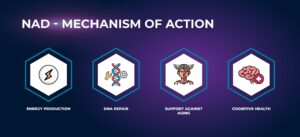
Redox Reactions and Energy Production
NAD+ switches between its oxidised (NAD+) and reduced (NADH) forms to carry electrons through glycolysis, fat oxidation (β-oxidation) and the citric acid cycle. NADH then hands those electrons to the mitochondrial electron transport chain, which drives ATP production. The NAD+/NADH balance is central to cellular energy and metabolism.
DNA Repair and Gene Regulation
NAD+ is consumed by several enzyme families:
- PARPs (poly ADP-ribose polymerases): enzymes that detect and help repair DNA damage.
- Sirtuins: NAD+-dependent deacetylases that regulate gene expression, mitochondrial function and stress responses.
- CD38: an enzyme involved in calcium signalling and immune function. In mice, rising CD38 activity is one of the main drivers of the age-related fall in NAD+.
Aging and Age-Related Disease
Animal research supports the idea that falling NAD+ contributes to genomic instability, mitochondrial decline and cellular senescence, which are hallmarks of aging. In animals, restoring NAD+ has improved tissue function and may slow some age-related diseases. Whether the same holds in people is still being tested.
Metabolic and Cognitive Health
In animal studies, raising NAD+ with precursors such as NMN and NR improved markers of cognitive health, mitochondrial function, metabolism and inflammation, and in some mouse studies modestly extended lifespan.
Human results are more modest. In a 10-week trial in women with prediabetes, 250 mg of NMN a day improved muscle insulin sensitivity. In a 6-week trial in healthy middle-aged and older adults, 1,000 mg of NR a day raised NAD+ in blood cells and was well tolerated. Other trials, including one giving obese men 2,000 mg of NR a day for 12 weeks, found no improvement in insulin sensitivity. The precursors reliably raise NAD+; clear health benefits in people are not yet established.
NAC vs NAD: Key Differences
The acronyms are easy to mix up, but NAC and NAD+ do different jobs. NAD+ fuels energy production and DNA repair and is studied for longevity, while NAC mainly supports antioxidant defence and detoxification. The table sums up the main differences.
| Feature | NAC | NAD+ |
|---|---|---|
| What it is | Acetylated form of the amino acid cysteine | Coenzyme made from vitamin B3 forms and tryptophan |
| Main job | Supplies cysteine for glutathione; thins mucus | Carries electrons for ATP production; fuels PARPs, sirtuins and CD38 |
| Strongest evidence | Acetaminophen overdose (standard treatment); fewer COPD flare-ups | Precursors raise blood NAD+; health benefits in people still unproven |
| How it is taken | Oral capsules or powder; IV and inhaled forms in hospital | Oral precursors (NR, NMN); IV or injectable NAD+ in clinics |
| Doses used in studies | 600-1,200 mg a day orally | NR or NMN mostly 250-1,000 mg a day |
| How it is tracked | Indirectly, through glutathione levels | NAD+ blood tests or specialised NAD+/NADH testing |
Chemical Nature and Role
NAC is an amino acid derivative that supports antioxidant defence by feeding glutathione synthesis. NAD+ is a coenzyme, derived from vitamin B3, that is essential for cellular redox reactions and metabolic regulation.
Primary Function and Health Focus
NAC acts as an antioxidant and detoxifier by boosting glutathione, and its best-supported uses are liver protection after acetaminophen overdose and respiratory health. NAD+ powers cellular energy production, supports DNA repair and activates sirtuins, so it is studied mainly for aging, metabolic health and brain function.
Supplement Delivery
NAC is taken directly as a capsule or powder; IV and inhaled NAC are hospital treatments. NAD+ itself has poor oral bioavailability, so most people raise levels through NR or NMN. Direct NAD+ is mainly given as an IV drip or injection in clinics, where controlled research is still limited.
Where They Act
Once absorbed, NAC is converted to cysteine and used throughout the body, especially in the liver. NAD+ works inside every cell, fuelling mitochondria, supporting DNA repair in the nucleus and keeping metabolism in balance.
Testing and Tracking
NAC’s effect is usually inferred from glutathione levels, which can be measured in blood but may not reflect every tissue. NAD+ can be measured with specialised blood tests, including NAD+/NADH profiling, though blood levels do not necessarily mirror levels in muscle or brain.
Can You Take NAC and NAD Together?
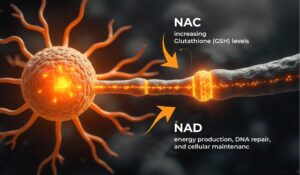
NAC and NAD+ cover different needs, so in theory they complement each other:
- NAD+ fuels the cell by supporting mitochondrial ATP production, sirtuin activity and DNA repair.
- NAC protects the cell by replenishing glutathione, reducing oxidative stress and calming inflammation.
There is no known harmful interaction between them. However, the combination has only been tested in small early trials, mostly as part of multi-ingredient mixes (for example NAC with nicotinamide riboside, L-carnitine and serine in fatty-liver research). Those studies cannot show what NAC plus an NAD+ precursor does on its own, so the “synergy” is a reasonable idea rather than a proven effect. There is also no good evidence that a particular timing matters.
Doses Used in Studies
These are the doses commonly used in human studies and reported by supplement users, not a recommendation:
- NAC (N-acetylcysteine): 600-1,200 mg a day orally, often split into two 600 mg doses. COPD trials have mostly used this range. The much higher IV doses used for acetaminophen overdose are given only in hospital.
- NAD+ precursors (NR or NMN): most human trials have used 250-1,000 mg a day for several weeks to a few months, and a few have used up to 2,000 mg a day. IV and injectable NAD+ protocols are given in clinics, with little controlled research behind them.
Individual needs vary with health status, age and medication. Speak with a healthcare professional before starting either supplement.
Where To Buy NAD+
For everyday use, NAD+ is usually bought as an oral NR or NMN supplement. Choose a brand that publishes third-party test results for each batch, because purity and dose accuracy vary between products. IV NAD+ is only available through clinics.
Injectable NAD+ vials are also sold by research suppliers for laboratory use only. They are not approved for human use. If you source NAD+ for research, SwissChems lists it in its research range and publishes independent lab test results. A certificate of analysis confirms identity and purity; it does not show that a product is sterile or safe to inject.

Pros
- Exceptional purity & testing (≥98%)
- Pharmaceutical-style packaging for stability
- Broad catalog across peptides & nootropics
- Strong reputation & consistency across years
Cons
- Some items frequently out of stock due to high demand
- Limited long-term data for some compounds
Alternatives to NAC and NAD
If neither fits your goals, other options target the same pathways. Some are cheaper or easier to find.
Glutathione Supplements
Since NAC is mainly valued for raising glutathione, some people take glutathione directly. Liposomal and S-acetyl forms are marketed for better absorption than standard capsules, though human data are limited. NACET, an ethyl ester form of NAC, is another option designed to improve uptake.
Vitamin B3 (Niacin, NR and NMN)
Because NAD+ is hard to absorb directly, B3 precursors are used instead. Niacin (nicotinic acid), nicotinamide, NR and NMN all help the body make NAD+. Niacin is the cheapest, but it can cause skin flushing at higher doses.
Alpha-Lipoic Acid (ALA)
ALA is an antioxidant that helps regenerate others, including glutathione and vitamins C and E. It also takes part in mitochondrial energy production and may complement NAC.
Coenzyme Q10 (CoQ10)
CoQ10 is part of the mitochondrial electron transport chain, the same energy system NADH feeds. It is often used for heart health and general energy support.
Lifestyle Approaches
Not every option comes in a bottle. Regular exercise, good sleep and a diet rich in protein, vegetables and fruit support the body’s own glutathione production and healthy NAD+ metabolism.
Side Effects and Safety: NAC vs NAD
Both are generally well tolerated at the doses used in studies, but each has side effects and cautions worth knowing.
NAC
- Common side effects: nausea, vomiting, diarrhoea, stomach discomfort and an unpleasant sulphur smell or taste.
- Allergic reactions: rash, itching or swelling can occur; allergic-type reactions are most common with IV NAC in hospital.
- Drug interactions: NAC can strengthen the effect of nitroglycerin, raising the risk of headache and low blood pressure.
- Pre-existing conditions: people with asthma (inhaled NAC can trigger airway spasm) or a history of stomach ulcers should use NAC with caution.
NAD+ and Its Precursors
- Common side effects: NR and NMN have been well tolerated in trials; some users report mild nausea, diarrhoea, stomach discomfort or headache.
- IV NAD+: infusions often cause nausea, cramping, chest tightness or flushing, especially when run quickly.
- Pre-existing conditions: people with liver or kidney problems should talk to a healthcare provider before using NAD+ products.
- Pregnancy and breastfeeding: there is not enough safety data, so NAD+ supplements are not recommended.
General Recommendations
- Consult a healthcare provider before starting, especially if you have a health condition or take other medication.
- Watch for side effects and stop if you have a reaction.
- Check quality: choose products with batch-specific third-party testing.
The Bottom Line
NAC and NAD+ are not rivals: NAC supports the body’s antioxidant defences, while NAD+ powers energy metabolism and cell repair.
- NAC has the stronger clinical record: it is the standard treatment for acetaminophen overdose and reduces COPD flare-ups. Studies mostly use 600-1,200 mg a day.
- NR and NMN reliably raise NAD+ in the blood, but the anti-aging benefits seen in animals have not yet been clearly shown in people.
- They act on different pathways and can be taken together, but there is little direct research on the combination. Talk to a doctor first if you take medication, have asthma or are pregnant.
Frequently Asked Questions
Disclaimer
Please read carefully
The information on this site is for educational and informational purposes only, and is not medical advice. Always consult a qualified healthcare professional before using any supplement or medication, or making changes to your health, fitness, or nutrition routine.
Not medical advice
Content here is not a substitute for professional medical advice.
Consult your doctor
Talk to your doctor before starting any supplement or new routine.
Use at your own risk
We are not responsible for adverse effects from acting on this.
Do your research
Make informed decisions about your own health.
No guarantees
Individual results vary. No claims about outcomes.
Important — Never disregard professional medical advice or delay seeking it because of something you read here. If you think you may have a medical emergency, call your doctor or your local emergency number right away.