Contents10 sections
The best myostatin supplements available today are injectable myostatin-inhibiting peptides (like the SwissChems research peptide) and epicatechin-based capsules, two very different approaches to blocking the protein that caps your muscle growth. Neither delivers the dramatic results seen in animal studies, but both have mechanisms worth understanding.
Myostatin is a protein that limits how much muscle your body builds. Blocking it could, in theory, remove that cap and let you build more lean mass than your genetics normally allow. That concept has driven intense interest in myostatin supplements for muscle growth from bodybuilders, athletes, and researchers. This guide breaks down how the best myostatin supplements work, what the science actually supports, and whether they are worth your money.
Key Takeaways
- Myostatin (GDF-8) is a natural protein that suppresses muscle growth. Blocking it allows greater skeletal muscle hypertrophy in animal models.
- The two most accessible myostatin supplements are injectable myostatin-inhibiting peptides (available from research chemical vendors) and epicatechin-based supplements (available over the counter).
- Animal studies show dramatic results from myostatin inhibition, but human clinical data is limited. Most evidence for supplements comes from small studies or preclinical research.
- Natural myostatin reduction is possible through resistance training, epicatechin-rich foods, and high-protein diets, though the effects are modest compared to pharmaceutical interventions.
- Myostatin inhibitors are being researched for therapeutic use in Duchenne muscular dystrophy, sarcopenia, and other muscle-wasting conditions.
What Is Myostatin?
Myostatin, also known as growth differentiation factor 8 (GDF-8), is a member of the TGF-beta superfamily of proteins. It acts as the body’s negative regulator of skeletal muscle mass, essentially a built-in brake that prevents muscles from growing beyond a certain point.
How Myostatin Controls Muscle Growth
| Function | What It Does |
|---|---|
| Muscle fiber regulation | Limits the formation of new muscle fibers (hyperplasia) |
| Hypertrophy control | Restricts existing muscle fibers from growing larger |
| Age-related changes | Myostatin levels increase with age, contributing to sarcopenia |
| Disease association | Elevated myostatin is linked to Duchenne muscular dystrophy, spinal muscular atrophy, and chronic kidney disease |
The most famous example of natural myostatin deficiency is the Belgian Blue cattle breed, which has a genetic mutation that suppresses myostatin production. These animals develop dramatically larger muscles than normal cattle without any intervention. Similar mutations have been documented in whippets, mice, and in rare cases, humans.
Why Blocking Myostatin Matters
If myostatin is the brake on muscle growth, inhibiting it is like releasing that brake. In animal models, myostatin knockout mice develop roughly twice the skeletal muscle mass of normal mice. This has fueled research into myostatin blockers for both athletic performance and medical applications like treating muscle-wasting diseases.
The challenge is translating these results to humans. Animal models respond far more dramatically to myostatin inhibition than humans do, and the supplements currently available produce much more subtle effects than genetic knockout.
How Myostatin Supplements Work
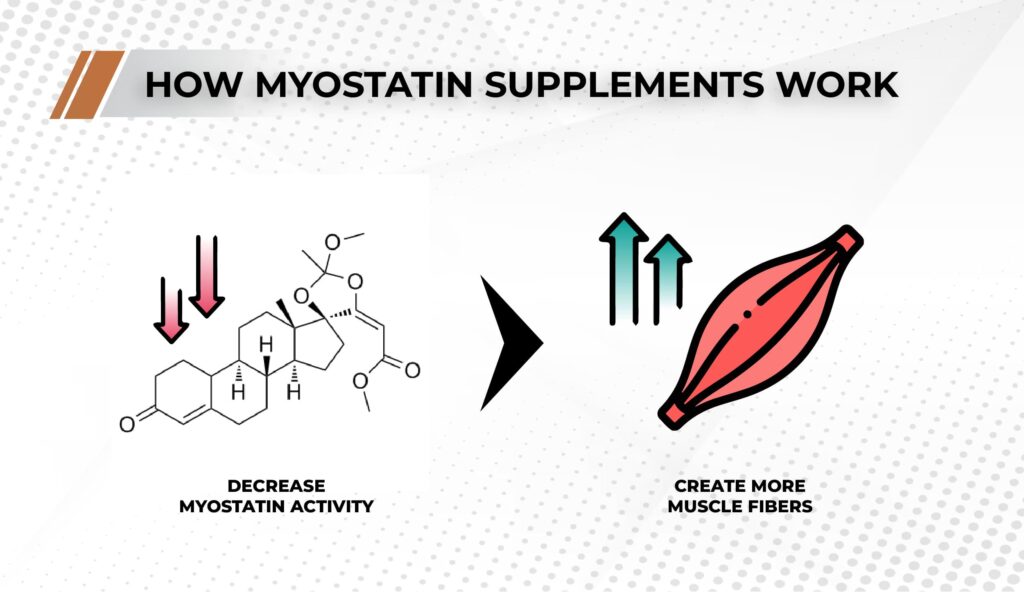
Myostatin inhibitors, also called myostatin blockers, reduce or block GDF-8 activity through several mechanisms:
Direct Binding Inhibitors
Compounds like follistatin and experimental peptides such as ACE-031 bind directly to myostatin, preventing it from signaling muscle cells to stop growing. These tend to be the most potent inhibitors but are available only as research chemicals or in clinical trials.
Natural Inhibition
Certain food-derived compounds can modestly reduce myostatin expression:
- Epicatechin (found in dark chocolate and green tea) has shown the ability to lower serum myostatin levels in small human studies
- Leucine and other branched-chain amino acids may suppress myostatin mRNA expression when combined with resistance training
- Creatine supplementation paired with weightlifting has been associated with reduced myostatin levels in some research
Gene-Level Regulation
Emerging therapies target myostatin at the genetic level, reducing its production rather than blocking its activity. These approaches are primarily in the clinical research phase for treating muscular dystrophy and are not available as consumer supplements.
The 2 Best Myostatin Supplements
1. SwissChems Myostatin Inhibitor Peptide (1 mg)
SwissChems offers a myostatin-inhibiting peptide designed for research use. This is an injectable compound that targets the myostatin signaling pathway directly.
| Detail | Info |
|---|---|
| Form | Injectable peptide (requires reconstitution) |
| Amount | 1 mg per vial |
| Typical cycle | 4-8 weeks |
| Price | ~$127 per vial |
| Testing | Third-party tested for purity |
| Category | Research chemical (not for human consumption) |
What to expect: Users in research communities report modest improvements in lean body mass and recovery over 6-8 week cycles, particularly when combined with resistance training and high-protein diets. Results are significantly less dramatic than animal model data would suggest.
Considerations: This is an injectable research peptide, not a consumer supplement. Proper reconstitution, sterile injection technique, and understanding of peptide injection sites are essential. Consult a healthcare professional before use.
2. Epicatechin-Based Supplements
Epicatechin is a flavanol found naturally in dark chocolate and green tea. The epicatechin myostatin connection is the most researched natural pathway for reducing this growth-limiting protein, with human studies showing that this compound lowers serum GDF-8 levels. Several supplement companies offer concentrated epicatechin capsules marketed for muscle growth support.
| Detail | Info |
|---|---|
| Form | Oral capsule |
| Typical dose | 150-200 mg per day |
| Typical cycle | 8-12 weeks |
| Price | $30-60 per month |
| Testing | Varies by brand (check for third-party COAs) |
| Category | Dietary supplement |
What the research shows: A 2014 study published in the Journal of the International Society of Sports Nutrition found that epicatechin supplementation (1 mg/kg/day) reduced myostatin levels and increased follistatin-to-myostatin ratios in middle-aged adults. However, the muscle-building effects were modest, noticeable improvements in grip strength but limited visible hypertrophy over the study period.
Considerations: Epicatechin is the safer, more accessible option. It is a legal dietary supplement with a favorable side effect profile. The trade-off is that its myostatin-inhibiting effects are substantially weaker than injectable peptides or pharmaceutical compounds.
Head-to-Head Comparison
| Factor | SwissChems Peptide | Epicatechin Supplements |
|---|---|---|
| Potency | Higher (direct inhibition) | Lower (indirect reduction) |
| Evidence quality | Limited (preclinical + anecdotal) | Small human studies |
| Administration | Injectable | Oral capsule |
| Safety profile | Unknown long-term | Generally well-tolerated |
| Price per month | ~$127+ | $30-60 |
| Legal status | Research chemical | Legal dietary supplement |
| Best for | Experienced researchers with peptide knowledge | Anyone looking for a natural myostatin support option |
Foods That May Reduce Myostatin Naturally
Before reaching for supplements, consider that several common foods contain compounds linked to myostatin reduction:
| Food | Active Compound | Mechanism | Evidence Level |
|---|---|---|---|
| Dark chocolate (85%+ cacao) | Epicatechin | Reduces serum myostatin, increases follistatin | Small human studies |
| Green tea | Epicatechin, EGCG | Suppresses myostatin activity | In vitro and animal studies |
| Spinach and leafy greens | Ecdysteroids | May support insulin-like growth factors | Limited human data |
| High-protein foods (chicken, eggs, fish) | Leucine | Inhibits myostatin mRNA expression | Human studies (in context of resistance training) |
| Fatty fish (salmon, mackerel) | EPA/DHA omega-3s | Reduces inflammation, may indirectly support muscle retention | Moderate human evidence |
These foods are not replacements for dedicated myostatin supplements. The epicatechin myostatin effect from dark chocolate and green tea is the most studied of these dietary approaches, but the overall impact is modest and works best as part of a comprehensive plan that includes resistance training and adequate protein intake.
Benefits of Myostatin Inhibition
Increased Lean Muscle Mass
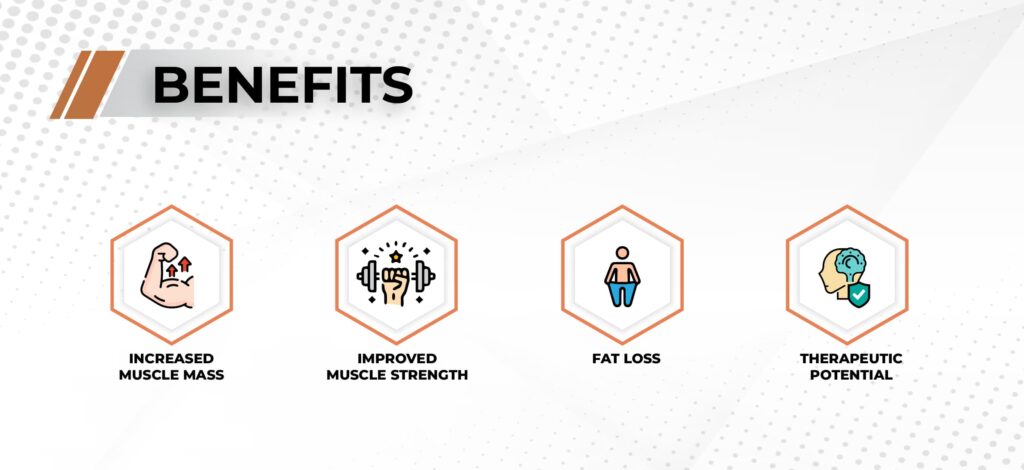
The primary benefit of blocking myostatin is enhanced skeletal muscle hypertrophy. In animal models, myostatin-deficient subjects develop significantly more muscle mass. In humans, myostatin supplements for muscle growth produce more modest results but may provide an edge when combined with consistent resistance training.
Improved Body Composition
GDF-8 inhibition has been associated with reduced fat mass alongside increased lean mass. This dual effect on body composition makes myostatin blockers of interest to bodybuilders and athletes focused on cutting cycles or recomposition.
Therapeutic Potential
Beyond fitness applications, myostatin inhibitors are being actively researched for:
- Duchenne muscular dystrophy (DMD): Reducing myostatin may slow muscle degeneration in DMD patients
- Sarcopenia: Age-related muscle loss correlates with elevated myostatin levels
- Chronic kidney disease: Muscle wasting in CKD patients is associated with increased myostatin expression
- Spinal muscular atrophy: Early research suggests potential benefits for preserving muscle function
Risks and Side Effects
Known Concerns
| Risk | Description |
|---|---|
| Limited human data | Most dramatic results come from animal models. Human responses are less pronounced |
| Tendon and ligament stress | Rapid muscle growth without proportional connective tissue adaptation increases injury risk |
| Unknown long-term effects | No long-term clinical trials have been completed for any myostatin supplement |
| Muscle imbalance | Uneven development is possible without balanced training programs |
Injectable Peptide-Specific Risks
- Injection site reactions (redness, swelling)
- Potential hormonal interactions with other compounds
- Sterility concerns with improper reconstitution or injection technique
- Unknown interactions with other supplements or medications
Epicatechin-Specific Risks
- Generally well-tolerated at standard doses
- Possible mild gastrointestinal discomfort
- May interact with blood-thinning medications
- Quality varies significantly between brands, always verify third-party testing
How to Get the Most From Myostatin Supplements
Combine Supplements with Resistance Training
Myostatin supplements for muscle growth work best alongside progressive overload training. Resistance training itself naturally reduces GDF-8 expression, creating a synergistic effect with supplementation. Without consistent training, the benefits of any myostatin blocker will be minimal.
Optimize Your Diet
- Protein: Aim for 1.6-2.2 g/kg body weight daily. High leucine sources (whey protein, eggs, chicken) support muscle protein synthesis and may further suppress myostatin
- Epicatechin-rich foods: Include dark chocolate (85%+ cacao) and green tea daily as a baseline
- Creatine: 5 g daily of creatine monohydrate supports muscle development and may complement myostatin inhibition
Monitor and Adjust
Track your progress through:
- Body composition measurements (not just scale weight)
- Strength progressions on key lifts
- Recovery quality and training capacity
- Any side effects or adverse reactions
The Bottom Line
The best myostatin supplements currently available, injectable peptides and epicatechin capsules, offer two very different risk-reward profiles.
- Peptides provide more direct myostatin inhibition but carry higher risk and require injection knowledge.
- Epicatechin is safer and easier to use but delivers subtler results.
- Neither option produces the dramatic muscle growth seen in animal knockout studies. If you decide to try myostatin blockers, set realistic expectations: they may provide a marginal edge on top of an already-solid training and nutrition foundation, not a shortcut around one.