Contents9 sections
Sergio Oliva, known as “The Myth”, won the Mr. Olympia three years in a row, from 1967 to 1969, and is the only man ever to beat Arnold Schwarzenegger at the Olympia. Born in Cuba in 1941, he was a weightlifter on the Cuban national team before he defected to the United States in 1962 and settled in Chicago, where he later spent many years as a police officer.
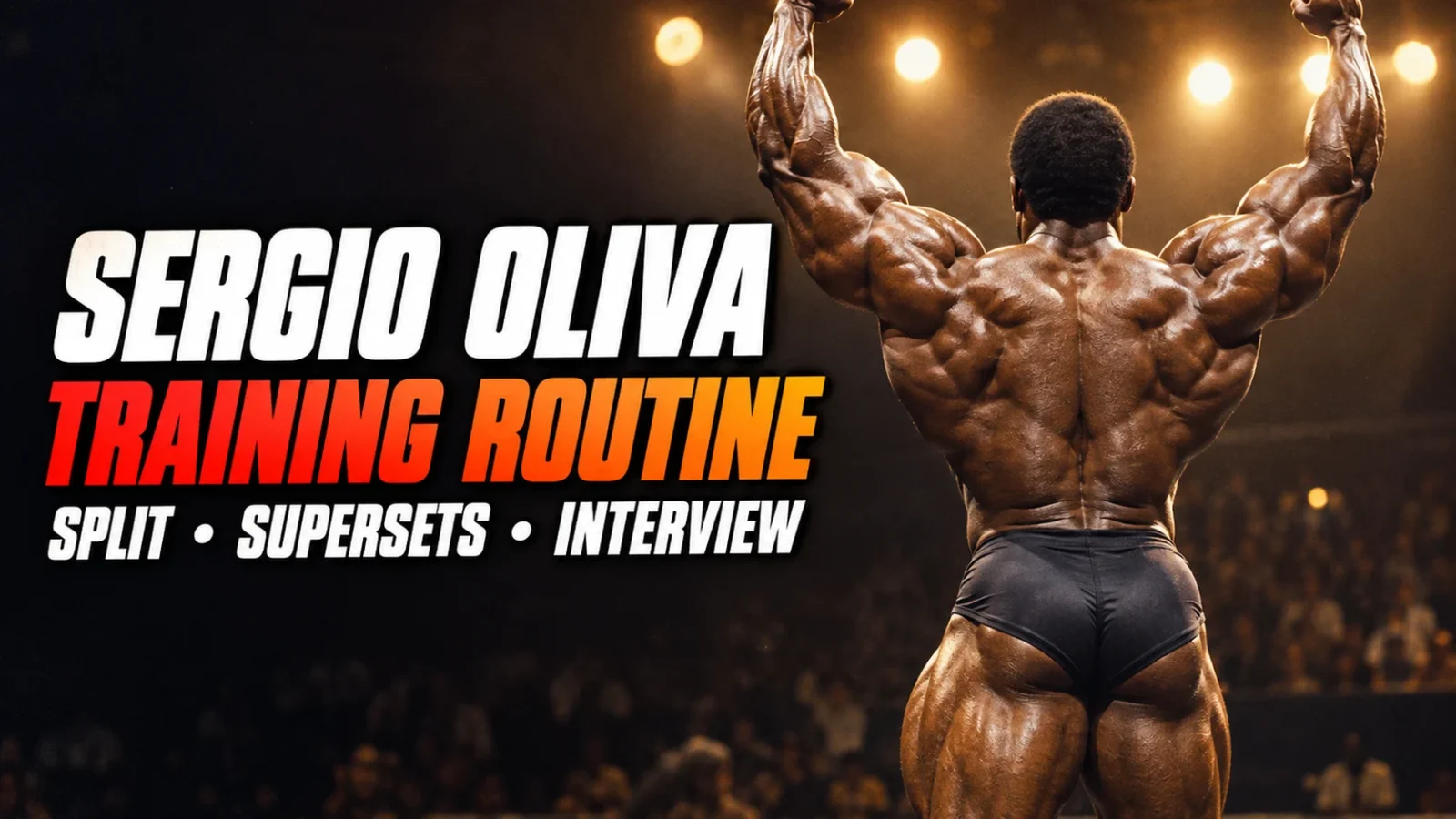
His physique set a new standard for the 1960s: huge arms, lats and thighs over a very small waist, shown off in his trademark Victory Pose with both arms raised overhead. He competed until 1985 and died in Chicago on November 12, 2012, at the age of 71.
This guide lays out the six-day routine Oliva published in 1973 as the only program he had used since 1970, explains what stands out in it and how to adapt it, and summarizes his later interview with Brian D. Johnston about Arthur Jones, contest politics and steroids.
Key Takeaways
- Sergio Oliva won three straight Mr. Olympia titles (1967 to 1969) and remains the only man to beat Arnold Schwarzenegger at the Olympia.
- His 1973 routine used three sessions (chest and back, shoulders and arms, abs and legs), each repeated twice a week over six days.
- He relied on supersets such as bench press with chin-ups and press behind neck with rows, sets of five, and three 20-rep squat sets on Saturday.
- The program has no direct hamstring work and a lot of volume, so most lifters should cut sets, add a hamstring exercise and use their own weights.
- In his interview with Brian D. Johnston, Oliva credited Arthur Jones’ short, all-out workouts for his best shape and said he would not recommend steroids to anyone.
Who Was Sergio Oliva?
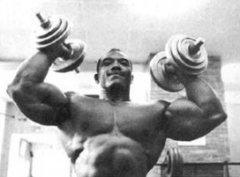
| Attribute | Detail |
|---|---|
| Name | Sergio Oliva |
| Nickname | The Myth |
| Born | July 4, 1941, Guanabacoa, Cuba |
| Died | November 12, 2012, Chicago, aged 71 |
| Height | About 5 ft 10 in (178 cm) |
| Mr. Olympia titles | 3 (1967, 1968, 1969) |
| Signature pose | The Victory Pose (both arms overhead) |
| Outside bodybuilding | Chicago police officer for many years |
Before bodybuilding, Oliva was an Olympic-style weightlifter in Cuba. After he defected in 1962, he settled in Chicago and turned to bodybuilding, where his size and shape quickly set him apart.
He won the Mr. Olympia in 1967, again in 1968 when no one entered against him, and in 1969, when he beat a young Arnold Schwarzenegger. Schwarzenegger took the title from him in 1970. Oliva was barred from the 1971 Olympia in Paris after competing at a Mr. Universe in London that was not run by the IFBB, and in 1972 in Essen, Germany, he placed second to Schwarzenegger in a decision fans still argue about. You can see where he sits among the sport’s champions in our complete list of Mr. Olympia winners.
Oliva later returned to the Olympia stage in the mid-1980s and placed eighth in 1985, his last contest. He died in Chicago on November 12, 2012, at 71. His son, Sergio Oliva Jr., followed him into bodybuilding.
Sergio Oliva’s Training Routine
In the August/September 1973 issue of Muscle Training Illustrated (MTI), Oliva set out what he called his only true exercise program, and he was blunt about any other version:
“Since 1970 these are the only exercises I have been doing. Any other exercises printed in any other magazine are false.”
Sergio Oliva, Muscle Training Illustrated, August/September 1973
The program is a six-day split built from three sessions, each repeated twice a week. It mixes high volume, sets of five, supersets that pair opposing muscles, a heavy and a lighter squat day, and 20-rep squat sets.
| Day | Focus | Main work |
|---|---|---|
| Monday | Chest and back | Bench press supersetted with chin-ups; dumbbell flyes supersetted with dips |
| Tuesday | Shoulders and arms | Presses, curls and triceps work, mostly 5 x 5 |
| Wednesday | Abs, legs and calves (heavy) | Squats working up to 500 lb x 4; standing calf raises |
| Thursday | Chest, back and shoulders | Bench press 7 x 5; press behind neck supersetted with rows |
| Friday | Shoulders, arms and back | Tuesday’s arm work for 3 x 5; chin-up variations |
| Saturday | Abs, legs and calves (lighter) | Low-rep squats, three 20-rep squat sets, front squats |
| Sunday | Rest | – |
The weights below are in pounds, exactly as published. Where the 1973 exercise names are unclear today, the likely modern equivalent is given in brackets.
Monday: Chest and Back
Monday paired pushing with pulling. Oliva supersetted every bench press set with a set of chin-ups, adding weight to the bar each set while the chin-up reps came down.
| Set | Bench press | Chin-ups (superset) |
|---|---|---|
| 1 | 200 lb x 8 | 15 reps |
| 2 | 220 lb x 8 | 15 reps |
| 3 | 260 lb x 8 | 10 reps |
| 4 | 300 lb x 8 | 10 reps |
| 5 | 320 lb x 8 | 8 reps |
| 6 | 350 lb x 8 | 8 reps |
| 7 | 380 lb x 8 | 5 reps |
- Dumbbell flyes supersetted with dips: 5 sets of 15 reps with 80 lb dumbbells. Oliva did not give the sets, reps or weight for the dips.
Tuesday: Shoulders and Arms
Tuesday covered shoulders, biceps and triceps, with most exercises done for five sets of five.
| Exercise | Sets x reps | Weight |
|---|---|---|
| Press (standing overhead press) | 5 x 15 | 200 lb |
| Extending heavy curls | 5 x 5 | 200 lb |
| French curls (triceps extension) | 5 x 5 | 200 lb |
| Scott bench curls (preacher curls) | 5 x 10 | 150 lb |
| Scott bench curls with dumbbell | 5 x 5 | 60 lb dumbbell |
| Sitting down triceps (seated dumbbell triceps extension), supersetted with triceps pushdowns | 5 x 5 | 60 lb dumbbell |
The 15 reps on the press is as printed; on Friday the same press is listed at five reps. The original does not explain what “extending heavy curls” were.
Wednesday: Abs, Squats and Calves
Wednesday started with abs, then moved to the heavy squat session of the week and calves. Neither leg day includes direct hamstring work.
| Exercise | Sets x reps | Weight |
|---|---|---|
| Situps | 10 x 50 | Bodyweight |
| Leg raises | 5 x 20 | Bodyweight |
| Side bends with bar behind neck | 5 x 200 | Not given |
| Squats | 5 sets: 5, 5, 5, 5, 4 reps | 300, 400, 440, 470, 500 lb |
| Standing heel raises (standing calf raises) | 10 x 8 | 300 lb |
Thursday: Chest, Back and Shoulders
Thursday was the second chest and back session of the week, with extra shoulder work.
| Exercise | Sets x reps | Weight |
|---|---|---|
| Bench press | 7 x 5 | 200, 220, 260, 300, 320, 350, 380 lb |
| Press behind neck, supersetted with machine rows | 5 x 5 | 250 lb press; 200 lb rows |
| Seated dumbbell press | Not given | 80 lb dumbbells |
| Dips | 5 x 8 | Bodyweight |
Friday: Shoulders, Arms and Back
Friday returned to shoulders and arms with three sets instead of five, swapped the preacher curls for Scott bench triceps work, then added chin-up variations for the back.
| Exercise | Sets x reps | Weight |
|---|---|---|
| Press (standing overhead press) | 3 x 5 | 200 lb |
| Extending heavy curls | 3 x 5 | 200 lb |
| French curls (triceps extension) | 3 x 5 | 200 lb |
| Scott bench for triceps | 3 x 5 | 200 lb |
| Scott bench for triceps with dumbbell, supersetted with triceps pushdowns | 3 x 5 | 50 lb dumbbell |
| Chin-ups behind neck | 5 x 5 | Bodyweight |
| Chin-ups with a close grip (“closed hands”), supersetted with triceps machine pulldowns | 5 x 5 | Bodyweight |
Saturday: Abs and Lighter Legs
Saturday was the lighter leg day, but not an easy one: a few low-rep squat sets, then three sets of 20 reps, front squats and seated calf raises.
| Exercise | Sets x reps | Weight |
|---|---|---|
| Situps | 5 x 10 | Bodyweight |
| Leg raises | 5 x 10 | Bodyweight |
| Side bends with bar behind neck | 5 x 50 | Not given |
| Squats | 3 x 3, then 2 x 3, then 3 x 20 | 300 lb, then 400 lb, then 250 lb |
| Front squats | 5 x 10 | 200 lb |
| Sitting heel raises (seated calf raises) | 5 x 5 | 200 lb |
What Stands Out in Oliva’s Program
Every muscle twice a week
Each session comes around twice a week, a pattern many champions of that era shared (Franco Columbu’s 14-day split follows the same idea). Research on training frequency generally supports working a muscle at least twice a week, mainly because it makes it easier to fit in enough weekly volume without very long sessions.
Supersets of opposing muscles
Bench press with chin-ups and press behind neck with rows pair a pushing muscle with a pulling one. One side rests while the other works, which saves time and lets Oliva handle heavy weights on both lifts. The flyes and dips superset is the exception: both moves hit the chest.
A heavy and a lighter leg day
Wednesday ramps up to 500 pounds for four reps; Saturday keeps the squat weights lower but adds three sets of 20 reps, which most lifters find harder than the heavy day. Both sessions skip hamstring curls and deadlifts entirely.
Still a lot of volume
Oliva later said magazine reports of 15 to 20 sets per body part were exaggerated, but this routine is still demanding: Monday alone has seven bench press sets, five sets of flyes and the dips, and Wednesday opens with 500 situps and 1,000 side-bend reps. He did this on rare genetics and, by his own account, with steroids.
How to Use Oliva’s Routine Today
The structure of the program holds up well. The loads and the volume are what most lifters need to change:
- Use your own weights. The numbers are Oliva’s. Pick loads that let you finish every set with good form, and keep a rep or two in reserve on most sets.
- Cut the sets. Natural or less experienced lifters will usually do better with three or four sets per exercise, keeping five sets for one main lift per session.
- Add hamstrings. Put one hamstring exercise, such as Romanian deadlifts or leg curls, on each leg day.
- Trim the ab work. Hundreds of situps and side bends take a lot of time. Three or four hard sets of one or two ab exercises are enough for most people.
- Choose the front version if needed. Presses and chin-ups behind the neck need good shoulder mobility. If they hurt, press and pull in front of your head instead.
- Add a rest day if recovery suffers. Running the three sessions as three days on and one day off spreads the work over eight days instead of seven.
Highlights from Sergio Oliva’s Interview with Brian D. Johnston
Years after the MTI routine, at 60 and still training five days a week, Oliva gave a long interview to Brian D. Johnston, a writer on high-intensity training. They covered Arthur Jones and the Nautilus machines, contest politics, steroids and Oliva’s later life. The summary below gives Oliva’s own views and memories as he told them to Johnston; the short quotes are his words from that interview.
Training with Arthur Jones
Jones, the inventor of the Nautilus machines, invited Oliva to Florida to try his equipment. Oliva said the workouts were nothing like regular training: whole-body sessions in which every exercise was taken to the point where the weight would not move, with a free-weight lift followed straight away by a Nautilus machine for the same muscle, such as squats followed by the Nautilus leg machine, or bench press followed by the chest machine, and almost no rest.
His first workout came right after Casey Viator’s, and Oliva admitted it nearly made him sick. As he kept training that way, his endurance caught up. He said he was at his biggest while training with Jones, around the 1972 Olympia, and that he should have stayed with him.
Jones also measured the visiting champions. Oliva recalled that Jones took arm measurements cold, that many arms advertised in the magazines at 21 to 22 inches came out at 18 to 19, and that his own measured about 20.5 inches cold and nearly an inch more after a workout. Johnston noted that Oliva may be the only bodybuilder officially measured with a flexed arm taller, from the top of the biceps to the bottom of the triceps, than his head; Oliva said Jones took that measurement.
“Anything I have to say about Jones is good. He is the only honest man I met in bodybuilding.”
Sergio Oliva, interviewed by Brian D. Johnston
Intensity over endless sets
Without access to Jones’ machines, Oliva went back to free weights. He said he was stronger than ever after his time in Florida and kept the same intensity. He rejected the idea that he did 15 to 20 sets per body part, but said free weights needed more sets than the machines to give the same effect, which fits the routine he published in 1973.
The Victory Pose
Oliva explained why few bodybuilders can pull off his famous pose: with both arms raised you need very wide lats, a tiny waist, big triceps, a large chest and big forearms, or you look flat from the front. He said the pose came to him on stage in the 1960s without planning, the crowd loved it, and after that audiences would not let him leave the stage without it.
Contests and politics
Oliva was outspoken about the business side of the sport and especially about Joe Weider, who co-founded the IFBB with his brother Ben and published the leading muscle magazines. He believed he deserved the 1972 title in Essen, recalled being allowed only a guest posing exhibition at the 1971 Olympia in Paris, and felt that Mike Mentzer should have beaten Frank Zane in 1979. These are Oliva’s opinions, not established facts.
About his last Olympia in 1985, he said he felt weak and flat after switching to a diet modeled on Frank Zane’s, which did not suit him, and that he did not believe he could have placed higher than eighth that night in any case.
Steroids: his own use and his advice
Oliva was open about his own use. He said he took Deca (nandrolone) and Dianabol, which was a big deal at the time, and that steroid use was common among the top bodybuilders of his era, though at much lower doses than later. He recalled that Deca was not considered especially risky then and was even prescribed by doctors. You can read more about both drugs in our guides to Dianabol and Deca-Durabolin. Schwarzenegger, too, has acknowledged using steroids during his competitive years, as covered in our article on Arnold Schwarzenegger’s steroid use.
He was critical of the drug use he saw later, including growth hormone, and said that people who use steroids have to train even harder, not less. His advice was to train hard, eat well with quality protein and take a good vitamin and mineral supplement. He put a good physique down to about 45% genetics and the rest training.
“I wouldn’t recommend them to anyone… to my friends or any of my family.”
Sergio Oliva, interviewed by Brian D. Johnston
Later life
At 60, Oliva still trained five days a week, gave seminars around the world, was working on a book about his life and was still serving on the Chicago police force. He said he did not push protein powders or endorse products he did not believe in. Among the bodybuilders of that time he named Flex Wheeler, Shawn Ray and Ronnie Coleman as favorites, and he compared himself most to Wheeler, who also had a tiny waist and, in Oliva’s view, the most complete physique.
The Bottom Line
Sergio Oliva’s routine shows how the Myth built one of the greatest physiques in bodybuilding history: heavy basics, supersets and every muscle trained twice a week.
- The structure still works: three sessions, each trained twice a week, with supersets of opposing muscles and a heavy and a lighter leg day.
- The weights and volume are Oliva’s, built on rare genetics and, by his own account, steroid use. Most lifters should use their own loads, cut sets and add hamstring work.
- In his own words, intensity mattered more than endless sets, and he would not recommend steroids to anyone.
Frequently Asked Questions
Disclaimer
Please read carefully
The information on this site is for educational and informational purposes only, and is not medical advice. Always consult a qualified healthcare professional before using any supplement or medication, or making changes to your health, fitness, or nutrition routine.
Not medical advice
Content here is not a substitute for professional medical advice.
Consult your doctor
Talk to your doctor before starting any supplement or new routine.
Use at your own risk
We are not responsible for adverse effects from acting on this.
Do your research
Make informed decisions about your own health.
No guarantees
Individual results vary. No claims about outcomes.
Important — Never disregard professional medical advice or delay seeking it because of something you read here. If you think you may have a medical emergency, call your doctor or your local emergency number right away.