Contents12 sections
Pre workout supplements are marketed mostly to lifters, but many runners use them too, hoping for fresher legs, sharper focus and a stronger finish. Some of that is backed by research. Much of it is not.
Caffeine has the best evidence for running. Beta-alanine and creatine help with specific kinds of running, and only when taken the right way. Most other label ingredients add little, and the wrong product or timing can cost you a run. Here is what works, the risks, how to time it and the natural alternatives.
Key Takeaways
- Caffeine is the best-supported pre-run ingredient; studies typically use 3-6 mg per kg of body weight, 30-60 minutes before exercise.
- Beta-alanine helps most in hard efforts of 1-4 minutes, but only after weeks of daily use, not as a single pre-run dose.
- Creatine suits sprint and interval work; citrulline and BCAAs have mixed evidence for running and recovery.
- The main risks are too much caffeine, stomach upset mid-run, poor sleep and blends that hide their doses.
- Coffee, beetroot juice and a small carb snack cover most of what many runners need.
Why Runners Use Pre Workout
Fatigue on a run comes from several places: falling glycogen on long efforts, acid build-up in hard intervals, and a brain that asks you to slow down before your muscles truly give out. Stimulants make a given pace feel easier and sharpen alertness and reaction time, which helps on technical trails. Some ingredients buffer acid in short, hard efforts.
What a pre workout cannot do is replace training, fuelling and sleep. Claims that it speeds recovery are mostly marketing.
The Science of Pre Workout Supplements
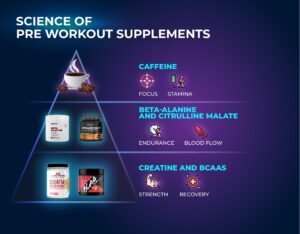
Most pre workouts mix the same handful of ingredients, and the evidence behind them varies a lot.
Caffeine
- Blocks adenosine receptors in the brain, raising alertness and lowering how hard an effort feels. This, not the older “fat burning and glycogen sparing” theory, is considered its main mechanism.
- Improves endurance across a large body of studies. In time trials the gains are usually a few percent, which still matters over a race.
- Very high doses (around 9 mg/kg) bring more side effects without a clear extra benefit.
Beta-Alanine
- Raises muscle carnosine, which buffers the acid that builds up during hard efforts.
- Shows the clearest performance improvements in efforts lasting 1 to 4 minutes, such as intervals, hill repeats and a fast finish; far less on steady runs.
- Works by loading, not timing: studies use about 4-6 g a day for at least 2-4 weeks. It often causes a harmless tingling, which smaller split doses reduce.
Creatine
- Regenerates phosphocreatine, the fuel for very short, maximal bursts, so it suits sprints, strides and repeated intervals rather than steady distance running.
- Also works by saturating the muscles over time (commonly 3-5 g a day), so timing around a run matters little.
- Often adds a little water weight, which some distance runners would rather avoid. If you use it, see creatine HCl vs monohydrate.
Citrulline Malate
- Converted to arginine, which the body uses to make nitric oxide, a molecule that widens blood vessels. Studies commonly use about 6-8 g, roughly an hour before exercise.
- Results are mixed and come mostly from resistance training; evidence for running is limited. More in our citrulline malate guide.
Branched-Chain Amino Acids (BCAAs)
- Leucine, isoleucine and valine. The “central fatigue” theory says they compete with tryptophan for entry into the brain, lowering serotonin and fatigue, but research on BCAAs has found inconsistent effects on endurance performance.
- If you already eat enough protein, they add little for muscle protection or recovery.
| Ingredient | Most useful for | Doses used in studies | Evidence for running |
|---|---|---|---|
| Caffeine | Endurance, races, focus | 3-6 mg/kg, 30-60 min before | Strong |
| Beta-alanine | Hard efforts of 1-4 minutes | 4-6 g a day for 2-4+ weeks | Moderate, effort-specific |
| Creatine | Sprints, strides, intervals | 3-5 g a day | Good for sprints, limited for distance |
| Citrulline malate | Blood flow, possibly soreness | About 6-8 g, 1 hour before | Mixed |
| BCAAs | Long runs (in theory) | Varies widely | Weak and inconsistent |
Benefits of Pre Workout Before Running
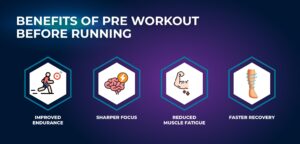
Improved Endurance
Caffeine lowers perceived effort, so the same pace feels easier for longer. It is the most consistent benefit in the research and applies to long runs, tempo work and races. Citrulline is sold for endurance too, but the running evidence is weak.
Sharper Mental Focus
Caffeine keeps you alert to pacing, form and breathing late in long or monotonous runs. The same claim for BCAAs has not held up reliably in performance studies.
Less Fatigue in Hard Efforts
Daily beta-alanine can delay the burn in intervals, hills and a finishing kick, and creatine helps you repeat short sprints with less drop-off.
Recovery: Don’t Expect Much
Some trials found slightly less soreness with citrulline or BCAAs, but neither has been shown to meaningfully speed recovery between runs. Sleep, enough protein and carbohydrate, and a sensible training load still do that job.
Potential Risks
Caffeine Overload
Too much caffeine causes jitters, anxiety, a racing heart, stomach upset and poor sleep. Many pre workouts contain 200 mg or more per scoop, on top of any coffee you’ve had. The FDA cites 400 mg a day as an amount not generally linked to dangerous effects in healthy adults. People with heart conditions, high blood pressure or anxiety, and anyone pregnant, should ask a doctor first.
Digestive Issues
Running jostles the gut. Sugar alcohols, some sweeteners and too much liquid can mean bloating, cramps or an urgent stop. Leave 30-60 minutes before the run and test any new product on an easy run first.
Hydration
At moderate doses, caffeine’s diuretic effect is small and does not appear to meaningfully dehydrate people who exercise. Sweat loss on long, hot runs is the bigger risk, so plan fluids and electrolytes.
Ingredient Quality and Banned Substances
Proprietary blends hide doses, and some pre workouts have been found to contain unsafe or sport-banned stimulants such as DMAA. Choose full label disclosure and, if you race in tested events, third-party certification such as Informed Sport or NSF Certified for Sport.
Formulas Built for Lifters
Many formulas are built for the gym, with high stimulant doses and pump ingredients. They suit lifting sessions (see our guide to the best pre workout for muscle gain) better than a tempo run. Runners usually do better with something simpler and lower in stimulants.
How to Take Pre-Workout Before Running
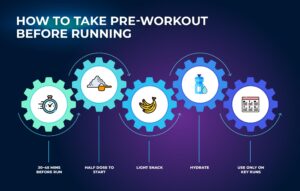
Timing
- Take it 30-60 minutes before the run, so caffeine can take effect and your stomach can settle.
- Caffeine’s effects last several hours, so late-day doses can disrupt sleep.
Dosage
- Start with half a serving if you are new to pre workout or sensitive to caffeine.
- The ISSN position stand on caffeine reports benefits at 3-6 mg per kg of body weight: about 210-420 mg for a 70 kg runner. Many people do well at the lower end. Count coffee, gels and energy drinks too.
Food and Hydration
- Pair it with a light carb snack such as a banana or toast, and avoid a heavy meal right before the run.
- Drink water with it, and add electrolytes for long or hot runs.
Frequency of Use
- Save it for long runs, key workouts and races; easy runs don’t need it.
- Never try a new product on race day. Test it in training with the same timing and breakfast.
Best Types of Pre Workouts for Different Runners
Long-Distance Runners
Moderate caffeine is the main tool, paired with carbohydrate and, on long or hot runs, electrolytes. BCAAs and pump ingredients add little; fuelling during a half or full marathon matters far more.
Sprinters and Interval Runners
Creatine and beta-alanine earn their place here, both taken daily. Add caffeine for focus on hard sessions.
Casual and Recreational Runners
A full pre workout is rarely necessary. Coffee, tea or a low-stimulant formula gives a gentle lift without jitters; stimulant-free citrulline or beetroot products have modest effects.
Natural Alternatives if You Don’t Want Supplements
Coffee or Green Tea
Coffee supplies the same caffeine as pre workouts, though the amount per cup varies a lot. Green tea gives a lighter dose. Have either 30-60 minutes before the run.
Bananas, Oats, or Honey
These carbohydrate-rich foods supply easily digested fuel. Bananas and honey act fast; oats release energy more slowly.
Beet Juice
Beetroot is rich in nitrate, which the body converts to nitric oxide. Research on beet juice and other nitrate sources suggests modest endurance gains and a lower oxygen cost of exercise, with smaller effects in highly trained athletes. Studies usually give it 2-3 hours before exercise.
Coconut Water
Coconut water provides fluid and potassium but less sodium than most people lose in sweat, so a sports drink or electrolyte mix is better for long, hot runs.
What to Consider When Buying Pre Workout
- Full label: every ingredient dosed, no proprietary blends.
- Caffeine per serving: one serving or less should keep you within the doses used in studies for your body weight.
- Gut-friendly: fewer sugar alcohols and fewer ingredients usually mean fewer stomach problems on the run.
- Third-party testing: for purity and banned substances, especially if you compete.
Enhanced Labs Maximus Stim
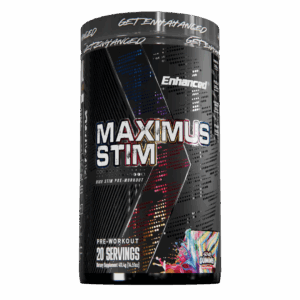
Maximus Stim is the stimulant pre workout from Enhanced Labs. Check the caffeine per serving, start with a partial serving and test it on a training run before race day. Our Enhanced Labs review covers the rest of the range.

Pros
- Catalog is specifically organized around muscle building, fat loss, testosterone support, and workout performance.
- Range includes creatine, protein, EAAs, beta-alanine, and L-citrulline alongside more specialized formulas.
- Orders of $99+ qualify for free US shipping.
Cons
- Features several strong claims around muscle growth, testosterone, fat loss, and metabolic effects that should be distinguished from independently demonstrated clinical outcomes
- Heavily oriented toward bodybuilding and performance rather than broader nutritional supplementation.
The Bottom Line
Pre workout before running can help, but mostly through one ingredient: caffeine, at a sensible dose and tested in training first.
- Caffeine at the doses used in studies has the strongest evidence for endurance and focus.
- Beta-alanine and creatine help sprint and interval work only with daily use; citrulline and BCAAs are optional at best.
- Watch total caffeine and never try a new product on race day. Coffee, beet juice and a banana are a perfectly good natural alternative.
Frequently Asked Questions
Disclaimer
Please read carefully
The information on this site is for educational and informational purposes only, and is not medical advice. Always consult a qualified healthcare professional before using any supplement or medication, or making changes to your health, fitness, or nutrition routine.
Not medical advice
Content here is not a substitute for professional medical advice.
Consult your doctor
Talk to your doctor before starting any supplement or new routine.
Use at your own risk
We are not responsible for adverse effects from acting on this.
Do your research
Make informed decisions about your own health.
No guarantees
Individual results vary. No claims about outcomes.
Important — Never disregard professional medical advice or delay seeking it because of something you read here. If you think you may have a medical emergency, call your doctor or your local emergency number right away.