
Contents10 sections
Cabergoline is a prescription dopamine agonist used to treat high prolactin (hyperprolactinemia) and prolactin-secreting pituitary tumors. In bodybuilding, it is best known as the drug some steroid users add when prolactin runs high on cycles that include trenbolone or nandrolone (Deca), or when low libido and flat mood show up during or after a cycle.
That second use is where most of the confusion lives. Low sex drive and low mood after a cycle are most often caused by suppressed natural testosterone, not prolactin. Cabergoline only fixes a prolactin problem, and only a blood test can show whether you have one. It also carries a dose-dependent risk of heart valve damage that belongs at the start of any cabergoline guide, not the end.
This guide covers how cabergoline works, what the clinical research shows, the doses used in medicine and those commonly reported by steroid users, the stacks it shows up in, its side effects, and what to know before you buy it. Nothing here is a recommendation to use it.
Key Takeaways
- Cabergoline acts like dopamine at D2 receptors in the pituitary gland, which shuts down prolactin release. It does not make the brain produce more dopamine.
- Get prolactin tested before using it. Low libido and flat mood on or after a cycle are more often caused by low testosterone, and cabergoline only helps when prolactin is actually high.
- At the high doses once used for Parkinson’s disease, cabergoline was linked to heart valve damage. Long-term users under medical care are monitored with echocardiograms.
- In a study of 455 patients with high prolactin, cabergoline brought levels back to normal in 86%, and only 3.9% stopped because of side effects.
- Medical treatment starts at 0.25 mg twice a week. Commonly reported doses on steroid cycles are 0.25-0.5 mg once or twice a week, based on user practice, not clinical trials.
What Is Cabergoline?
Cabergoline is an ergot-derived dopamine agonist, sold under brand names such as Dostinex. In the US it is approved to treat hyperprolactinemia, whether it has no clear cause or comes from a pituitary adenoma. In Europe it was also used for Parkinson’s disease, at doses many times higher than those needed for prolactin. Those high doses are where its best-known safety problem, heart valve damage, was found.
How Cabergoline Works
Prolactin is made by cells in the pituitary gland, and dopamine from the hypothalamus is the main brake on its release. Cabergoline binds to dopamine D2 receptors on those cells and copies that brake. Inside the cell, D2 activation lowers cAMP and calcium entry, and prolactin release falls.
Cabergoline acts on dopamine receptors directly; it does not make the brain produce more dopamine. It also binds to some serotonin receptors, including 5-HT2B. Activation of 5-HT2B receptors on heart valve cells is the leading explanation for the valve damage seen at high doses.
Its elimination half-life is about 63-69 hours, which is why it is taken once or twice a week rather than daily. The prolactin-lowering effect of a single dose can last a week or longer. For a quick reference, see our cabergoline compound profile.
Two Things to Check Before Using Cabergoline
1. Prolactin Bloodwork
Cabergoline treats one thing: prolactin that is too high. The only way to know that is a blood test. The symptoms people blame on prolactin, such as low libido, erectile problems, flat mood and sensitive nipples, overlap heavily with low testosterone and with estrogen that is too high or too low. Those are far more common on and after a cycle.
- Test before starting. Lab reference ranges vary, but the upper limit for men is commonly around 15-20 ng/mL.
- Re-test a mildly high result. Prolactin rises with stress, poor sleep, hard exercise, sexual activity and some medications, so a single borderline result is often repeated, ideally in the morning while rested.
- Check testosterone and estradiol in the same draw. They are the more common causes of the same symptoms.
- Re-test after starting. In medicine, the dose is adjusted on prolactin results, and no more often than every 4 weeks.
- Don’t push it too low. Prolactin far below normal has been linked to sexual problems in men, so the target is the normal range, not zero.
2. Heart Valve Risk
In the 2000s, large studies of Parkinson’s disease patients taking cabergoline, often at 3 mg a day or more, linked it to cabergoline-associated valvulopathy (CAV). The changes seen included:
- Thickening and stiffening of the valve leaflets
- Restricted valve motion
- Leaking valves (regurgitation), where blood flows backward through a valve, such as the tricuspid
The doses used for high prolactin are far lower, usually 2 mg a week or less. Most studies in prolactin patients have not found a clear rise in clinically important valve disease at these doses, though some found more mild valve changes, and the risk appears to grow with the total amount taken over time. Regulators responded by restricting its use: European rules call for an echocardiogram before long-term treatment and regular checks during it, and the drug is not to be used by anyone with existing valve disease.
How the risk is managed in medical practice:
- The lowest dose that keeps prolactin in range, for only as long as needed
- A baseline echocardiogram before long-term use
- Repeat heart scans at regular intervals, commonly every 6-12 months, during extended treatment
- Prompt checks for new shortness of breath, a persistent cough, chest pain or swelling in the legs, which can be signs of valve disease or fibrosis
Cabergoline Benefits: What the Research Shows

Lowering High Prolactin
This is the use cabergoline is approved for, and where the evidence is strongest. In a study of 455 patients with high prolactin, cabergoline brought prolactin back to normal in 86% of patients overall: 92% of those with no clear cause or a small tumor (microprolactinoma), and 77% of those with a larger tumor (macroprolactinoma). Tumor shrinkage occurred in 67% of prolactinoma cases, and vision improved in 70% of patients who had visual field problems.
These were patients with a medical prolactin disorder, not healthy lifters. The results show the drug lowers prolactin reliably. They say nothing about whether a steroid user with normal prolactin gains anything from taking it.
Libido, Fertility and Sexual Function
High prolactin suppresses the hormones that drive testosterone production and ovulation. In men, it can cause low libido, erectile problems and reduced fertility. In women, it can cause irregular or absent periods and infertility. When cabergoline brings prolactin back to normal, these problems often improve, and restoring fertility is one of its main medical uses.
Cabergoline has also been studied for sexual desire and function in men and women. That research is limited, and lowering prolactin that is already normal is not an established treatment for low libido. For most men on or after a cycle, testosterone is the more likely problem.
Mood, Motivation and Cognition
Because cabergoline acts on dopamine receptors, it is often marketed online as a mood and motivation drug. The evidence is thin. Its use as an add-on to antidepressants rests on early reports and small studies, and it is not an approved treatment for depression.
Research on cabergoline and working memory is small, and the effects tend to vary from person to person. Patients treated for high prolactin sometimes report clearer thinking once their levels come down, but there is no good evidence that cabergoline sharpens the mind of someone whose prolactin is already normal.
Metabolism and Body Weight
High prolactin is linked to weight gain and insulin resistance, and some studies in patients with prolactin disorders report improvements in weight, BMI and insulin sensitivity after cabergoline treatment. Those patients were correcting a hormone disorder. There is no good evidence that cabergoline causes fat loss in people with normal prolactin, and it is not a fat burner.
Cabergoline and PCT
Cabergoline is often listed as a PCT drug, but it does not restart natural testosterone production the way clomiphene or tamoxifen are used to. High prolactin does suppress the hormones that signal the testes, so if a blood test shows prolactin is high after a cycle, bringing it down may remove one obstacle to recovery. If prolactin is normal, cabergoline adds nothing to PCT.
It is not a gyno drug in the usual sense either. Most gynecomastia on a cycle is driven by estrogen. Prolactin may play a part, particularly alongside progestogenic steroids, but high prolactin on its own is a much less common cause.
Cabergoline Dosage and Stacks
Trenbolone and Nandrolone (19-Nor) Cycles
The most common reason bodybuilders use cabergoline is a cycle that includes trenbolone or nandrolone (Deca), usually alongside testosterone. Both are 19-nor steroids that also act on the progesterone receptor, and both are blamed for prolactin-type side effects such as low libido, erectile problems (“Deca dick”) and nipple sensitivity.
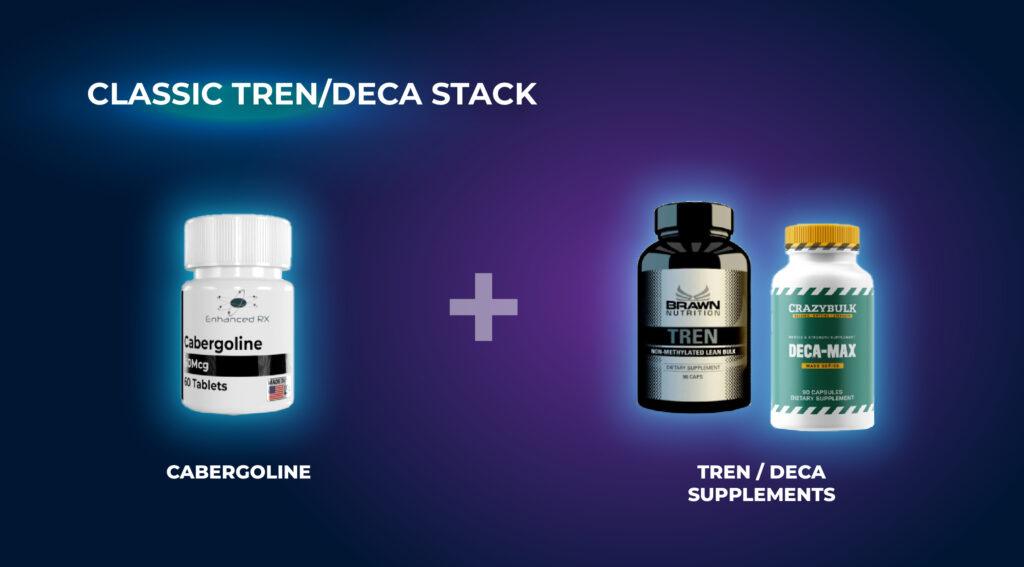
How much these steroids raise prolactin themselves is less clear than forum advice suggests. Estrogen is a well-known stimulus for prolactin release, and the testosterone in the stack (plus nandrolone, which converts to estrogen at a low rate) raises estrogen. Recent research on 19-nor steroids suggests they may not raise prolactin directly, and that estrogen from testosterone may be the bigger driver. Either way, prolactin is high in some users on these stacks and normal in others, so a blood test, not the name of the steroid, should decide whether cabergoline is used at all.
The table below sets the medical dosing for high prolactin next to what steroid users commonly report. The user figures describe practice, not clinical doses, and they are not recommendations.
| Medical use (high prolactin) | Commonly reported on steroid cycles | |
|---|---|---|
| Starting dose | 0.25 mg twice a week | 0.25 mg once or twice a week |
| Dose range | Up to 1 mg twice a week, raised no faster than every 4 weeks | 0.25-0.5 mg twice a week |
| Adjusted by | Prolactin blood tests | Prolactin blood tests and symptoms |
| Duration | Months; may be stopped once prolactin has been normal for 6 months, with follow-up tests | During the cycle and for 2-4 weeks after |
| Heart monitoring | Echocardiogram before and during long-term treatment (European guidance) | The same valve risk applies |
Users who report running it this way also describe re-checking prolactin every 4-6 weeks, adjusting the dose on bloodwork rather than on symptoms alone, and taking it with food to limit nausea.
Growth Hormone Peptides
Some growth hormone releasing peptides, notably GHRP-6 and hexarelin, can raise prolactin and cortisol slightly as a side effect. Online protocols often add cabergoline to these peptides as a precaution. There is no good evidence that this is needed or that it changes results, and taking a drug with a heart valve warning “just in case” is a poor trade. If prolactin is a concern on a peptide, a blood test answers it.
Stacks Without Evidence
Other cabergoline stacks found online, such as cabergoline with L-tyrosine and B vitamins for “dopamine support,” or weekly cabergoline as a metabolic or fat-loss stack, have no supporting research. We have left them out.
Cabergoline Side Effects and Risks
Common Side Effects
Most patients treated for high prolactin tolerate cabergoline well. Side effects are most likely in the first weeks and after a dose increase:
- Nausea or upset stomach, especially when taken without food
- Headache
- Dizziness or light-headedness, particularly when standing up quickly
- Tiredness, weakness and constipation
- Low blood pressure, especially early in treatment
Taking it with food or at bedtime is the usual way to reduce nausea and dizziness. In the 455-patient study above, only 3.9% of patients stopped treatment because of side effects.
Fibrosis
Like other ergot-derived drugs, cabergoline has been linked to fibrosis, a build-up of scar-like tissue, in the lining of the lungs, around the heart and at the back of the abdomen. Shortness of breath, a persistent cough, chest pain or swelling in the legs need a doctor’s attention promptly.
Impulse Control and Psychiatric Effects
Dopamine agonists, cabergoline included, can cause impulse control disorders. These have been reported in people taking cabergoline for prolactin disorders, not only at Parkinson’s doses. They include:
- Compulsive gambling, shopping or binge eating
- Hypersexuality and other risky or unusual behavior
- Sudden changes in mood, personality or spending habits
People often don’t notice these changes in themselves, so a partner or family member may be the first to spot them. They usually ease when the dose is lowered or the drug is stopped under a doctor’s care. Cabergoline is also used with caution in people with a history of psychosis.
Interactions and Who Should Avoid It

- Heart valve disease or fibrosis: Cabergoline should not be used by people with valve disease or a history of fibrosis in the lungs, heart lining or abdomen.
- Uncontrolled high blood pressure or an allergy to ergot drugs: Both rule it out.
- Dopamine-blocking drugs: Antipsychotics and metoclopramide work against cabergoline and should not be combined with it. Other dopamine drugs should not be added without medical advice.
- Blood pressure medication: The effects on blood pressure can add up, so a doctor should be involved.
- Liver disease: Cabergoline is cleared mainly by the liver, so severe liver problems call for caution.
- Pregnancy and breastfeeding: Women using it to restore fertility do so under medical supervision, usually stopping once pregnancy is confirmed. It suppresses milk production, so it is not used while breastfeeding.
Buying Cabergoline: What to Know
Cabergoline is a prescription medicine in the US, the UK, the EU and most other countries. The safest route is a doctor who can confirm high prolactin with a blood test, prescribe a pharmacy product and arrange heart checks if treatment runs long.
Outside that route, cabergoline is widely sold online as tablets, capsules and liquids. These are not regulated pharmacy products, so dose accuracy and purity depend on the seller. If you buy outside a pharmacy, look for:
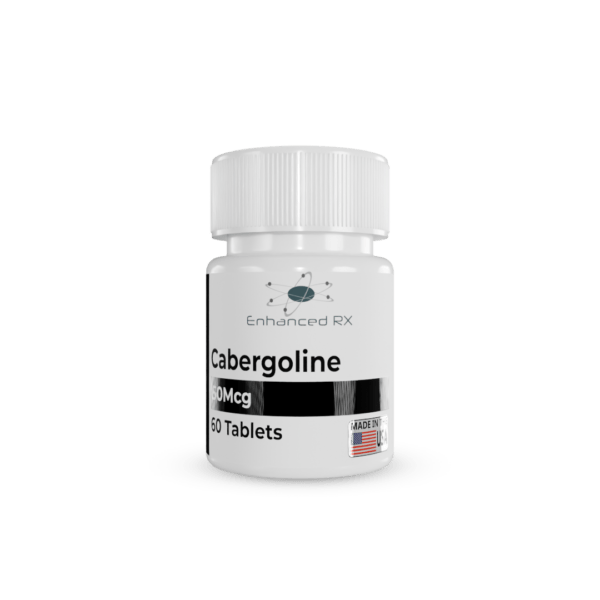
- A clear dose per tablet, capsule or millilitre on the label
- A recent certificate of analysis tied to the batch you receive
- A seller with a track record and clear contact details
Be wary of unknown sites, products with no batch information and prices far below the market. A certificate of analysis does not make a product safe to use, and it does not remove any of the risks covered above. Pumping Iron, which we have featured before as a cabergoline source, is listed below.

Pros
- Damaged, missing, or incorrect products can qualify for free reshipment when photographic evidence is provided promptly.
- Orders are provided with tracking information, making shipments easier to monitor.
- Loyalty program exists for repeat and long-term customers.
Cons
- 10–15-business-day timeframe is slower than some competing suppliers.
- Lost or stolen packages generally aren't eligible for reshipment; the company offers a 30% discount instead.
- Refunds aren't provided simply because a research product doesn't produce the expected results, and approved refunds can incur a $25 fee.
The Bottom Line
Cabergoline is an effective, well-studied drug for high prolactin, but it treats a measured problem. It is not a routine cycle add-on or a dopamine booster.
- It brings high prolactin back to normal in most patients, which can restore libido and fertility. When prolactin is already normal, there is little evidence it helps mood, focus, fat loss or PCT.
- Test prolactin, testosterone and estradiol before using it. Low testosterone, not prolactin, is the usual cause of low libido and flat mood on and after a cycle.
- Its heart valve risk is dose-dependent and real. Long-term use calls for medical supervision and echocardiograms, and stacking it “just in case” with steroids or peptides is a poor trade.
Frequently Asked Questions
Disclaimer
Please read carefully
The information on this site is for educational and informational purposes only, and is not medical advice. Always consult a qualified healthcare professional before using any supplement or medication, or making changes to your health, fitness, or nutrition routine.
Not medical advice
Content here is not a substitute for professional medical advice.
Consult your doctor
Talk to your doctor before starting any supplement or new routine.
Use at your own risk
We are not responsible for adverse effects from acting on this.
Do your research
Make informed decisions about your own health.
No guarantees
Individual results vary. No claims about outcomes.
Important — Never disregard professional medical advice or delay seeking it because of something you read here. If you think you may have a medical emergency, call your doctor or your local emergency number right away.