Contents15 sections
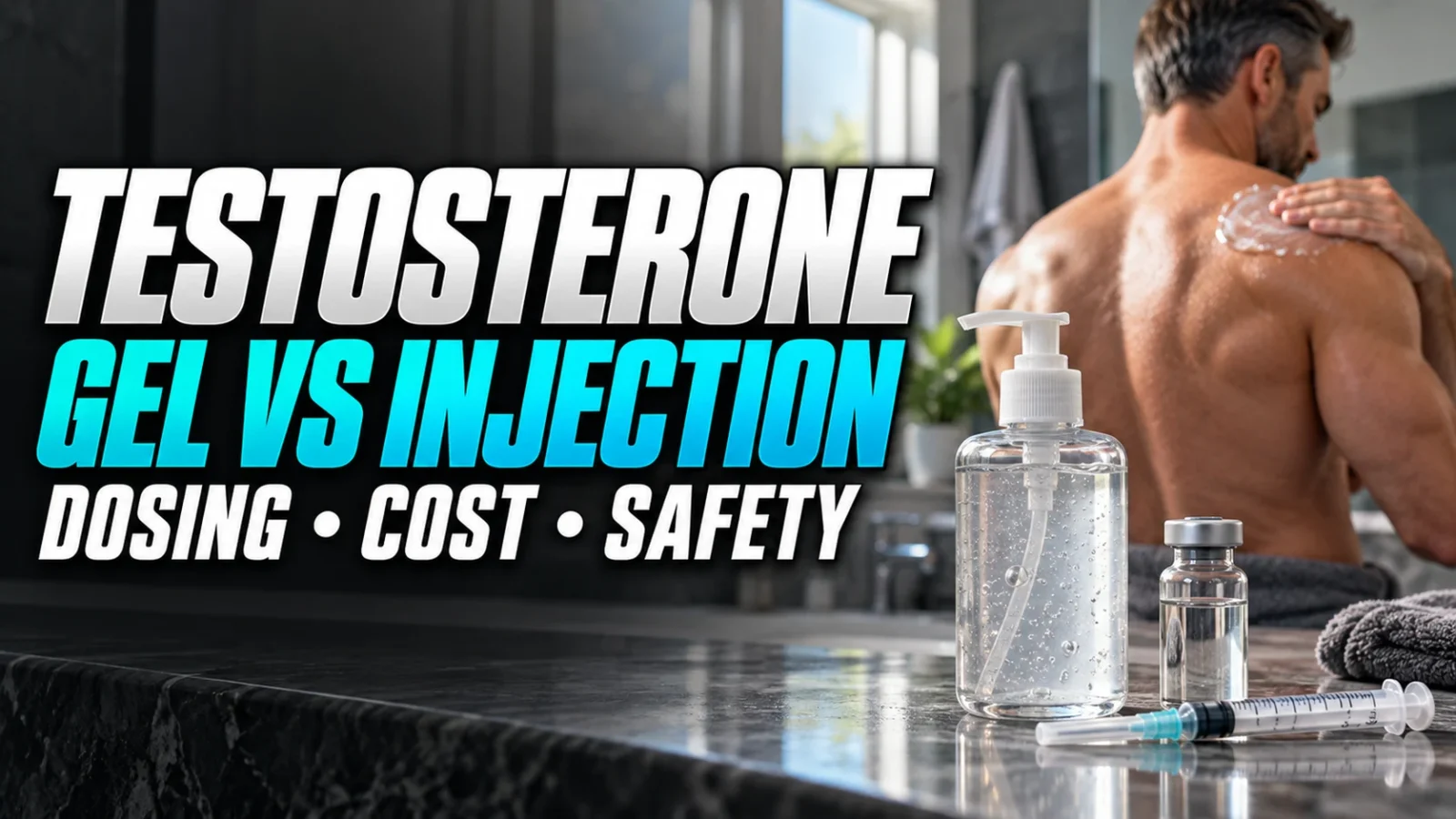
Testosterone gel and testosterone injections are the two most common forms of testosterone replacement therapy (TRT). Both can bring low testosterone back into the normal range and relieve the symptoms of deficiency. Where they differ is how steady your levels are, how often you dose, what they cost and which side effects are most likely.
Gels are rubbed into the skin every day and give fairly stable levels, but they can rub off on partners and children and usually cost more. Injections are given weekly to every two weeks (or about every 10 weeks for long-acting testosterone undecanoate), are usually the cheapest option, and raise red blood cell counts more often.
This guide compares the two on dosing, results, side effects, heart safety (including what the large TRAVERSE trial found) and cost, so you can have an informed conversation with your doctor about which form suits you.
Key Takeaways
- Gels and injections both restore testosterone and improve symptoms such as low libido. Neither is better for everyone; the right choice depends on cost, routine and side effect risks.
- Gels give steadier day-to-day levels and wear off within days of stopping, but they must be applied daily and can transfer to women and children through skin contact.
- Generic cypionate and enanthate injections are usually the cheapest form of TRT, but they cause peaks and troughs and raise hematocrit (red blood cells) more often than gels.
- In the TRAVERSE trial of 5,246 men with hypogonadism and heart risk, testosterone gel did not increase heart attacks or strokes compared with placebo. Atrial fibrillation, kidney injury and lung clots were more common.
- Both gels and injections suppress sperm production. Nasal testosterone may affect fertility hormones less, but the evidence comes from small studies.
Testosterone Gel vs Injection at a Glance
| Feature | Testosterone Gel | Testosterone Injections |
|---|---|---|
| How it is taken | Rubbed into the skin once a day | Into a muscle or under the skin, weekly to every 2 weeks; long-acting undecanoate about every 10 weeks |
| Testosterone levels | Fairly steady, loosely following the body’s daily rhythm | Peak after each injection, then fall; swings are bigger with longer intervals |
| Main drawbacks | Transfer to others by skin contact, daily routine, variable absorption, skin irritation | Needles, peaks and troughs, more frequent rise in red blood cells |
| Cost | Higher, especially brand-name products | Lowest with generic cypionate or enanthate |
| Stopping | Levels fall within a few days | Levels take weeks to fall (months with undecanoate) |
| Fertility | Suppresses sperm production | Suppresses sperm production |
Who Needs TRT?
Testosterone is the main male sex hormone. It is essential for male sexual development and helps maintain muscle, bone, red blood cell production, libido and mood. Each lab sets its own reference range; the harmonized range for healthy, non-obese men aged 19 to 39 is about 264 to 916 ng/dL. Levels fall gradually with age, by roughly 1-2% a year from the 30s onward, and faster with obesity and chronic illness. Our guide to average testosterone levels by age has the figures.
The FDA approves testosterone for men with hypogonadism: low testosterone caused by a problem in the testes (primary hypogonadism) or in the pituitary gland or hypothalamus (secondary hypogonadism). Hypogonadism from an identifiable cause is the universally accepted reason to treat. In 2015 the FDA stated that testosterone is not approved for low testosterone due to aging alone.
The American Urological Association guideline uses a total testosterone below 300 ng/dL as a reasonable cut-off, measured on at least two separate early-morning blood tests and combined with symptoms. One low result is not enough, because levels vary from day to day.
Signs of Low Testosterone
- Low libido and sexual desire
- Erectile dysfunction
- Depressed mood and a reduced sense of well-being
- Reduced muscle mass and strength
- Reduced bone mass and osteoporosis
- Mild anemia
- Poor sleep, poor concentration and forgetfulness
If your results come back low, a doctor should look for the cause, such as a pituitary problem, medications, obesity or sleep apnea, before starting TRT. They should also ask whether you want children, because testosterone therapy lowers sperm production.
Testosterone Injections
Intramuscular injections of testosterone esters have been used to treat hypogonadism for decades. The ester attached to the testosterone molecule controls how quickly it is released from the oil depot, and so how often you need an injection.
Testosterone Enanthate
Testosterone enanthate has been one of the most common forms of testosterone treatment since its introduction in the early 1950s. It has a terminal half-life of about 4.5 days, and after a single 250 mg injection levels peak within about 10 hours.
Older pharmacokinetic work found that 200-250 mg every 2-3 weeks kept average levels in range, but at that interval levels run high in the first days and low before the next injection. Current guidelines favor smaller, more frequent doses, such as 75-100 mg weekly or 150-200 mg every 2 weeks. A weekly under-the-skin enanthate autoinjector (Xyosted) is also FDA-approved.
Testosterone Cypionate
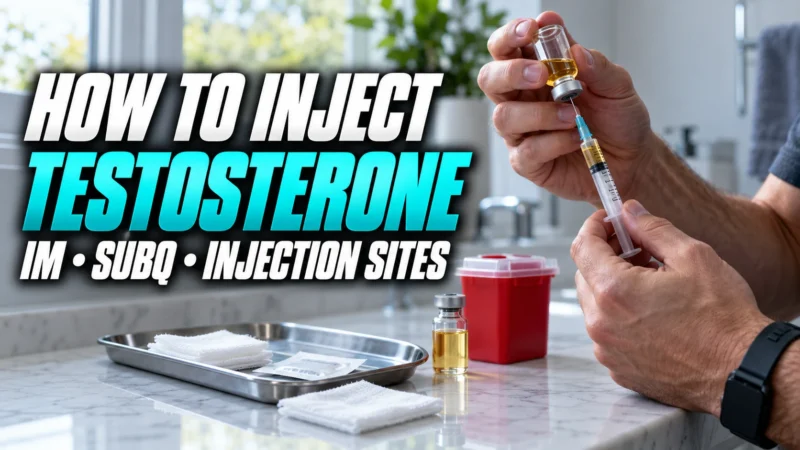
Testosterone cypionate, the most widely used injection in the US, behaves almost the same as enanthate and offers no real advantage over it. Doses and intervals are the same. Our guide on how to inject testosterone covers technique and injection sites.
Testosterone Propionate
Testosterone propionate has a terminal half-life of only about 19 hours, so it needs an injection every 2-3 days. Even then, levels dip below the normal range between doses, which makes it unsuitable for long-term treatment of hypogonadism.
Long-Acting Testosterone Undecanoate
Testosterone undecanoate in castor oil has a much longer half-life, about 34 days, which allows injections roughly every 10 weeks or more. It is given as a slow, deep injection into the buttock muscle in a clinic.
- In the US (Aveed, 750 mg): one injection at the start, another 4 weeks later, then one every 10 weeks.
- Outside the US (Nebido, 1,000 mg): one injection at the start, another 6 weeks later, then one every 10-14 weeks.
The interval is fine-tuned from a blood test taken just before the next injection: levels that are too high lead to a longer interval, levels that are too low to a shorter one.
Pros:
- Relatively stable levels within the normal range
- The least frequent dosing of any injection
- In the large IPASS observational study, injectable undecanoate was effective and well tolerated, with improvements in sexual function and waist size
Cons:
- A long wash-out period if side effects appear
- Higher cost than other injections
- A risk of pulmonary oil microembolism (POME) and anaphylaxis
- It must be given in a clinic, and in the US patients are observed for 30 minutes afterwards
Pros and Cons of Injections Overall
The main advantages of cypionate and enanthate are that they reliably raise testosterone, they are cheap, and there is no daily routine. The main drawbacks are the needle itself and the swings in levels. Many men notice energy, mood and libido rising after an injection and fading before the next one, and these swings are larger when the interval is longer.
Erythrocytosis
Erythrocytosis, a rise in hematocrit (the share of the blood made up of red cells), is the most common lab side effect of TRT. It is more frequent with ester injections, especially in older men, and appears earlier than with gels or patches. Thicker blood is a concern for clots, so the Endocrine Society advises checking hematocrit before starting and pausing treatment if it rises above 54%.
Pulmonary Oil Microembolism (POME)
Oil-based injections carry a small risk of POME: a brief coughing fit, urge to cough or shortness of breath immediately after the injection. It has been reported after testosterone enanthate in castor oil and, less often, after testosterone undecanoate.
The FDA required a special warning about POME and anaphylaxis when it approved intramuscular testosterone undecanoate (Aveed). Because Aveed contains 750 mg rather than the 1,000 mg in Nebido, it is given at slightly shorter intervals of about 10 weeks.
Monitoring on Injections
- Enanthate or cypionate: testosterone is measured midway between injections. If it is above 700 ng/dL (24.5 nmol/L) or below 400 ng/dL (14.1 nmol/L), the dose or frequency is adjusted.
- Undecanoate: testosterone is measured just before each injection, and the interval is adjusted to keep it in the mid-normal range.
Transdermal Testosterone Gel
Testosterone gels contain 1-2% testosterone in an alcohol base. You spread a measured dose over a large area of skin once a day. The testosterone soaks into the skin, which then releases it into the blood over the following hours.
Where and When to Apply Testosterone Gel
Most gels are applied in the morning to clean, dry skin on the shoulders and upper arms; some 1% gels can also go on the abdomen, and a few products are applied to the thighs, so follow the label for your product. Let the gel dry for a few minutes before dressing and wash your hands straight after. Each label says how long to wait before showering or swimming, typically 2 to 6 hours.
Advantages of Testosterone Gel
- Stable levels: gels give relatively steady testosterone levels, and morning use loosely mimics the body’s natural daily rise and fall.
- Quick to stop: because each dose lasts about a day, the effect wears off within a few days if a side effect appears.
- No needles: nothing to inject and no clinic visits for doses.
These advantages are why some specialists prefer gels when starting therapy, for older men, and for men who had symptom swings on injections.
What the Gel Trials Showed
Most large placebo-controlled TRT trials used gel, so much of what is known about the benefits of TRT comes from gel studies.
- Lean body mass: in a 3-year trial by Storer and colleagues in men over 60 with low or low-normal testosterone, 7.5 g of 1% gel daily increased lean body mass and modestly improved muscle strength and stair-climbing power.
- Bone density: in the T Trials, a year of 1% gel (starting at 5 g a day) in men 65 and older with testosterone below 275 ng/dL significantly increased volumetric bone mineral density. Higher density did not translate into fewer fractures, though: in a TRAVERSE sub-study, fractures were somewhat more common with testosterone than with placebo.
- Sexual activity: in older men with low libido in the T Trials, a year of gel improved 10 of 12 measures of sexual activity on the Psychosexual Daily Questionnaire.
These benefits come from restoring testosterone to normal, not from the gel itself. Injections that keep levels in the same range are expected to have similar effects, and both forms improve sexual function.
Disadvantages of Testosterone Gel
Absorption varies. In some men, gel never brings testosterone into the normal range. Men with a high BMI often need higher doses, because body fat seems to change how well the skin absorbs it.
It can transfer to others. Skin contact after applying the gel can pass testosterone to partners and children and cause virilization in women and early puberty signs in children. After reports of such cases, the FDA required a boxed warning on testosterone gels in 2009. To lower the risk:
- Wash your hands thoroughly with soap and water after applying the gel.
- Cover the application site with clothing once the gel is dry.
- Wash the site first if skin-to-skin contact with someone else is expected.
Other drawbacks are the daily routine, occasional skin irritation, and a higher cost than generic injections.
Monitoring on Gel
Gel levels can vary from day to day in a way that is hard to predict, so two measurements are usually taken before changing the dose. Levels are typically first checked within the first few weeks, aiming for the mid-normal range. As with any TRT, monitoring is then repeated at about 3, 6 and 12 months after starting and yearly after that, including hematocrit.
Nasal Testosterone Gel
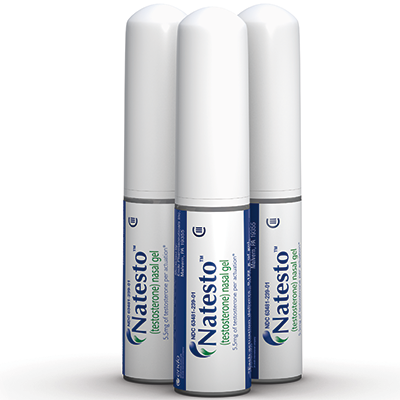
A 4.5% nasal testosterone gel (Natesto), approved by the FDA in 2014, offers a needle-free route without the skin-transfer risk of topical gels. It is pumped into each nostril three times a day.
Its drawbacks are the three-times-daily dosing, nasal side effects such as a runny nose or nosebleeds, unsuitability for men with nasal or sinus problems, and much less long-term data than gels or injections.
Because each dose wears off within hours, testosterone falls back toward baseline between doses. This is thought to interfere less with the pituitary signals (LH and FSH) that drive sperm production. In a small open-label study, most men on nasal testosterone kept LH, FSH and semen parameters in the normal range. It may become an option for men on TRT who want to preserve fertility, but larger trials are needed.
Fertility: Gel Does Not Protect It
Gels and injections both suppress sperm production. Testosterone from outside the body tells the pituitary to cut LH and FSH, and the testes respond by making less of their own testosterone and fewer sperm. Choosing a gel instead of injections does not avoid this. Men who want children soon usually discuss options such as hCG or clomiphene with their doctor; see how to increase sperm count while on TRT.
Testosterone Gel vs Injection Dosage
The table shows label and guideline starting doses for men with diagnosed hypogonadism. They are not advice: your prescriber sets and adjusts the dose based on your blood tests.
| Form | Label or Guideline Dose | How Often |
|---|---|---|
| Testosterone cypionate or enanthate injection | 75-100 mg, or 150-200 mg | Weekly, or every 2 weeks |
| Testosterone undecanoate injection (Aveed, US) | 750 mg | Start, week 4, then every 10 weeks |
| Testosterone undecanoate injection (Nebido) | 1,000 mg | Start, week 6, then every 10-14 weeks |
| Testosterone gel 1% | 50 mg testosterone (5 g gel) to start; range 50-100 mg | Once daily, in the morning |
| Testosterone gel 1.62% | 40.5 mg to start; range 20.25-81 mg | Once daily, in the morning |
| Nasal testosterone gel 4.5% | 11 mg per dose (one pump in each nostril) | Three times daily |
Heart Safety: Gel, Injections and the TRAVERSE Trial
Concern about TRT and the heart grew after several observational studies in 2013 and 2014. In 2015 the FDA added label wording about a possible increased risk of heart attack and stroke.
Some of the concern was specific to injections. A retrospective analysis of three large health databases found that men who started testosterone injections had more cardiovascular events, such as heart attack and stroke, than men who started gel. One proposed reason is the high peak after each injection, but a database study cannot rule out differences between the men who chose each form.
The TRAVERSE trial, published in the New England Journal of Medicine in 2023, was designed to settle the main question. It randomized 5,246 men aged 45 to 80 with hypogonadism and either existing heart disease or a high cardiovascular risk to daily 1.62% testosterone gel or a placebo gel, and followed them for an average of about 33 months.
- Major heart events: cardiovascular death, heart attack or stroke occurred in 7.0% of the testosterone group and 7.3% of the placebo group, so testosterone was non-inferior to placebo.
- Other risks: atrial fibrillation, acute kidney injury and pulmonary embolism (blood clots in the lungs) were more common with testosterone.
TRAVERSE has limits. It tested a gel, not injections; many men stopped treatment early; and it does not answer questions about higher-than-replacement doses. In 2025 the FDA required testosterone labels to include the TRAVERSE results and a warning that testosterone can raise blood pressure, and removed the earlier wording about a possible increased risk of heart attack and stroke.
For men with confirmed hypogonadism, the best current evidence is that properly dosed TRT does not raise the risk of heart attack or stroke over a few years. Whether injections carry more heart risk than gel has never been tested in a randomized trial. With either form, keeping levels in the normal range and checking hematocrit and blood pressure are what matter.
Cost: Which Is Cheaper?
Generic testosterone cypionate and enanthate injections are usually the cheapest form of TRT, with or without insurance, and a multi-dose vial can last weeks to months. Generic gels cost more because you use a dose every day, and brand-name gels and nasal gel cost more still. Long-acting undecanoate is expensive per injection and is given in a clinic, although you need only a handful of injections a year.
| Form | Typical Cost | Notes |
|---|---|---|
| Generic cypionate or enanthate vials | Lowest | Usually on insurance formularies; discount cards cut cash prices |
| Generic testosterone gel | Moderate | Daily use adds up over a month |
| Brand-name gels and nasal gel | High | Often need prior authorization from insurers |
| Long-acting undecanoate (Aveed) | High per injection | Given in a clinic about every 10 weeks |
Prices change often and differ between pharmacies, plans and countries, so check the current price with your pharmacy and insurer. Remember to add lab tests and visits to the total.
Prescribing Trends and Sticking With Treatment
US testosterone prescribing grew several-fold through the 2000s, and gels drove much of that growth. Prescriptions peaked around 2013 and then fell sharply after the heart-safety concerns and the FDA’s label change. Since then, cheaper generic injections have taken a larger share, and testosterone cypionate is now among the most prescribed forms in the US.
Whatever the form, many men stop TRT early. In one older US claims study of 15,952 men, 52% of men on topical testosterone and 31% on injections were still filling prescriptions after 3 months, and only 18% and 5% after a year. Another study of gels alone found that only 34.7% of men were still using them at 6 months and 15.4% at a year. In TRAVERSE, too, many men stopped the study gel before the end.
Gel or Injection: How to Choose
A gel may suit you if:
- You dislike needles or want steady levels without peaks and troughs
- You are starting TRT and want something that wears off quickly if it does not suit you
- Your hematocrit tends to run high
- You can reliably avoid skin contact with children and partners after applying it
Injections may suit you if:
- Cost matters most
- You prefer a weekly or every-other-week routine to a daily one
- You live with young children or a partner and worry about transfer
- Gel did not raise your levels enough, which is more common at a high BMI
Other options exist too, including long-acting pellets placed under the skin; see our comparison of testosterone pellets vs injections. Whatever you choose, it should come from a prescriber who confirms the diagnosis with repeat morning blood tests, explains the effect on fertility and monitors you regularly. If you are considering telehealth, our review of the best online TRT clinics compares how the main providers handle labs and follow-up.

Pros
- LegitScript-certified telehealth provider that uses licensed U.S. pharmacies.
- Licensed providers review every intake, and TRT plans include quarterly bloodwork.
- Direct-pay pricing with the consultation and shipping included and no membership fees.
- Fully remote, with no clinic visits and treatments shipped to your door.
Cons
- Serves U.S. patients only.
- Some treatments are compounded and have not been evaluated by the FDA for safety or effectiveness.
The Bottom Line
Neither gel nor injection is better for everyone: both restore testosterone, and the right choice comes down to cost, routine, side effect risks and who you live with.
- Gels give steadier daily levels and are easy to stop, but they cost more, need daily use and can transfer to partners and children.
- Generic injections are the cheapest and least frequent option for most men, but they cause bigger peaks and troughs and raise red blood cell counts more often.
- TRAVERSE found no rise in heart attacks or strokes with testosterone gel in men with confirmed hypogonadism, though atrial fibrillation, kidney injury and lung clots were more common. Injections have not been tested in a trial like it.
Frequently Asked Questions
Disclaimer
Please read carefully
The information on this site is for educational and informational purposes only, and is not medical advice. Always consult a qualified healthcare professional before using any supplement or medication, or making changes to your health, fitness, or nutrition routine.
Not medical advice
Content here is not a substitute for professional medical advice.
Consult your doctor
Talk to your doctor before starting any supplement or new routine.
Use at your own risk
We are not responsible for adverse effects from acting on this.
Do your research
Make informed decisions about your own health.
No guarantees
Individual results vary. No claims about outcomes.
Important — Never disregard professional medical advice or delay seeking it because of something you read here. If you think you may have a medical emergency, call your doctor or your local emergency number right away.