Contents11 sections
Testosterone pellets and testosterone injections are two of the most common ways to deliver testosterone replacement therapy (TRT) to men with diagnosed low testosterone. Pellets are small implants placed under the skin every three to six months. Injections go into a muscle or under the skin, usually every one to two weeks, or about every ten weeks with the long-acting undecanoate form.
Both work. They differ in how steady your testosterone levels stay, how often you need a clinic visit, which side effects are more likely and what they cost. This guide compares them on each point using the clinical research and current treatment guidelines, so you can make the choice with your doctor. For the wider trade-offs of treatment itself, see our guide to the pros and cons of TRT.
Key Takeaways
- Pellets and injections both bring testosterone into the normal range. Pellets are implanted every three to six months; cypionate and enanthate injections are usually given every one to two weeks.
- Pellets give steadier levels with no self-injection, but each insertion is a minor procedure. In a review of 973 implantations, about 11% caused local problems such as pellet extrusion, bleeding or infection.
- Generic injectable testosterone is usually the cheapest form of TRT. Pellets often cost several hundred to over a thousand dollars per insertion, two to four times a year.
- Injections cause bigger peaks and troughs and raise red blood cell counts (erythrocytosis) more often than gels or pellets, so hematocrit needs regular checks.
- In the TRAVERSE trial of 5,246 men at high heart risk, testosterone gel did not increase heart attacks or strokes compared with placebo. No trial of that size has tested pellets or injections.
Testosterone and Low Testosterone
Testosterone is the main male sex hormone. It is needed for male sexual development and for maintaining muscle, bone, sex drive and red blood cell production. [9]
In young, healthy men (20 to 30 years old), the hypothalamic-pituitary-gonadal (HPG) axis keeps serum testosterone roughly within 300 to 800 ng/dL, although each lab sets its own reference range. [9] After the third decade of life, levels decline gradually, at roughly 1-2% per year, and the rate varies with body fat and chronic illness. [9]
When Is Testosterone Therapy Considered?
Male hypogonadism is the clinical syndrome that results when the testes do not produce enough testosterone, sperm or both. [3]
A diagnosis needs both symptoms and blood work. The American Urological Association (AUA) guideline on testosterone deficiency, published in 2018, uses a total testosterone below 300 ng/dL as a reasonable cut-off to support the diagnosis. [9] The level should be low on two separate early-morning tests, and the man should have symptoms or signs of deficiency. The Endocrine Society guideline takes the same approach: consistent symptoms plus clearly low testosterone. [3] A low number on its own, or symptoms on their own, are not enough.
Common symptoms and signs of low testosterone include:
- Anemia
- Depressed mood
- Erectile dysfunction
- Decreased libido and sexual function
- Reduced muscle mass and strength
- Reduced bone mass and osteoporosis
- Poor sleep, low energy and weight gain
- Forgetfulness, difficulty concentrating and memory problems

Pellets vs Injections at a Glance
Several testosterone formulations are FDA-approved for the treatment of hypogonadism, including injectables, transdermal gels and implantable subdermal pellets. [1] Patches, a nasal gel and oral testosterone undecanoate capsules are also available. Our testosterone gel vs injection comparison covers the most common non-injected option.
| Testosterone Pellets | Cypionate or Enanthate Injections | Testosterone Undecanoate Injection | |
|---|---|---|---|
| How it is given | Implanted under the skin in a short office procedure | Into a muscle or under the skin, often at home | Slow deep injection into the buttock, in a clinic |
| How often | Every 3-6 months | Usually every 1-2 weeks | Every 10 weeks after a loading dose (US); 10-14 weeks for the 1,000mg form |
| Testosterone levels | Early peak, then steady for months with a slow decline | Peak after each shot and trough before the next; smaller with weekly doses | Relatively stable |
| Changing the dose | Hard: cannot be lowered once implanted | Easy: dose and interval can change at any time | Slow: long wash-out period |
| Specific risks | Extrusion, bleeding or infection at the site | Erythrocytosis; swings in energy, mood and libido | Pulmonary oil microembolism (POME) and anaphylaxis |
| Typical US cash cost | Several hundred to over $1,000 per insertion | Usually the cheapest form of TRT | Expensive brand-name drug |
Testosterone Pellets
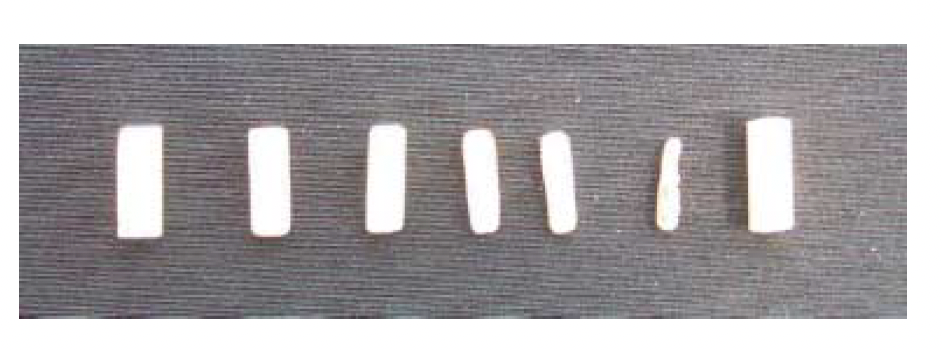
Testosterone pellets were among the first forms of testosterone therapy, dating back to the late 1930s. [4] They are small cylinders of crystalline testosterone, made by high-temperature moulding, that dissolve slowly in the fat under the skin. [4]
In the US, the FDA-approved pellet is Testopel, supplied as 75mg pellets. Some clinics use compounded pellets instead; these are made by compounding pharmacies and are not FDA-approved. Much of the detailed pellet research used 100mg and 200mg implants, 6 or 12mm long with a common diameter of 4.5mm. [4]
How Pellets Release Testosterone
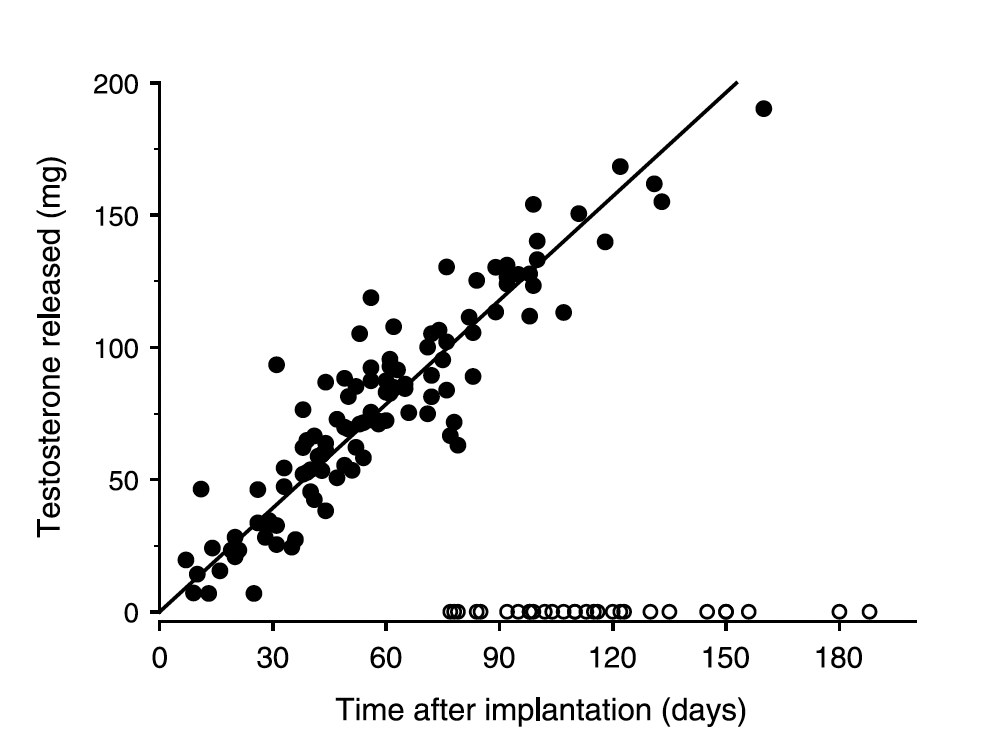
With three to six implants, serum testosterone stays in the normal range and declines slowly over four to six months. [4] There is an initial burst release, however, and levels can run above the normal range, to about 50 nmol/L (roughly 1,440 ng/dL), in the first weeks. [4] After that early peak, levels decline steadily and eventually fall back into the low range. [5] The overall terminal half-life is about 71 days. [4]
Each 200mg pellet releases about 1.3mg of testosterone per day. The standard dose in that research, four 200mg pellets, releases an estimated 5.2mg a day, close to the 5-7mg a day that healthy men produce naturally. Assuming constant release until the pellets dissolve, four pellets should last about 154 days. [6]
In practice, levels stay fairly stable from day to day for months and return to pretreatment levels between four and seven months after implantation, depending on the dose. [6] Three 200mg or six 100mg pellets usually last up to six months. [5] The Testopel label suggests 150 to 450mg (two to six 75mg pellets) every three to six months; many urologists implant more and adjust the number to the patient’s blood levels.
How Pellets Are Implanted
Insertion is a 10- to 15-minute procedure in the office, repeated every three to six months depending on follow-up blood tests. [2] After a local anesthetic, the clinician makes a small incision and uses a trocar to tunnel the pellets into the fat under the skin, usually of the hip, upper buttock or lower abdomen. [4] The pellets are fully biodegradable and do not need to be removed. [4]
Pros of Pellets
- No self-injections and no daily gels. [2]
- Steadier levels: the extended release reduces the “up and down” feelings many men report with intramuscular injections. [2]
- Lower risk of erythrocytosis than injections. [1]
- No risk of passing testosterone to a partner or child through skin contact, as can happen with gels.
Cons of Pellets
- Each insertion is a minor surgical procedure, so you need regular office visits. [5]
- Pain, irritation and bruising at the insertion site.
- Pellets can work their way out (extrusion), often with local inflammation. [6] In a review of 973 implantations in 221 men, about 11% caused local problems such as extrusion, bleeding or inflammation and infection. [4]
- Once implanted, the dose cannot be lowered quickly if side effects appear.
- Usually more expensive than injections.
Monitoring and Re-implantation
The Endocrine Society guideline advises measuring testosterone at the end of the dosing interval, just before the next insertion, and adjusting the number of pellets or the interval to keep levels in the normal range. [3]
Patients are usually asked to get in touch as soon as their familiar low-testosterone symptoms return, so the next implantation can be booked. [6]
Testosterone Injections
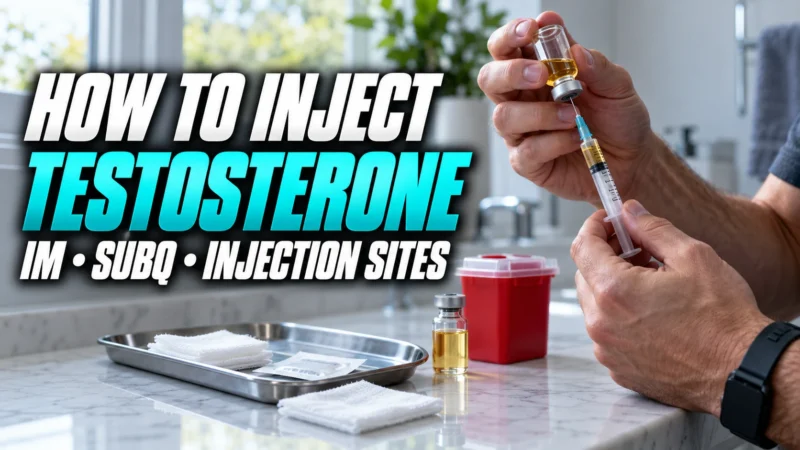
Long-acting intramuscular injections of testosterone esters, such as testosterone enanthate, testosterone cypionate and mixtures of esters, have been used to treat hypogonadism for decades. In the US, cypionate is the most widely prescribed. If you are new to injecting, our guide on how to inject testosterone covers sites, needles and technique.
Testosterone Enanthate
Testosterone enanthate has been one of the most common preparations for testosterone replacement since its introduction in the early 1950s. [7] It has a terminal half-life of about 4.5 days, and after a single 250mg injection, peak concentrations are reached after about 10 hours. [7] Multiple-dose pharmacokinetic studies put the best interval at two to three weeks for doses of 200-250mg. [7]
Today, smaller and more frequent doses are common because they reduce peaks and troughs. The Endocrine Society guideline lists 75-100mg a week or 150-200mg every two weeks for enanthate or cypionate. [3] In the US, enanthate is also sold as a weekly under-the-skin autoinjector (Xyosted).
Testosterone Cypionate
Testosterone cypionate and testosterone cyclohexanecarboxylate have pharmacokinetic properties very similar to enanthate. [7] Neither offers a clear advantage over enanthate, so the choice usually comes down to availability and price.
Testosterone Undecanoate
Injectable testosterone undecanoate in castor oil is an extra long-acting form, with a half-life of about 34 days, which allows injections roughly every 10 weeks or longer.
In the US it is sold as Aveed: 750mg, a second 750mg dose four weeks later, then 750mg every 10 weeks. [8] Outside the US, a 1,000mg form is used, with the second dose after six weeks and then injections every 10 to 14 weeks. The interval is set using a testosterone level measured just before the next injection: levels that are too high lead to a longer interval, levels that are too low to a shorter one. It is given as a slow injection into the buttock muscle, in a clinic.
Testosterone Propionate
Testosterone propionate has a terminal half-life of only about 19 hours. After a single 50mg injection, levels peak after 14 hours, so it needs frequent injections. [7] Even with injections every two to three days, levels dip below the normal range, so it is not suitable for long-term treatment of hypogonadism. [7]
Pros of Injections
- Usually the cheapest form of TRT. [10]
- Easy to adjust: the dose and interval can be changed at any time based on blood tests and symptoms.
- Effective at starting and maintaining normal male development and sexual function in men with hypogonadism.
- No daily application, and enanthate and cypionate can be injected at home.
- Testosterone undecanoate needs the fewest injections of any injectable and gives relatively stable levels. In the large international IPASS observational study, it was effective and well tolerated, with improvements in several measures of sexual function and in waist circumference.
Cons of Injections
- Enanthate and cypionate need an injection every one to two weeks.
- Peaks and troughs: testosterone levels, and with them energy, mood and libido, can rise and fall between shots. The swings are bigger with longer intervals.
- A higher risk of erythrocytosis than gels or pellets. [1]
- Testosterone undecanoate has a long wash-out period if side effects appear, costs more than the other injectables, carries a risk of POME and anaphylaxis, and must be given in a clinic with observation afterwards.
Side Effects: Pellets vs Injections
Heart Health and the TRAVERSE Trial
The best evidence on testosterone and heart risk comes from the TRAVERSE trial, published in the New England Journal of Medicine in 2023. It randomized 5,246 men aged 45 to 80 with low testosterone and existing heart disease or a high cardiovascular risk to a daily testosterone gel or a placebo gel. Testosterone did not increase major cardiac events (heart attack, stroke or cardiovascular death): 7.0% in the testosterone group vs 7.3% with placebo. Atrial fibrillation, acute kidney injury and pulmonary embolism were more common with testosterone.
TRAVERSE used a gel, so it does not directly tell us whether pellets or injections carry the same risk. Older observational data suggest the form may matter: in a large retrospective analysis of three databases, injections were associated with a greater risk of heart attack and stroke than gels. Studies of this kind cannot prove cause, because men prescribed injections may differ from men prescribed gels. No large trial has compared pellets and injections head to head on heart outcomes.
Erythrocytosis
Erythrocytosis, a rise in red blood cells and hematocrit that thickens the blood, is a common side effect of testosterone therapy, particularly with injections of testosterone esters and in older men. Injectable testosterone is associated with a significantly higher risk of erythrocytosis than gels or pellets, possibly because of higher average or peak testosterone levels, and it tends to appear sooner. [1] Guidelines advise checking hematocrit before and during treatment, and stopping therapy until it falls if it rises above 54%. [3]
Pulmonary Oil Microembolism (POME)
POME is a reaction to the oil an injection is dissolved in. It causes brief respiratory symptoms, such as cough, an urge to cough and shortness of breath, right after the injection. It is mainly linked with injectable testosterone undecanoate. Because of this risk and rare cases of anaphylaxis, the FDA approved Aveed with a boxed warning and a restricted program: it is given only in certified clinics, and patients are observed for 30 minutes after each injection. [8]
Fertility
Every form of testosterone therapy, pellets and injections alike, suppresses the pituitary hormones (LH and FSH) that drive sperm production, and can lower sperm counts sharply or to zero. Pellets cannot be stopped quickly, so men who may want children soon should discuss fertility-sparing options with their doctor before choosing either.
Monitoring on Injections
For enanthate or cypionate, the Endocrine Society guideline advises measuring testosterone midway between injections and adjusting the dose or frequency if it is above 700 ng/dL (24.5 nmol/L) or below 400 ng/dL (14.1 nmol/L). [3] For testosterone undecanoate, the level is measured just before each injection and the interval adjusted to keep testosterone in the mid-normal range. The AUA guideline aims for a total testosterone of 450 to 600 ng/dL, the middle of the normal range.
Cost of Pellets vs Injections
Pellets
Pellet therapy usually costs more. US cash prices are often around $500 to well over $1,000 per insertion, depending on how many pellets you need, the clinic, and whether it uses FDA-approved Testopel or compounded pellets. At two to four insertions a year, that adds up to roughly $1,000 to $4,000 or more a year.
Some insurance plans cover Testopel when low testosterone is properly documented, often with prior authorization; compounded pellets are rarely covered. Our guide on how to get insurance to cover TRT explains what insurers usually ask for.
Injections
In general, injections are the most affordable TRT option. [10] Generic testosterone cypionate is usually the cheapest in the US: a 10mL vial (200mg/mL) often costs well under $100 with a pharmacy discount program, and at common doses of 100-200mg a week it lasts 10 to 20 weeks. Syringes, needles, blood tests and doctor visits add to the total.
Brand-name testosterone undecanoate (Aveed) costs far more per injection than generic cypionate or enanthate and is mostly used with insurance coverage. Online TRT clinics usually charge a monthly membership instead, which costs more than generic medication alone but includes the lab work and follow-up. Prices vary by pharmacy, clinic and state and change often, so check current prices before you decide.
Which One Is Right for You?
Neither option is best for everyone. As a rough guide:
- Pellets may suit men who dislike injections, want steady levels with few appointments, have already found a stable dose and do not plan to father children soon.
- Injections may suit men who want the lowest cost, need to fine-tune their dose, are just starting therapy, or want the option to stop quickly.
- Testosterone undecanoate may suit men who want infrequent injections without a surgical procedure and have insurance that covers it.
Many men start with injections or a gel to find the dose that works, then consider pellets once their levels and side effects are stable. Whichever you choose, start with a proper diagnosis from two morning blood tests, and keep up with regular checks of testosterone, hematocrit and PSA.
Both are available through urologists, endocrinologists and many men’s health clinics, including online TRT clinics that arrange lab work locally. Choose one that tests before prescribing, explains the fertility trade-off and rechecks your blood work.

Pros
- LegitScript-certified telehealth provider that uses licensed U.S. pharmacies.
- Licensed providers review every intake, and TRT plans include quarterly bloodwork.
- Direct-pay pricing with the consultation and shipping included and no membership fees.
- Fully remote, with no clinic visits and treatments shipped to your door.
Cons
- Serves U.S. patients only.
- Some treatments are compounded and have not been evaluated by the FDA for safety or effectiveness.
The Bottom Line
Pellets trade a minor procedure every few months and a higher price for steady levels and no self-injections; injections are cheaper and easier to adjust, but cause bigger swings and more erythrocytosis.
- Pellets last three to six months and cause less erythrocytosis than injections, but each insertion is a minor procedure, about 11% of implantations in one large review had local problems, and the dose cannot be lowered once the pellets are in.
- Generic cypionate or enanthate injections are the cheapest and most adjustable form of TRT; weekly dosing reduces the peaks and troughs. Long-acting undecanoate needs a clinic visit about every 10 weeks and observation for POME.
- Every form suppresses sperm production and needs regular checks of testosterone, hematocrit and PSA. TRAVERSE found no rise in heart attacks or strokes with testosterone gel in high-risk men, but it did not test pellets or injections.
Frequently Asked Questions
Disclaimer
Please read carefully
The information on this site is for educational and informational purposes only, and is not medical advice. Always consult a qualified healthcare professional before using any supplement or medication, or making changes to your health, fitness, or nutrition routine.
Not medical advice
Content here is not a substitute for professional medical advice.
Consult your doctor
Talk to your doctor before starting any supplement or new routine.
Use at your own risk
We are not responsible for adverse effects from acting on this.
Do your research
Make informed decisions about your own health.
No guarantees
Individual results vary. No claims about outcomes.
Important — Never disregard professional medical advice or delay seeking it because of something you read here. If you think you may have a medical emergency, call your doctor or your local emergency number right away.