Contents9 sections
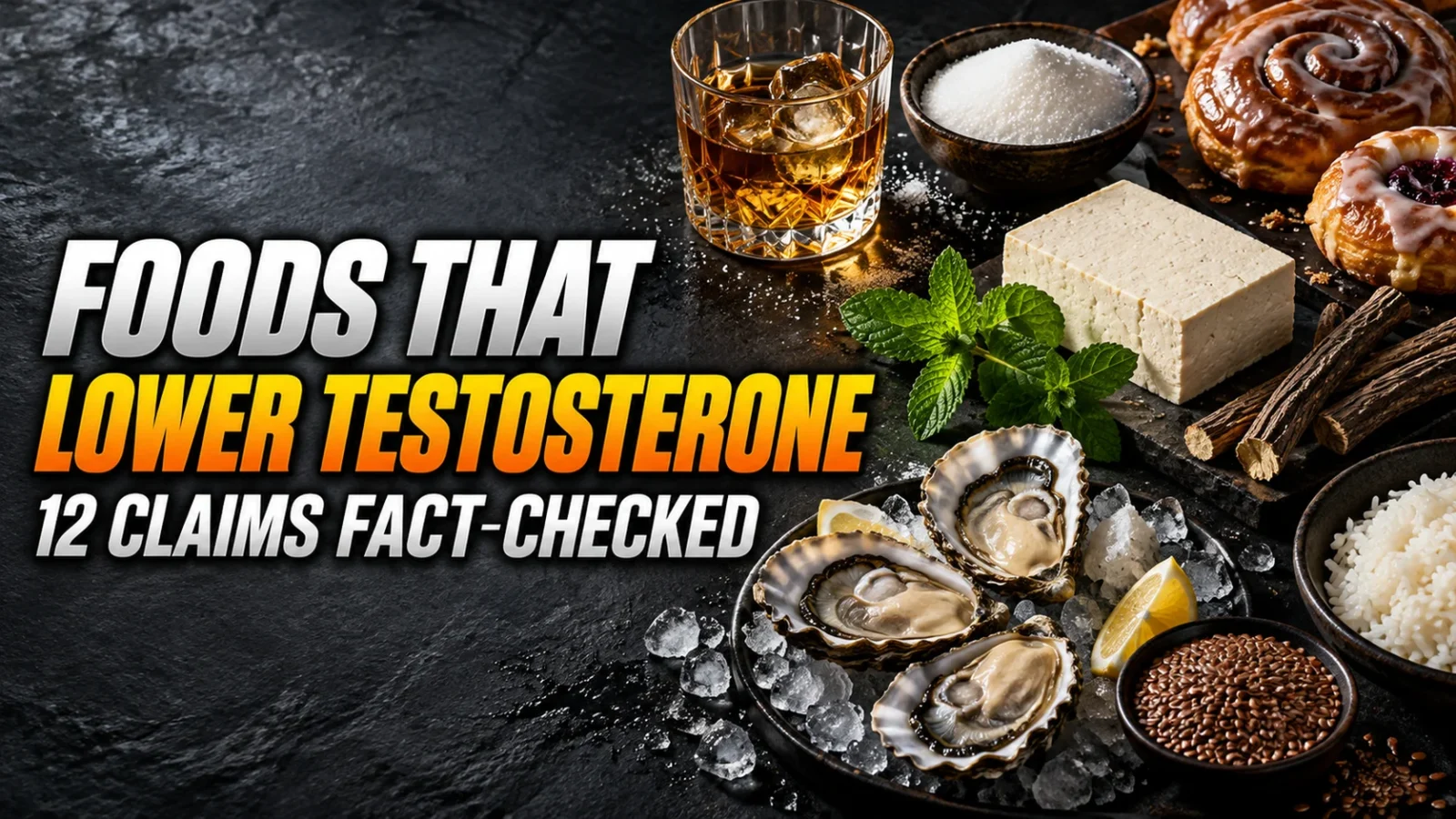
Testosterone drives muscle growth, strength, sex drive and sperm production in men, and diet is one of the few things that affect it which you control every day. That has made lists of “foods that kill testosterone” popular, but most of them mix solid human research with rat studies and guesswork.
This guide goes through 12 foods commonly blamed for lowering testosterone and sorts out the evidence: what has been shown in men, what has only been seen in animals or in small, specific groups, and what does not hold up. A few of these foods matter in large amounts. Your overall diet, body fat, drinking and sleep matter far more than any single item.
Key Takeaways
- Most foods blamed for “killing” testosterone have weak evidence. At normal intakes, soy, dairy, white rice and oysters have not been shown to lower it in healthy men.
- Meta-analyses of clinical trials in men find that soy foods, soy protein and isoflavone supplements do not change testosterone or estrogen levels.
- Heavy drinking clearly lowers testosterone. Moderate intake, around one or two standard drinks a day, has little or no effect in most studies.
- Large amounts of real licorice lowered testosterone in a small study of men taking 7 g a day. The concerns about mint and flaxseed rest mainly on animal data or small, specific groups.
- Body fat, sleep and overall diet matter most: obesity is one of the most common causes of low testosterone, and one week of 5-hour nights cut daytime testosterone by 10-15% in young men.
What Is Testosterone?

Testosterone is the main male sex hormone. In men it is made mainly in the testes, with small amounts from the adrenal glands; women make much smaller amounts in the ovaries and adrenal glands. It drives male traits such as facial hair and a deeper voice. Levels peak in adolescence and early adulthood, then decline slowly with age.
In the blood, most testosterone is bound to proteins. A large share is held tightly by sex hormone-binding globulin (SHBG), most of the rest is loosely bound to albumin, and only about 1-3% circulates free. Free testosterone plus the albumin-bound part is called bioavailable testosterone, because tissues can use it. A standard blood test measures total testosterone; free testosterone is calculated or measured when SHBG is unusually high or low. Our guide to the free testosterone range explains what the numbers mean.
In men, testosterone is responsible for:
- Sex drive and erectile function
- Muscle mass and strength
- Bone density
- Red blood cell production
- Fat distribution and metabolism
- Sperm production
Testosterone is also the raw material for most of a man’s estrogen. The aromatase enzyme converts part of it into estradiol, which men need for bone health, sex drive and sperm production. Too little estrogen causes its own problems, so the goal is balance, not zero.
Symptoms of Low Testosterone
Most labs put the normal adult male range at roughly 300 to 1,000 ng/dL, and the American Urological Association uses a total testosterone below 300 ng/dL, together with symptoms, as the threshold for low testosterone. Levels fall slowly with age, on average about 1% a year from around age 30 to 40 (see average testosterone levels by age). Common symptoms of low testosterone include:
- Low sex drive
- Erectile dysfunction and weaker orgasms
- Loss of muscle and strength, with more body fat
- Fatigue and low energy
- Low mood, irritability or poor concentration
These symptoms have many other causes, so a diagnosis needs blood tests: at least two early-morning, ideally fasting, measurements on different days. If testosterone is clearly low, a doctor or a reputable online TRT clinic can look for the cause and discuss treatment. For men in the low-normal range, the habits later in this article are where to start.
The 12 Foods at a Glance
Here is how the 12 foods compare when you look at the quality of the evidence rather than the headline. The details for each follow below.
| Food | Main evidence | Verdict |
|---|---|---|
| Soy | Meta-analyses of clinical trials in men | No effect at normal intake |
| Dairy | One small, short-term study in seven men | No good evidence at normal intake |
| Alcohol | Human studies and clinical data | Heavy drinking lowers testosterone |
| Sugar | Human glucose studies; obesity and diabetes data | Excess intake lowers it, mainly through body fat |
| Mint | Rat studies; small trials in women with high androgens | Possible effect from daily spearmint tea; no data in men |
| Licorice | Small study in seven men | Large daily amounts can lower testosterone |
| Trans fats | Observational study in young men | Linked to lower testosterone; avoid anyway |
| Vegetable oils | Mixed, mostly observational | Weak evidence |
| Flaxseed | One small study in men with prostate cancer; animal data | No proven effect at food amounts |
| White rice | No direct evidence | Not a problem by itself |
| Baked goods | Indirect: sugar, refined flour, body fat | Limit as a daily habit |
| Oysters | Rich in zinc; cadmium data mostly from animals | More likely to help than harm |
Foods Said to Lower Testosterone: What the Evidence Shows
1. Soy and Soy Products

Soy foods such as tofu, edamame, tempeh and soy milk contain isoflavones, plant compounds with a structure similar to estrogen. They bind weakly to estrogen receptors (not to testosterone receptors, as is sometimes claimed), which is where the fear that soy feminizes men comes from.
The human data do not back that up. Meta-analyses pooling dozens of clinical trials in men have found that neither soy foods, soy protein nor isoflavone supplements change total testosterone, free testosterone or estrogen levels at normal dietary intakes. The worrying stories come from a handful of case reports of men consuming extreme amounts, such as quarts of soy milk every day, whose hormone problems improved after they cut back.
Verdict: normal soy intake, including soy protein powder, is not a testosterone problem. Only extreme daily intake, far beyond a normal diet, has been linked to issues.
2. Dairy (Milk, Cheese, Yogurt)

Dairy is a good source of protein, calcium and other nutrients. The concern is that much commercial milk comes from cows that are pregnant while being milked, so it contains small amounts of natural estrogens.
The main human evidence is a small Japanese study in which seven men drank a large serving of cow’s milk. In the hours that followed, their estrogen levels rose and their testosterone fell. That was a short-term test in very few people, and it does not show that regular dairy intake keeps testosterone low.
Verdict: there is no good evidence that normal dairy intake lowers testosterone. If you tolerate dairy, moderate amounts fit a testosterone-friendly diet.
3. Alcohol

Alcohol has the strongest evidence of anything on this list, but the dose matters.
Heavy, regular drinking lowers testosterone. Alcohol is directly toxic to the testosterone-producing cells in the testes, disrupts the brain signals that tell them to make testosterone, and over time can damage the liver, which raises SHBG and estrogen. Alcohol use disorder is a well-known cause of low testosterone, testicular shrinkage and infertility. In older experiments, healthy men given about a pint of whiskey a day for a month (roughly 10 standard drinks a day) saw their testosterone fall during the drinking period. A review in the Journal of Clinical Medicine looked at this and other evidence on alcohol and testosterone.
Moderate drinking is a different story. Studies of men drinking around one to two standard drinks a day generally find small or no changes in testosterone. A standard drink in the US contains 14 g of alcohol: about 12 oz of beer, 5 oz of wine or 1.5 oz of spirits. Binges add a short-term hit on top and disrupt sleep, which matters for testosterone too.
Verdict: heavy drinking clearly lowers testosterone. If you drink, staying within the US guideline of no more than two drinks a day for men, and not drinking every day, keeps the effect small.
4. Sugar

Sugar affects testosterone mainly through body fat and blood sugar control, and the human evidence there is strong.
In the short term, a single 75-gram glucose drink, the amount used in a standard glucose tolerance test, lowered men’s testosterone significantly over the following two hours in a clinical study. That effect is temporary, but it is one reason testosterone should be tested in the morning while fasting.
The bigger issue is long-term. A diet high in added sugar makes it easier to gain fat and develop insulin resistance, and obesity and type 2 diabetes are two of the most common causes of low testosterone in men. Fat tissue converts more testosterone into estrogen, and insulin resistance lowers SHBG and dampens the hormone signals to the testes. This is largely reversible: in men with obesity, losing weight tends to raise testosterone.
Verdict: the occasional dessert is irrelevant. A diet that is consistently high in sugar and keeps you overweight is one of the most reliable ways to lower testosterone.
5. Mint (Spearmint and Peppermint)
Mint is used in tea, gum, candy and toothpaste, and is a traditional remedy for indigestion and nausea. The testosterone concern comes from two different kinds of research, and it is important to keep them apart:
- Animal data: in rat studies, drinking spearmint or peppermint tea lowered testosterone and caused changes in the testes.
- Human data: small trials in women with excess androgens (hirsutism or polycystic ovary syndrome) found that spearmint tea twice a day lowered free testosterone. This is why spearmint tea is sometimes suggested for PCOS.
There are no good studies in healthy men, and the claim that menthol blocks testosterone receptors is not supported by evidence. The amounts of mint in gum, breath mints or toothpaste are far below the amounts used in these studies.
Verdict: if you drink several cups of spearmint tea every day and are worried about testosterone, switching to another tea is an easy precaution. Normal use of mint as a flavoring is not a demonstrated problem.
6. Licorice Root

Licorice root has a long history in herbal medicine for stomach complaints and coughs, and its extract is used to flavor candy, gum, herbal teas and tobacco.
Its active compound, glycyrrhizin (glycyrrhizic acid), can affect testosterone. In a small study published in the New England Journal of Medicine, seven healthy young men took 7 grams of licorice a day, containing 0.5 grams of glycyrrhizic acid, for a week. Their testosterone dropped markedly and returned to normal within days of stopping. Glycyrrhizin appears to block an enzyme (17β-hydroxysteroid dehydrogenase) that the testes need for the final step in making testosterone. Later studies have given mixed results, so the size of the effect is uncertain.
Dose is what matters. Seven grams of real licorice every day is more than most people eat. Many licorice-flavored candies sold in the US contain anise oil and little or no real licorice, while real black licorice, licorice root supplements and some herbal teas do contain glycyrrhizin.
Testosterone is not the main risk. Glycyrrhizin makes the body hold on to sodium and lose potassium, which can raise blood pressure and cause heart rhythm problems. The FDA warns that people aged 40 and over who eat 2 ounces of black licorice a day for at least two weeks can develop an irregular heart rhythm.
Verdict: an occasional piece of licorice is fine. Daily licorice root supplements or large amounts of real black licorice are worth avoiding, for your blood pressure as much as your testosterone. Deglycyrrhizinated licorice (DGL) supplements have the glycyrrhizin removed.
7. Trans Fats
Artificial trans fats are made by partially hydrogenating liquid vegetable oils so they stay solid and keep longer, as in old-style margarine, shortening and many fried and packaged foods. They raise LDL cholesterol, lower HDL cholesterol and increase the risk of heart disease.
They have also been linked to lower testosterone. An observational study of young, healthy men published in the Asian Journal of Andrology found that men with the highest trans-fat intake had lower testosterone and smaller testicular volume than those with the lowest intake. Because it was observational, it shows an association rather than proof of cause, but it fits with other research linking trans fats to poorer sperm quality.
In the US, the FDA has removed partially hydrogenated oils from the food supply, so artificial trans fats are far less common than they used to be. They can still turn up in some imported and packaged foods, so check labels for “partially hydrogenated oil”.
Verdict: worth avoiding for your heart alone, with a possible benefit for testosterone.
8. Vegetable Oils
Oils such as soybean, corn, sunflower and canola oil are rich in polyunsaturated fats, mainly the omega-6 fat linoleic acid, and are used in most fried and ultra-processed foods.
Some research, including a study on dietary fat and testosterone, has linked higher intake of polyunsaturated fats with lower testosterone. But the evidence is mixed and mostly observational, and in large studies, replacing saturated fat with polyunsaturated fat is linked to better heart health.
What is clearer is that total fat matters. A meta-analysis of intervention studies found that men on low-fat diets had somewhat lower testosterone than men on higher-fat diets. So the answer is not to cut fat, but to get most of it from whole foods such as olive oil, avocados, nuts, eggs and fatty fish.
Verdict: weak evidence against vegetable oils themselves. The bigger issue is the fried and ultra-processed foods they usually come in.
9. Flaxseed

Flaxseed is a good source of fiber, plant omega-3 fats and lignans, plant compounds with weak estrogen-like activity. The lignans are the reason flax appears on testosterone lists. The evidence is limited:
- Human data: a small pilot study in men with prostate cancer who were awaiting surgery combined a low-fat diet with about 30 g (roughly four tablespoons) of ground flaxseed a day for about a month, and their total testosterone fell. Because the diet was also low in fat, the study cannot show how much of the drop came from the flaxseed.
- Animal data: most of the remaining evidence on flax lignans and male hormones comes from rodent studies, which do not translate directly to people.
There are no good trials showing that a normal serving of flaxseed lowers testosterone in healthy men.
Verdict: a tablespoon or two a day as food has no proven effect on testosterone. Large daily doses of flax or lignan supplements are where the uncertain risk lies.
10. White Rice
Rice is a staple for billions of people and is naturally gluten-free. It sometimes appears on testosterone lists because white rice is a refined, high-glycemic carbohydrate that raises blood sugar quickly.
There is no good evidence that rice itself lowers testosterone. Its effect depends on the rest of your diet. Eaten with protein, vegetables and some fat, in portions that match your activity, it is useful fuel for training. Problems arise when refined carbohydrates dominate the diet and contribute to fat gain and insulin resistance, as covered under sugar.
Verdict: not a testosterone problem by itself. Brown or wild rice add fiber and minerals, but white rice is fine in sensible portions.
11. Baked Goods
Cakes, cookies, pastries and donuts combine the things already covered: added sugar, refined flour and often a lot of fat from shortening or frying. They are easy to overeat and add calories without much protein, fiber or micronutrients.
Observational studies that look at whole eating patterns tend to find that diets heavy in pastries, desserts and fried or processed foods go together with lower testosterone. They cannot fully separate the food from the extra body fat that often comes with it, but either way the direction is the same.
Verdict: an occasional treat will not affect your hormones. Making baked goods a daily habit works against both your waistline and your testosterone.
12. Oysters
Oysters appear on some testosterone lists for the wrong reason. They are the richest food source of zinc, and zinc is essential for making testosterone. In a classic study, restricting zinc in young men lowered their testosterone, and correcting a marginal zinc deficiency in older men raised it.
The concern is cadmium, a heavy metal that shellfish can accumulate from polluted water. In animal studies, cadmium damages the testes and lowers testosterone. In humans the evidence on cadmium and testosterone is mixed, and for smokers, tobacco smoke is the largest source of cadmium exposure.
Verdict: for most people, oysters are more likely to help testosterone than hurt it. Buy them from reputable, regulated sources and eat them as part of a varied diet rather than in very large amounts every day.
How to Support Healthy Testosterone Levels
Avoiding a few foods matters less than getting the basics right. These are the habits with the best evidence in men.
Strength Training
Lifting weights causes a brief rise in testosterone after each session. That spike is short-lived and does not seem to drive muscle growth on its own, but regular training helps in the long run by building muscle, reducing body fat and improving insulin sensitivity, which all support healthier testosterone levels.
Compound lifts that train several large muscle groups at once give the best return for your time:
- Squats
- Deadlifts
- Lunges
- Bench press
- Pull-ups and chin-ups
- Rows

Train hard, but recover well. Very high training volumes combined with too little food and sleep can lower testosterone rather than raise it.
Lose Excess Body Fat
For overweight men, this is the most effective natural step. Excess fat increases the conversion of testosterone into estrogen and is tied to insulin resistance, and both push testosterone down. Studies of weight loss consistently show testosterone rising as the weight comes off, with the largest gains in men who lose the most.
Eat Enough of the Right Nutrients
A diet built mostly on whole foods, with enough protein, fruit, vegetables and healthy fats, covers most needs. A few nutrients matter more than others for testosterone:
- Zinc: found in oysters, red meat, shellfish and pumpkin seeds. A deficiency lowers testosterone; extra zinc does not raise it if your levels are already normal.
- Vitamin D: from sunlight, fatty fish and eggs. Low vitamin D is linked to lower testosterone, but in trials, supplements mainly help men who are deficient.
- Magnesium: found in leafy greens, nuts, seeds and whole grains.
- Enough fat and calories: very low-fat diets and long, aggressive calorie deficits both lower testosterone.
Vitamin D also matters for muscle function, and a deficiency is a known cause of muscle weakness.

Source: https://www.ncbi.nlm.nih.gov/pmc/articles/PMC6842386/
Magnesium may help most when intake is low. In a small study of sedentary men and athletes, four weeks of magnesium supplements raised testosterone in both groups, with larger rises in those who exercised. Leafy greens, nuts and seeds are the easiest food sources. If you supplement, the form of magnesium you choose affects how well it is absorbed and tolerated.

If you are considering a testosterone support supplement, get your levels checked first so you know your starting point, and choose products with clearly listed doses. Our guide to testosterone boosters covers the main options.

Pros
- Catalog is specifically organized around muscle building, fat loss, testosterone support, and workout performance.
- Range includes creatine, protein, EAAs, beta-alanine, and L-citrulline alongside more specialized formulas.
- Orders of $99+ qualify for free US shipping.
Cons
- Features several strong claims around muscle growth, testosterone, fat loss, and metabolic effects that should be distinguished from independently demonstrated clinical outcomes
- Heavily oriented toward bodybuilding and performance rather than broader nutritional supplementation.
Sleep 7-9 Hours
Testosterone rises during sleep and peaks in the morning, so short sleep cuts directly into production. In a University of Chicago study, ten healthy young men who were limited to five hours of sleep a night for one week had 10-15% lower daytime testosterone than after a week of full sleep.
Sleep apnea, which is common in overweight men, is also linked to low testosterone. Loud snoring, gasping at night and daytime sleepiness are worth raising with a doctor.
Manage Stress
Long-term stress keeps the stress hormone cortisol elevated, and high cortisol is associated with lower testosterone. Regular exercise, time outdoors, enough sleep and relaxation practices such as meditation or yoga all help bring stress down. Our guide to supplements that reduce cortisol covers the options with some evidence behind them.
The Bottom Line
Very few foods lower testosterone at the amounts people normally eat; heavy drinking, excess body fat and poor sleep matter far more than soy, dairy or any single ingredient.
- The best-supported diet risks are heavy alcohol use, a diet high in sugar and ultra-processed food that keeps you overweight, and large daily amounts of real licorice.
- Soy, dairy, white rice and oysters are fine in normal amounts, and the concerns about mint and flaxseed rest mostly on animal data or small, specific groups.
- Focus on strength training, losing excess fat, 7-9 hours of sleep and enough zinc, vitamin D, magnesium and dietary fat, and get a morning blood test if you have symptoms of low testosterone.
Frequently Asked Questions
Disclaimer
Please read carefully
The information on this site is for educational and informational purposes only, and is not medical advice. Always consult a qualified healthcare professional before using any supplement or medication, or making changes to your health, fitness, or nutrition routine.
Not medical advice
Content here is not a substitute for professional medical advice.
Consult your doctor
Talk to your doctor before starting any supplement or new routine.
Use at your own risk
We are not responsible for adverse effects from acting on this.
Do your research
Make informed decisions about your own health.
No guarantees
Individual results vary. No claims about outcomes.
Important — Never disregard professional medical advice or delay seeking it because of something you read here. If you think you may have a medical emergency, call your doctor or your local emergency number right away.