Contents9 sections
If you have narrowed your options down to prohormones or SARMs, you are comparing two groups of compounds sold to the same lifters with the same promise: more lean muscle and less fat without a full steroid cycle. Which one is stronger, which carries more risk, and which is even legal?
The answer depends on which prohormones you mean. Many of the ones sold in the 2000s were oral steroids under another name, and they are now controlled substances. The ones sold as supplements today are weaker precursors. SARMs sit in a third category: experimental drugs that were never approved and are sold as research chemicals.
This guide compares them on muscle gain, fat loss, side effects, cost, legality and stacking, and points out where the evidence comes from human trials and where it comes from animal studies.
Key Takeaways
- The best-known old prohormones, such as Superdrol, were active oral steroids sold as supplements. US laws in 2004 and 2014 made them Schedule III controlled substances.
- The prohormones sold legally today are weaker precursors the body has to convert, so their effects are smaller and less predictable, and they are still banned in tested sport.
- SARMs act on the androgen receptor more selectively than steroids, but none is FDA-approved, and they still suppress testosterone, lower HDL cholesterol and have been linked to liver injury.
- MK-677 and Cardarine are not SARMs. Cardarine’s development was stopped after it caused cancer in animal studies, so it is not a beginner compound.
- Stacking a prohormone with a SARM stacks the risks: testosterone suppression, liver strain and cholesterol changes add up.
What Are Prohormones?
A true prohormone is a precursor: a compound the body converts, through its own enzymes, into an active androgen such as testosterone. In practice the word became more of a marketing and legal label than a chemical one, and prohormones fall into two groups: the old ones and the current ones.
The Old Prohormones
In the years after the Dietary Supplement Health and Education Act of 1994, precursors such as androstenedione and 1-AD were sold over the counter. The Anabolic Steroid Control Act of 2004, in force from January 2005, made them Schedule III controlled substances alongside testosterone.
Because that law named specific compounds, companies moved on to ones it did not name. The one everyone remembers is Superdrol (methasterone). It was sold as a “prohormone”, but it is an active oral steroid in its own right: the 17-alpha-methylated form of drostanolone (Masteron). Halodrol, Epistane and similar designer compounds followed.

Regulators caught up in stages. DEA scheduling and the Designer Anabolic Steroid Control Act of 2014 (DASCA) made Superdrol, Halodrol, Epistane and the other big names of that era Schedule III controlled substances too.
Today’s Prohormones
The prohormones sold as supplements today are a narrower and weaker group. Most are DHEA-related compounds, such as epiandrosterone and so-called 1-Andro, or newer branded compounds such as 3-AD. Sellers market them as falling outside the scheduled lists. That is the seller’s legal position, not FDA approval: the FDA does not review supplements for safety or effectiveness before they go on sale.
A common claim is that prohormones “boost natural testosterone”. They don’t. A prohormone that works supplies extra androgen from outside, and the body responds by making less of its own, just as it does with steroids. For the full comparison with steroids, see our guide on whether prohormones are worse than steroids.
What Are SARMs?
Testosterone and other anabolic steroids have real medical uses, such as treating low testosterone and helping some patients regain muscle and bone. The problem is that they act on androgen receptors throughout the body, including the prostate, skin, scalp and cardiovascular system, which is where many of their side effects come from.

Drug companies developed SARMs, or selective androgen receptor modulators, to get the muscle- and bone-building effects with less action elsewhere. They were studied for conditions such as muscle wasting and osteoporosis. A few, including Ostarine (enobosarm) and Ligandrol (LGD-4033), have been through early human trials, but none has been approved for any medical use.
SARMs bind the same androgen receptor as testosterone; there is only one. What differs is how tissues respond. Most SARMs are not converted to DHT or estrogen, and in animal studies and early trials they acted more strongly on muscle and bone than on the prostate. That selectivity is partial, not absolute: SARMs still suppress the body’s own testosterone and lower HDL cholesterol, and the stronger ones do so more.
Are SARMs anabolic? Yes. Are they anabolic steroids? No; most are non-steroidal molecules. YK-11 is the exception: it has a steroid structure and has never been through human trials.
Two compounds often sold alongside SARMs are not SARMs at all. MK-677 (ibutamoren) is a growth hormone secretagogue that mimics the hormone ghrelin to raise GH and IGF-1. Cardarine (GW501516) is a PPAR-delta agonist that acts on fat and muscle metabolism. Neither works through the androgen receptor.
Prohormones vs SARMs: Overall
Which gives more results, prohormones or SARMs? If we are talking about the old prohormones, they win, because they were steroids, and steroids are stronger than SARMs by their nature. The price was some of the harshest side effect profiles of any performance-enhancing drugs, and today they are controlled drugs.
Against today’s legal prohormones, SARMs generally come out ahead on strength. No study compares the two directly, but the modern precursors have to be converted by the body and tend to produce smaller, less predictable effects. Neither is a safe middle ground, and lower potency does not mean low risk.
| Feature | Old prohormones (e.g. Superdrol) | Today’s legal prohormones | SARMs |
|---|---|---|---|
| What they are | Active oral steroids sold as supplements | Precursors the body converts into androgens | Mostly non-steroidal drugs that target the androgen receptor |
| Strength | High | Low to moderate | Moderate |
| Liver strain | High (17-alpha-methylated orals) | Varies; almost all are oral | Lower than methylated orals, but liver injury has been reported |
| Suppresses natural testosterone | Yes, strongly | Yes, if strong enough to work | Yes, dose-dependent |
| Lowers HDL cholesterol | Yes | Yes (seen in human trials) | Yes (seen in human trials) |
| US legal status | Schedule III controlled substances | Sold as supplements; not reviewed by the FDA | Unapproved; sold as research chemicals |
| Tested sport (WADA) | Prohibited | Prohibited | Prohibited |
Prohormones vs SARMs: Bulking
For raw muscle gain, the old prohormones beat SARMs. Claims that SARMs build more muscle than steroids have no evidence behind them. SARMs can add lean mass: in a three-week trial in healthy young men, Ligandrol at 1 mg a day increased lean body mass compared with placebo. That is a real effect, but a modest one next to an oral steroid.
The old compounds had practical limits. Many users report that Superdrol kills their appetite, which works against a bulk, and liver strain keeps cycles short. Today’s legal prohormones generally lose to SARMs on strength, so for people set on one of the two, the choice comes down to which set of risks they are taking on.
Prohormones vs SARMs: Cutting
Neither class is a fat burner. Fat loss comes from a calorie deficit, and on a cut the main appeal of both is holding on to muscle while you diet. The old prohormones did this well but were hard to justify, because liver strain and blood pressure limit how long they can be run. SARMs are often preferred for cutting for that reason, though they still bring suppression and cholesterol changes.

The two compounds most often sold as “SARMs for cutting” are not SARMs. MK-677 raises GH, and GH promotes the breakdown of stored fat, but in human trials MK-677 increased lean mass without clear fat loss, and some studies found it raised fasting blood sugar and appetite.
Cardarine improved fat burning and endurance in animal studies, but its developers abandoned it after long-term rodent studies found cancers in multiple organs, and WADA took the unusual step of warning athletes about it. Our page on Cardarine side effects and cancer risk covers that evidence in detail.
Prohormones vs SARMs: Side Effects
Are the side effects of prohormones as bad as their reputation? For the old ones, yes.

Superdrol, the most famous of them, is a 17-alpha-methylated oral, the chemical change that makes oral steroids hard on the liver. Published case reports describe young men with severe cholestatic jaundice after taking supplements that contained it. It also causes androgenic side effects such as acne and hair loss, and it lowers HDL cholesterol.
Methyl-1-Test (methyl-1-testosterone, also called methyldihydroboldenone) has a similar reputation, harsh enough that many experienced users avoid it completely.
Today’s legal prohormones are milder, but not harmless. In a small four-week trial, men who took the prohormone 1-Andro while training gained more muscle and strength than men on placebo, but their HDL cholesterol fell and their LDL rose. Are prohormones safe? None of them has a demonstrated safety record, and the stronger they are, the more they behave like steroids.
SARMs have their own list. The class is much larger than the remaining range of prohormones, and side effects vary by compound and dose. Human trials of Ligandrol and Ostarine show lower testosterone and HDL cholesterol, more so at higher doses. Case reports describe drug-induced liver injury in people using SARMs bought online, and the FDA has warned that SARMs in bodybuilding products have been linked to serious risks, including liver damage and an increased risk of heart attack and stroke.
On balance, most SARMs are easier on the liver than the old methylated prohormones. But “easier” is not “safe”, and the uncertainty about what is actually in the bottle adds its own risk (see below).
Prohormones vs SARMs: Costs
Cost is the factor people forget. The price of a SARM or prohormone depends on the compound, the dose and the seller, but the bottle is only part of it:
- Blood work before, during and after a cycle, to check liver enzymes, cholesterol and hormone levels
- Post-cycle therapy (PCT) if your natural testosterone is suppressed; more suppressive compounds generally mean a longer, stronger PCT
- Third-party testing, if you want to know what a product actually contains
Legal prohormones are often cheaper per bottle than SARMs, but the saving can disappear once you add the PCT and blood work the stronger ones call for. Our guide to PCT for SARMs explains how suppression and recovery work.
Prohormones vs SARMs: Legality
The old prohormones are Schedule III controlled substances in the United States, the same category as testosterone. Androstenedione, 1-AD, M1T and other first-wave compounds were added by the Anabolic Steroid Control Act of 2004. Superdrol, Halodrol, Epistane and the other designer compounds followed through DEA scheduling and DASCA in 2014. DASCA also gave the DEA a faster route to schedule new designer steroids and created penalties for selling products that contain an anabolic steroid without saying so on the label.
Today’s legal prohormones can be bought in the US as supplements because sellers position them outside the scheduled lists. That is not FDA approval, the lists have grown before, and many other countries regulate prohormones as medicines or controlled drugs. In sport, WADA prohibits them at all times.
SARMs have never been approved for human use. In the US they are sold as “research chemicals, not for human consumption”, and the FDA does not accept them as legal dietary supplement ingredients. WADA bans them in and out of competition. The rules differ by country; see our country-by-country guide to whether SARMs are legal.
Prohormones vs SARMs: Stacking Both?
Can you stack a prohormone with a SARM? Some people do, but no study has tested the combination, and the risks add up rather than cancel out:
- Liver strain: both are usually taken orally, and both classes have been linked to liver injury
- Cholesterol: both lower HDL, and the drops compound
- Suppression: two suppressive compounds mean deeper testosterone shutdown and a longer recovery
- Estrogen: SARMs do not convert to estrogen, but prohormones that convert to testosterone can raise it, so the effect depends on the exact compound
- Diagnosis: when a side effect appears, it is harder to tell which compound is causing it
There are no established doses or cycle lengths for either class, let alone for the two together. Anyone who combines them is running an experiment on themselves, and blood work before and after is the only way to see what it is doing.
Where Can I Buy SARMs and Prohormones?
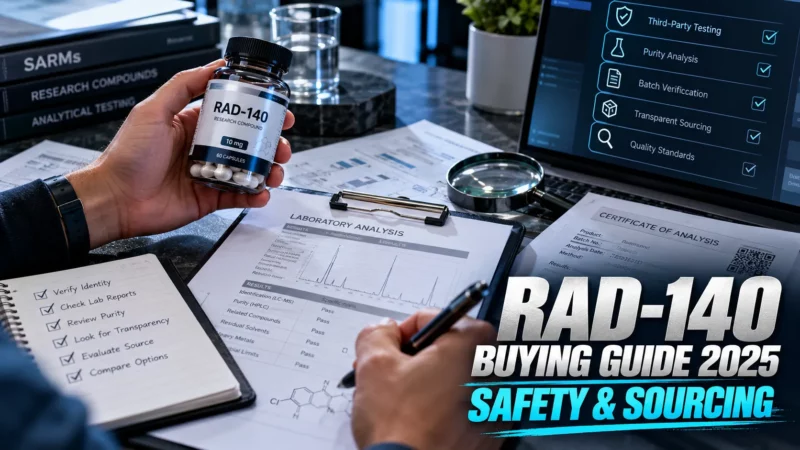
Quality is a real problem with both. SARMs sold online are unregulated: an analysis published in JAMA tested 44 products marketed as SARMs and found that many contained a different unapproved drug, no active ingredient at all, or an amount that did not match the label.
If you research SARM vendors, look for batch-specific, independent third-party testing (a certificate of analysis). Remember that a certificate shows what is in a batch, not that it is safe to take.

Pros
- Exceptional purity & testing (≥98%)
- Pharmaceutical-style packaging for stability
- Broad catalog across peptides & nootropics
- Strong reputation & consistency across years
Cons
- Some items frequently out of stock due to high demand
- Limited long-term data for some compounds
Prohormone supplements carry a different risk. The FDA has repeatedly warned about bodybuilding products that contain hidden steroids or steroid-like ingredients, so the label should name the exact compound and dose. A product that really contains Superdrol, Epistane or another scheduled compound is a controlled drug, whatever the label calls it.

Pros
- Catalog is specifically organized around muscle building, fat loss, testosterone support, and workout performance.
- Range includes creatine, protein, EAAs, beta-alanine, and L-citrulline alongside more specialized formulas.
- Orders of $99+ qualify for free US shipping.
Cons
- Features several strong claims around muscle growth, testosterone, fat loss, and metabolic effects that should be distinguished from independently demonstrated clinical outcomes
- Heavily oriented toward bodybuilding and performance rather than broader nutritional supplementation.
Prohormones vs SARMs: Which Is Stronger?
The old prohormones, by a distance, because they were steroids. SARMs come next, and today’s legal prohormones come last. Side effects rise with strength: the old prohormones brought acne, oily skin, high blood pressure, crushed HDL and liver toxicity, and they are now controlled drugs.
SARMs can add lean mass and were studied for bone density, but they are not as strong as the old prohormones and not as safe as their marketing suggests. Today’s legal prohormones are weaker still, and they are not free of side effects either.
If you are new to this and researching SARMs, our guide to the best SARMs for beginners explains why no SARM is risk-free and which have the most human data. MK-677 and Cardarine are not beginner SARMs: they are not SARMs at all, and Cardarine’s cancer findings in animal studies are a serious, unresolved risk.
The Bottom Line
The old prohormones were stronger than SARMs because they were oral steroids, and they are now controlled drugs; today’s legal prohormones are weaker, and SARMs are unapproved drugs with real risks of their own.
- Strength runs from the old prohormones to SARMs to today’s legal prohormones, and side effects rise with strength.
- Both SARMs and prohormones suppress natural testosterone, lower HDL cholesterol and have been linked to liver injury.
- MK-677 and Cardarine are not SARMs, and Cardarine was abandoned after causing cancer in animal studies.
- Stacking the two adds their risks together, and no study has tested the combination.
Frequently Asked Questions
Disclaimer
Please read carefully
The information on this site is for educational and informational purposes only, and is not medical advice. Always consult a qualified healthcare professional before using any supplement or medication, or making changes to your health, fitness, or nutrition routine.
Not medical advice
Content here is not a substitute for professional medical advice.
Consult your doctor
Talk to your doctor before starting any supplement or new routine.
Use at your own risk
We are not responsible for adverse effects from acting on this.
Do your research
Make informed decisions about your own health.
No guarantees
Individual results vary. No claims about outcomes.
Important — Never disregard professional medical advice or delay seeking it because of something you read here. If you think you may have a medical emergency, call your doctor or your local emergency number right away.