Contents8 sections
Peptides and anabolic steroids are both sold as shortcuts to a better physique, but they are very different things. Peptides are short chains of amino acids that act as signals: they tell the pituitary to release growth hormone, tell the brain you are full, or switch on a repair pathway. Anabolic steroids are testosterone and synthetic versions of it, and they act directly on the androgen receptor in muscle and almost every other tissue.
That difference drives everything else: how much muscle each can build, which one helps with fat loss, how hard each is on your hormones and liver, and where each stands legally. This guide compares them side by side, using what human studies show and flagging where the evidence comes only from animals.
Key Takeaways
- Peptides are short amino-acid chains that signal one pathway (growth hormone, appetite or tissue repair); anabolic steroids are testosterone derivatives that act on androgen receptors throughout the body.
- For muscle gain, steroids are far stronger: in a 10-week trial, 600 mg of testosterone a week plus training added about 6 kg of fat-free mass. Growth hormone peptides do much less.
- For fat loss, the strongest peptides are the prescription GLP-1 drugs: semaglutide and tirzepatide produced average weight loss of about 15% to 21% in their main trials.
- Steroids shut down natural testosterone and sperm production, and oral steroids strain the liver. Most peptides do not suppress the testes, but research peptides have little human safety data and unverified purity.
- Testosterone is legal with a prescription (Schedule III in the US). Research peptides are not approved for human use, and both classes are banned in tested sport.
What Are Peptides?
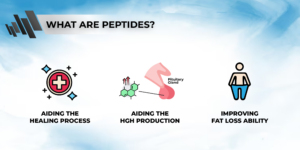
Peptides are short chains of amino acids, the same building blocks that make up proteins. Many of the body’s own signals are peptides, including insulin, GLP-1 and growth hormone-releasing hormone (GHRH). Therapeutic peptides copy or modify these natural signals to switch a specific pathway on or off.
Their effects depend entirely on the sequence. One peptide raises growth hormone, another slows digestion and curbs appetite, another is studied for tissue repair. So “peptides” is not one thing: comparing peptides vs steroids really means comparing a specific peptide with a specific steroid.
Most peptides are broken down in the gut, so they are usually given by subcutaneous injection (see our guide on how to inject peptides). A few have oral or nasal forms, such as oral semaglutide.
Two very different groups are on the market. Approved peptide drugs such as semaglutide, tirzepatide and tesamorelin went through clinical trials and are made to pharmaceutical standards. Research peptides such as BPC-157, CJC-1295 and AOD-9604 are sold labeled “not for human consumption”, with little or no human trial data and no guarantee of what is in the vial.
Examples of Peptides
Hundreds of peptides are sold online, but only a handful have meaningful human data. The ones most often compared with steroids are:
- BPC-157: a 15-amino-acid peptide derived from a protein in gastric juice, promoted for tendon, ligament and gut healing. The evidence is almost entirely from rodent studies; human data are limited to small, uncontrolled reports.
- CJC-1295: a long-acting GHRH analog. In healthy adults, a single injection of the DAC version raised growth hormone and IGF-1 levels for days. It is not an approved drug.
- AOD-9604: a modified fragment of the growth hormone molecule marketed for fat loss. It looked promising in animal studies, but it did not beat placebo for weight loss in human trials, and its development as an obesity drug was dropped.
- Semaglutide and tirzepatide: prescription GLP-1-based drugs approved for type 2 diabetes and weight management. By a wide margin, they are the best-studied peptides for body composition.
Benefits of Peptides
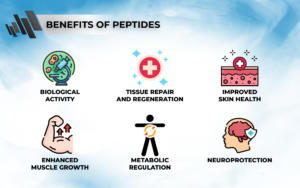
- Metabolic regulation: GLP-1 and dual GIP/GLP-1 agonists reduce appetite and improve blood sugar control. This is the area with the strongest human evidence.
- Growth hormone release: GHRH analogs (sermorelin, CJC-1295, tesamorelin) and ghrelin mimetics (ipamorelin, GHRP-2, GHRP-6) raise the body’s own GH and IGF-1 output.
- Tissue repair: BPC-157 and TB-500 are studied for tendon, muscle and gut healing, so far mostly in animals.
- Lean mass and recovery: higher GH and IGF-1 can increase lean body mass, although in healthy adults much of the gain is water and connective tissue rather than contractile muscle.
- Skin: cosmetic peptides and copper peptides (GHK-Cu) are used in skincare to support collagen; the evidence is modest.
- Targeted action: because each peptide hits one pathway, side effects tend to be narrower than with steroids, which act on androgen receptors throughout the body.
Where to Buy Peptides?
Approved peptides such as semaglutide and tirzepatide should come from a pharmacy on a prescription. Research peptides are a gray market: quality varies widely between sellers, so look for independent third-party testing of each batch rather than a seller’s own certificate. Our guide to the best peptide vendors explains how to vet a supplier.

Pros
- Exceptional purity & testing (≥98%)
- Pharmaceutical-style packaging for stability
- Broad catalog across peptides & nootropics
- Strong reputation & consistency across years
Cons
- Some items frequently out of stock due to high demand
- Limited long-term data for some compounds
What Are Steroids?
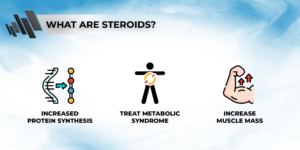
Anabolic-androgenic steroids (AAS) are testosterone and its synthetic derivatives. Testosterone was first synthesized in the 1930s, and steroids were developed to treat medical problems: low testosterone (hypogonadism), delayed puberty, and muscle wasting from illness, burns or HIV. They were never designed as fat-loss drugs.
Steroids bind the androgen receptor, which is found in muscle, bone, skin, the brain, the prostate and many other tissues. In muscle, this raises protein synthesis, which speeds gains in size and strength, helps keep lean mass during a diet and improves recovery between sessions. Steroids also raise red blood cell production. Because the receptor is everywhere, the side effects are body-wide too.
Testosterone is still a widely prescribed medicine for men with diagnosed low testosterone. Outside medicine, steroids are used at doses several times higher than the body makes, which is where most of the gains and most of the harm come from.
Examples of Steroids
- Testosterone is the base hormone and the most common anabolic steroid. It is a prescription medicine for hypogonadism; in sport and bodybuilding it is used at much higher, supraphysiological doses.
- Dianabol (methandienone) is a classic oral steroid from the early bodybuilding era. Like most oral steroids, it is 17-alpha-alkylated, which makes it hard on the liver.
- Anavar (oxandrolone) is a milder oral steroid, often called a “women’s steroid” because virilizing side effects are less common at low doses. They still happen, and it still suppresses natural hormone production.
Comparing Peptides vs Steroids
The table compares the two classes on the points that matter most in practice. “Peptides” covers very different compounds, so the peptide column notes where growth hormone peptides and GLP-1 drugs differ.
| Factor | Peptides | Anabolic Steroids |
|---|---|---|
| How they work | Signal one pathway (GH release, appetite, repair) | Activate androgen receptors throughout the body |
| Muscle gain | Small; GH peptides raise lean mass, much of it water and connective tissue | Large and dose-dependent |
| Fat loss | Strong for GLP-1 drugs (about 15-21% average weight loss in trials); modest for GH peptides | Minor; mainly help keep muscle while dieting |
| Natural testosterone suppression | GH peptides and GLP-1 drugs do not shut down the testes | Suppress LH, FSH, natural testosterone and sperm production; recovery can take months |
| Liver | Not a typical concern; GLP-1 drugs raise gallbladder risk | Oral 17-alpha-alkylated steroids are toxic to the liver; injectables much less so |
| Heart and blood | GH peptides can raise blood sugar and cause water retention | Lower HDL, raise blood pressure and hematocrit; long-term use linked to heart muscle damage |
| Cost | Research peptides are cheap per vial; brand GLP-1 drugs are expensive without insurance | Generic prescription testosterone is cheap; the main costs are clinic visits and bloodwork |
| Legal status (US) | Semaglutide, tirzepatide, tesamorelin: prescription only. Research peptides: not approved for human use | Schedule III controlled substances; testosterone legal on prescription |
| Drug testing | Banned by WADA; anti-doping labs test for many GH-releasing peptides; workplace panels usually do not | Banned by WADA; found by standard anti-doping urine tests, some for months; workplace panels usually do not test |
| Monitoring | Blood sugar and IGF-1 for GH peptides; supervised dosing for GLP-1 drugs | Hematocrit, lipids, liver enzymes, blood pressure and estradiol |
Muscle Growth
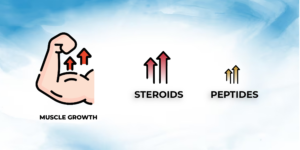
Steroids win this one clearly. In a well-known 10-week trial in healthy young men, 600 mg of testosterone enanthate a week combined with strength training added about 6 kg (13 lb) of fat-free mass, against about 2 kg with training alone. Even the men who took testosterone without training gained more fat-free mass than those who trained on placebo.
Peptides that raise growth hormone have far smaller effects. A systematic review of growth hormone in healthy athletes found that it increased lean body mass but did not improve strength, and much of that lean mass is water and connective tissue. GH-releasing peptides such as CJC-1295 generally produce a smaller rise than injected GH, so their effect is smaller still. For the details, see our guide to the best peptides for muscle growth.
Fat Loss
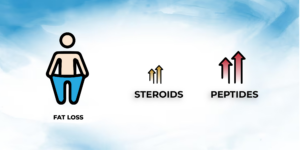
Peptides have the edge here, mainly because of one group: the GLP-1 drugs. Semaglutide (Wegovy, Ozempic) mimics the gut hormone GLP-1, which curbs appetite and slows stomach emptying. Tirzepatide (Zepbound, Mounjaro) acts on both the GLP-1 and GIP receptors.
In the STEP 1 trial, adults with overweight or obesity who took 2.4 mg of semaglutide a week lost an average of about 15% of their body weight over 68 weeks, against about 2% on placebo. In SURMOUNT-1, tirzepatide produced average losses of 15% to 21% over 72 weeks, depending on the dose. No steroid or growth hormone peptide comes close.
There are trade-offs. Nausea, vomiting, diarrhea and constipation are common, especially while the dose is being raised; gallbladder problems and pancreatitis are less common but serious. Part of the weight lost is lean mass, so resistance training and enough protein matter. Most people also regain much of the weight after stopping: a year after STEP 1 participants came off semaglutide, they had regained about two-thirds of the weight they had lost. Newer drugs in the same family, such as retatrutide, are still investigational.
Growth hormone peptides help less. GH does increase fat breakdown, and tesamorelin, a GHRH analog, is approved to reduce excess abdominal fat in people with HIV-associated lipodystrophy. In healthy people, though, GH peptides produce modest fat loss at best, and AOD-9604 did not beat placebo in human weight-loss trials.
Steroids are not fat-loss drugs. Testosterone reduces fat mass modestly in men with low testosterone, and steroids help preserve muscle in a calorie deficit, but they do little for fat loss compared with diet or GLP-1 drugs.
Raising Growth Hormone
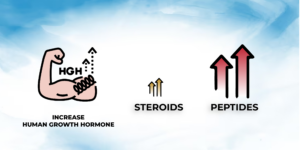
If the goal is higher growth hormone, peptides are the tool, not steroids. GHRH analogs (sermorelin, CJC-1295, tesamorelin) tell the pituitary to release GH, and ghrelin mimetics (ipamorelin, GHRP-2, GHRP-6) amplify each pulse, which is why the two types are often combined. Because they work through the pituitary, the body’s own feedback still limits how high GH and IGF-1 go, unlike injected GH.
Common side effects include water retention, tingling or numbness in the hands, increased hunger with ghrelin mimetics, and higher blood sugar. None of these peptides is approved for muscle building or anti-aging, and long-term human safety data are thin.
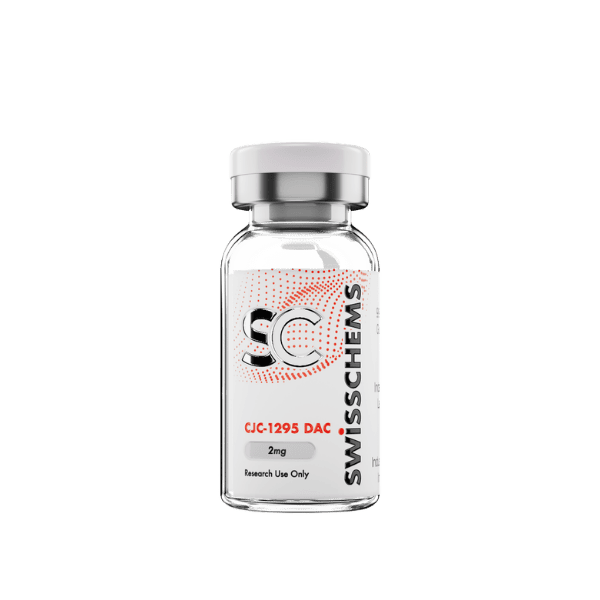 Growth Hormone Secretagogue
Overview
- Form: Powder
- Researched Dosage: 1mg twice weekly
- Typical Cycle: 12-16 weeks
- Cost: $47.95
- Stacking Options: Ipamorelin, BPC-157, NAD+
Pros
- The DAC component extends CJC-1295's activity, allowing it to produce a more sustained increase in growth hormone and IGF-1 compared with shorter-acting forms
- Increased GH/IGF-1 signaling may support changes in lean body mass and fat metabolism
- Its extended duration means it does not require the same frequent administration associated with shorter-acting growth hormone–releasing peptides.
Cons
- Has not been established as a safe or effective muscle-building treatment for healthy adults.
- Increasing GH/IGF-1 can affect glucose metabolism and may contribute to issues such as insulin resistance, elevated blood glucose, or fluid retention.
- Because the DAC formulation has an extended duration of action, unwanted effects may persist longer than with shorter-acting peptides.
Legality
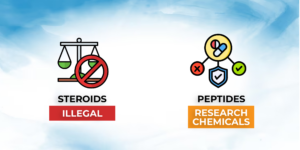
Steroids are not simply “illegal”. In the United States, anabolic steroids, including testosterone, are Schedule III controlled substances. Testosterone is legal with a valid prescription, and testosterone replacement therapy is a mainstream treatment for diagnosed low testosterone. Possessing or selling steroids without a prescription is illegal.
Laws differ by country. In the UK, for example, anabolic steroids are Class C drugs: possession for personal use is generally not an offence, but supplying them is. Check the rules where you live.
Peptides are split. Semaglutide, tirzepatide and tesamorelin are prescription medicines. Research peptides such as BPC-157 and CJC-1295 are not approved for human use; they are sold as research chemicals labeled “not for human consumption”, which leaves them in a legal gray area and puts the quality risk on the buyer. Our guide on whether peptides are legal covers the status by country.
In tested sport, both are banned. WADA prohibits anabolic steroids, growth hormone and the peptides that release it, as well as unapproved substances such as BPC-157.
Adverse Effects
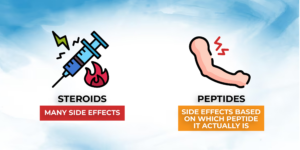
Steroids carry broader and better-documented risks because they act on androgen receptors throughout the body. Peptide side effects depend on the specific peptide; for research peptides, the biggest unknowns are long-term safety and what is actually in the vial.
Common steroid side effects include:
- Shutdown of natural testosterone and sperm production, testicular shrinkage and possible infertility; recovery after a cycle can take months (see PCT for testosterone).
- Acne, hair loss in men prone to it, and gynecomastia from conversion to estrogen.
- Lower HDL cholesterol, higher blood pressure and thicker blood (raised hematocrit); long-term use is linked to heart muscle damage.
- Liver strain with oral 17-alpha-alkylated steroids.
- Mood changes, and in women, a deeper voice and other virilizing effects that can be permanent.
Peptide side effects depend on the compound:
- GLP-1 drugs: nausea, vomiting, diarrhea, constipation, gallbladder problems and, rarely, pancreatitis. They are not used by people with a personal or family history of medullary thyroid cancer.
- GH-releasing peptides: water retention, tingling or numb hands, joint aches, higher blood sugar and, with some, increased appetite.
- Research peptides: injection-site reactions, possible contamination or wrong dosing from unregulated products, and almost no long-term human data. Our guide to the side effects of peptides covers each one.
The Bottom Line
Steroids build far more muscle, GLP-1 peptides do far more for fat loss, and neither comes without real trade-offs.
- For muscle gain, steroids are much stronger than any peptide, but they shut down natural testosterone, strain the heart and, as orals, the liver, and they are controlled substances without a prescription.
- For fat loss, the prescription GLP-1 drugs semaglutide and tirzepatide are the most effective option studied, with average losses of about 15% to 21% in their main trials. GH peptides and AOD-9604 do far less.
- Research peptides avoid testosterone suppression but have little human safety data and unverified purity. Testosterone itself is legal and monitored when prescribed for diagnosed low testosterone.
Frequently Asked Questions
Disclaimer
Please read carefully
The information on this site is for educational and informational purposes only, and is not medical advice. Always consult a qualified healthcare professional before using any supplement or medication, or making changes to your health, fitness, or nutrition routine.
Not medical advice
Content here is not a substitute for professional medical advice.
Consult your doctor
Talk to your doctor before starting any supplement or new routine.
Use at your own risk
We are not responsible for adverse effects from acting on this.
Do your research
Make informed decisions about your own health.
No guarantees
Individual results vary. No claims about outcomes.
Important — Never disregard professional medical advice or delay seeking it because of something you read here. If you think you may have a medical emergency, call your doctor or your local emergency number right away.