Contents16 sections
Sermorelin before and after results are usually quieter than the transformation photos online suggest. Sermorelin is a synthetic peptide made of the first 29 amino acids of growth hormone-releasing hormone (GHRH). It signals the pituitary gland to release more of your own growth hormone (GH), which the liver then turns into IGF-1. You are not injecting growth hormone itself, so changes build slowly.
In human studies, mostly in older adults, sermorelin and closely related GHRH peptides reliably raise GH and IGF-1. Their effects on body composition were modest. Better sleep and recovery are the changes users report first; visible fat loss and muscle tone depend mostly on training, diet and time.
This guide covers how sermorelin works, what the clinical evidence shows, a realistic timeline, studied and commonly reported doses, side effects, and how to judge your own before and after honestly.
Key Takeaways
- Sermorelin before and after changes are gradual because it raises your own growth hormone rather than delivering a direct HGH dose.
- Human trials, mostly in older adults, show sermorelin-type peptides raise GH and IGF-1; the body-composition changes in those trials were small.
- Users most often report better sleep and recovery first; fat loss and muscle tone take months and depend on diet and training.
- Side effects are usually mild, such as injection site reactions, flushing and headache, but IGF-1 labs and medical supervision matter.
- Sermorelin was approved for children with GH deficiency, not for anti-aging or bodybuilding, and is now mostly prescribed as a compounded medication.
Growth Hormone: Why It Matters
Growth hormone supports body composition, recovery and tissue repair. It signals the liver to make IGF-1, which carries many of GH’s effects on muscle, bone and fat metabolism. GH output falls with age, and poor sleep, high stress and excess body fat can lower it further.
In adults with diagnosed growth hormone deficiency, restoring GH increases lean mass and reduces fat mass. Whether raising GH in healthy adults with normal age-related decline brings the same benefits is much less clear. Sermorelin aims to restore a healthier GH rhythm rather than override it.
GH release is controlled by two opposing signals from the hypothalamus: GHRH stimulates it and somatostatin slows it. Ghrelin, a hormone made mainly in the stomach, also stimulates release. Sleep, strength training and body fat level all shift this balance.
Growth Hormone Production: How Sermorelin Works

Sermorelin is a GHRH analog. It binds to GHRH receptors on the pituitary gland and stimulates GH release in pulses. Because somatostatin and IGF-1 still feed back on the pituitary, the body keeps control over how much GH is released.
Each GH pulse drives the liver’s production of IGF-1, the marker doctors use to check whether therapy is working. Over weeks and months, higher IGF-1 can support recovery and lean tissue, especially when training and protein intake are in place.
Habits that support natural pulses help. Avoid a large meal in the hours before an evening dose, because food, especially carbohydrate, blunts GH release. Keep alcohol low at night, train during the day and sleep in a cool, dark room.
Sermorelin vs Direct HGH Therapy
Direct HGH therapy (somatropin) delivers growth hormone itself. It works whether or not the pituitary responds, but it bypasses the normal feedback loops, and high doses can push GH and IGF-1 well above the normal range. Sermorelin depends on a working pituitary and keeps the axis active, which is why its results are usually slower and smaller. Our guide to sermorelin vs HGH compares the two in detail.
Because sermorelin’s effect is limited by the body’s own feedback, GH levels are less likely to overshoot than with HGH. That is a theoretical safety advantage; long-term studies directly comparing the two in healthy adults do not exist.
Why Pulses Matter
GH is released in pulses, and the largest pulse usually comes early in the night, during deep (slow-wave) sleep. Sermorelin preserves this pulsatile pattern, which is why it is usually given at bedtime. GHRH also helps regulate deep sleep itself, which may explain why better sleep is the effect users mention most.
Late heavy meals, bright screens and alcohol reduce slow-wave sleep. A fixed bedtime, a dark room and a 60 to 90 minute wind-down protect these pulses.
What the Clinical Evidence Shows
Most of what is written about sermorelin results comes from clinic marketing and user reports. The controlled human data are smaller, but they are more useful for setting expectations.
Approved Use in Children
Sermorelin was sold as Geref and approved by the FDA in the 1990s to treat growth failure in children with growth hormone deficiency, at 30 micrograms per kilogram injected under the skin at bedtime. In a multicentre trial, once-daily sermorelin accelerated growth in GH-deficient children during the first year of treatment (Thorner and colleagues, Journal of Clinical Endocrinology and Metabolism, 1996). The manufacturer discontinued Geref in 2008. It was never approved for anti-aging, fat loss or bodybuilding.
IGF-1 in Older Adults
In healthy older men, twice-daily injections of GHRH(1-29), the same peptide as sermorelin, raised GH and IGF-1 back to levels typical of young men within two weeks (Corpas and colleagues, Journal of Clinical Endocrinology and Metabolism, 1992). This is the clearest evidence that the aging pituitary still responds to a GHRH signal.
Body Composition
In a 16-week study in men and women aged 55 to 71, a nightly injection of a GHRH(1-29) analog closely related to sermorelin raised GH and IGF-1 in both sexes (Khorram and colleagues, Journal of Clinical Endocrinology and Metabolism, 1997). The men gained a small amount of lean body mass and showed better insulin sensitivity; the body-composition changes in the women were less clear. These were modest effects in small groups, not dramatic transformations.
What Reviews Conclude
Reviews of growth hormone secretagogues, sermorelin included, conclude that these peptides raise GH and IGF-1 and appear well tolerated in short studies, but that evidence for lasting gains in muscle, strength or fat loss in healthy adults is limited (Sigalos and Pastuszak, Sexual Medicine Reviews, 2018). There are no controlled trials of sermorelin in young, healthy lifters.
The strongest fat-loss data for a GHRH-type drug come from tesamorelin, a longer-acting GHRH analog that is FDA-approved to reduce excess abdominal fat in people with HIV-associated lipodystrophy. That result should not be transferred directly to sermorelin.
Key Benefits of Sermorelin

The benefits below come from raising your own GH and IGF-1. Some are supported by trials; others rest mainly on user and clinic reports. Each section says which.
Fat Reduction and Body Composition
GH increases the breakdown of stored fat, and in the trials above, sermorelin-type peptides produced modest body-composition changes. In practice, users who report a tighter waist are almost always also eating in a calorie deficit with high protein intake. The peptide is a small push, not the main driver.
Lean mass gains, where they happen, follow better recovery and consistent training. Over months, photos and tape measurements show changes more clearly than the scale.
Deep abdominal (visceral) fat is the fat most sensitive to GH. Daily steps, regular cardio, carbohydrates timed around training and high protein intake all support losing it.
Realistic Before and After Markers
- Waist and hip measurements trend down
- Gym performance and stamina improve
- Morning energy is higher
- Sleep feels deeper and more regular
- IGF-1 is higher on follow-up labs, the one objective marker
Cognitive Function and Mood
Better sleep often brings steadier mood and focus, and users commonly report fewer afternoon crashes. Direct evidence for sermorelin itself is lacking. In a 20-week trial in older adults, including some with mild cognitive impairment, the related GHRH analog tesamorelin improved executive function (Baker and colleagues, Archives of Neurology, 2012). Treat cognitive benefits from sermorelin as possible, not proven.
A simple journal of sleep, focus and mood helps you judge whether anything has actually changed.
Bone Density and Joint Comfort
GH and IGF-1 help regulate bone remodeling, and GH replacement supports bone density in adults with true GH deficiency. There are no good human data showing that sermorelin improves bone density in healthy adults, and any effect would be slow. Strength training, vitamin D status and calcium intake matter more.
Loaded carries, squats and hinges place useful stress on bone. Users often report fewer aches after hard sessions as recovery improves, but this is anecdotal.
Muscle Tone and Performance
Sermorelin does not build muscle by itself. At best it improves the recovery environment, so progressive training and adequate protein work a little better. Many users describe firmer muscle tone over several months, usually alongside fat loss.
A simple plan works well: three full-body sessions or an upper and lower split, one or two sessions of easy (zone 2) cardio, small weekly progressions in reps or load, and a lighter deload week every six to eight weeks.
Training Tips to Maximize Results
- Lift three to five days per week with progressive overload
- Hit protein targets of 1.6 to 2.2 grams per kilogram of body weight per day
- Sleep seven to nine hours per night to protect natural GH pulses
- Keep a weekly log of lifts, steps and body measurements
Skin Health
IGF-1 is involved in collagen production, and clinics often market sermorelin for skin. Evidence that it visibly improves skin in healthy adults is limited, and the results users report vary with age, sun exposure and nutrition.
The basics have stronger evidence: enough protein and vitamin C, daily sunscreen, good hydration and not smoking.
Energy Levels and Sleep Quality
Improved sleep is the change users report earliest: fewer night awakenings and easier mornings, often within the first few weeks. Better sleep usually brings more daytime energy, better recovery between sets and better training sessions.
Protect it with a calm evening routine. Dim the lights, keep the room cool, avoid heavy food late at night and finish hard workouts at least three hours before bed.
Gradual Improvements: A Realistic Timeline
The timeline below reflects what users and clinics commonly report, not results from controlled trials. Individual response varies with age, sleep, diet, training and baseline hormone levels, and much of the visible change comes from the training and diet that go with the peptide.
| Timeframe | What Users Commonly Report |
|---|---|
| Weeks 1 to 2 | Deeper sleep for some users and slightly better morning energy. Many notice nothing yet. |
| Weeks 3 to 4 | Better training recovery. Steadier energy and mood. |
| Weeks 5 to 8 | Small changes in waist measurements and progress photos when diet and training are consistent. |
| Months 3 to 4 | Higher IGF-1 on follow-up labs. Clearer changes in body composition for consistent users. |
| Months 5 to 6 | Larger changes in tape measurements and photos. Faster recovery after hard sessions. |
| Months 6 to 12 | Slow, continued recomposition if training and diet are sustained. |
Sermorelin Dosage and Administration
Wherever sermorelin is used clinically, it is a prescription drug. The figures below are doses used in studies and doses commonly reported by clinics and users, not recommendations. A doctor sets the dose based on IGF-1 and response.
- Approved dose in children (Geref): 30 micrograms per kilogram of body weight under the skin once daily at bedtime
- Commonly reported adult doses: 100 to 300 micrograms under the skin once nightly, 5 to 7 nights per week
- Commonly reported timing: 30 to 60 minutes before bed, on an empty stomach
- Some clinics use a five days on, two days off pattern
Watch the unit: these doses are in micrograms (mcg), not milligrams (mg).
Injection technique
- Rotate injection sites to reduce irritation
- Use a new sterile needle every time and clean the skin with an alcohol swab
- Pinch the skin and inject into the fat under the skin at 45 to 90 degrees
- Keep it refrigerated after mixing and follow the pharmacy’s storage and expiry instructions
Lab monitoring
- Baseline and follow-up IGF-1 testing guides the dose
- Fasting glucose and lipids are tracked as part of routine care
- A healthcare provider adjusts the dose based on goals and response
Stacks and Synergies for Sermorelin
Sermorelin is usually combined with other therapy or with lifestyle changes rather than used alone. Any combination should be discussed with your provider and matched to your goals and lab results.
With Testosterone Replacement Therapy
Some adults on TRT under medical supervision also use sermorelin. There are no controlled trials of the combination. Clinics use it when symptoms and labs point to both low testosterone and signs of growth hormone deficiency. It does not replace testosterone therapy and should not be used for symptoms that have not been tested.
With Other Growth Hormone Secretagogues
Some protocols combine sermorelin, a GHRH analog, with a ghrelin-receptor agonist such as ipamorelin or GHRP-6. The two classes act through different receptors, and given together in short-term human studies they release more GH than either alone. The same logic sits behind the CJC-1295 and ipamorelin stack; see our ipamorelin and CJC-1295 before and after guide.
MK-677 (ibutamoren) is an oral compound that also works through the ghrelin receptor. Our MK-677 before and after guide covers what users report with it. Combinations raise the risk of water retention, numb hands and higher blood sugar, so they belong only with a provider who monitors IGF-1 and glucose.
With Lifestyle Fundamentals
- Strength training and daily steps
- Protein-forward nutrition and adequate micronutrients
- Stress management and sleep hygiene
- Low alcohol intake and morning sunlight exposure
Side Effects and Safety
Most people tolerate sermorelin well in short studies. The most common side effect is a reaction at the injection site: pain, redness or swelling. Flushing, headache and dizziness are also reported and often fade as the body adapts. Water retention and numbness or tingling in the hands suggest that GH and IGF-1 may be running too high.
Report persistent swelling, hand tingling, headaches that do not settle or rising fasting glucose to your provider. People with severe untreated sleep apnea or uncontrolled cardiovascular disease need careful supervision.
Who Should Avoid or Use Caution
- People with active cancer, since GH and IGF-1 promote cell growth
- Women who are pregnant or breastfeeding
- Anyone with proliferative diabetic retinopathy or uncontrolled cardiovascular disease
- People with diabetes or prediabetes, unless glucose is closely monitored
Where to Buy Sermorelin
For clinical use, sermorelin requires a prescription. Since the brand-name product is no longer made, it is mainly dispensed by compounding pharmacies after a medical assessment and lab work.
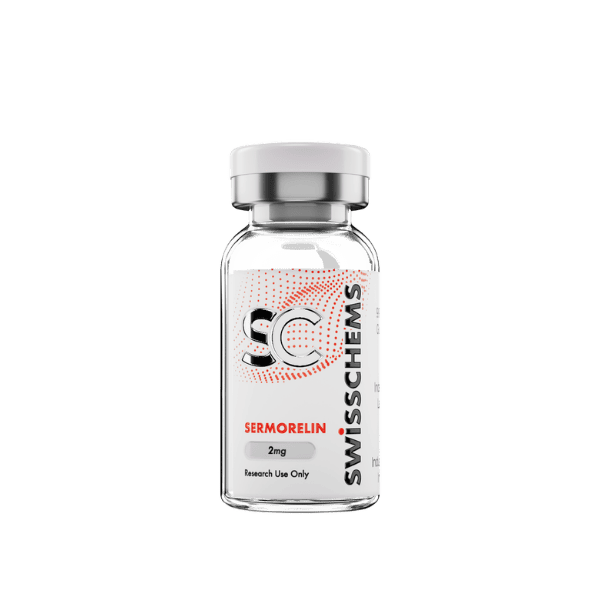
Research suppliers also sell sermorelin as a freeze-dried research peptide labelled not for human use. These products are not FDA-approved drugs, and quality varies by supplier. Check the batch certificate of analysis (our guide explains how to read a peptide COA), and keep in mind that a COA does not establish that a product is safe for any purpose.

Overview
- Form: Lyophilized powder
- Researched Dosage: 200 mcg to 500 mcg daily, usually taken before bed
- Typical Cycle: 8-12 weeks, with some protocols running 3-6 months
- Cost: $25.95
- Stacking Options: Ipamorelin, GHRP-2, GHRP-6
Pros
- A copy of the first 29 amino acids of natural growth hormone-releasing hormone, so it prompts the pituitary to release its own growth hormone.
- Keeps the body’s normal growth hormone pulses and feedback loop working, unlike taking synthetic growth hormone directly.
- Was once FDA-approved as Geref for children with growth hormone deficiency, so it has more human data than most peptides in this group.
Cons
- Half-life is very short, about 10-20 minutes, so it usually needs a daily injection.
- Reported side effects include flushing, headache, dizziness and redness or swelling where it’s injected.
- Approved version was taken off the US market in 2008 (the maker cited business reasons), and WADA bans it for tested athletes.
Before and After: Putting Results in Context
Photos tell the story better than the scale. Use the same light and pose each month, track waist, hip and thigh measurements, and keep a log of sleep hours and training numbers. Over six months, most of the change shows in tape measurements and strength trends.
Use simple tools to stay objective. Take front, side and back photos every four weeks. Record resting heart rate and morning weight three days per week. Review your log every month and adjust training volume or steps.
The three cases below are illustrative examples, not real patients or study results. They show how sermorelin is commonly combined with lifestyle changes and what a realistic outcome might look like. The doses are commonly reported doses, not recommendations, and in each case most of the visible change would come from training and diet.
Illustrative case A: Busy professional
- Starts with poor sleep and high stress
- Prescribed 200 micrograms nightly, five days on and two days off
- Adds two full-body lifting sessions per week and 8,000 steps per day
- A realistic 12-week outcome: deeper sleep and a waist 2 to 3 centimeters smaller
Illustrative case B: Lifter on TRT
- Baseline labs show low-normal IGF-1
- Adds 250 micrograms nightly under medical supervision
- Keeps protein at 2.0 grams per kilogram and lifts four days per week
- A realistic 16-week outcome: higher IGF-1, slightly better strength and a small drop in body fat on a DEXA scan
Illustrative case C: Recomposition focus
- No TRT; the goal is fat loss with better muscle tone
- Prescribed 150 to 200 micrograms before bed, six nights per week
- Tracks calories and hits 10,000 steps daily
- A realistic six-month outcome: progress photos show a tighter waist and firmer shoulders
Action Plan: How to Get the Best Before and After
- Confirm a medical need with a qualified healthcare provider, including baseline IGF-1
- Set clear goals and track sleep, training and diet
- Keep a consistent nightly dosing schedule as prescribed
- Train with a progressive plan and high protein intake
- Sleep seven to nine hours nightly and manage stress
- Review IGF-1 and other labs with your provider every eight to twelve weeks
The Bottom Line
Sermorelin raises your own growth hormone and IGF-1, but its before and after changes are gradual and modest, and most visible results still come from sleep, training and diet.
- Human trials, mostly in older adults, show sermorelin-type peptides restore GH and IGF-1 toward youthful levels; body-composition gains in those trials were small, and there are no trials in young lifters.
- Users most often report better sleep and recovery first; changes in waist size and muscle tone take three to six months or more and depend on a calorie-controlled diet and progressive training.
- Use it only with a prescription and medical supervision: check IGF-1 and glucose, and watch for swelling, hand numbness or persistent headaches.
Frequently Asked Questions
Disclaimer
Please read carefully
The information on this site is for educational and informational purposes only, and is not medical advice. Always consult a qualified healthcare professional before using any supplement or medication, or making changes to your health, fitness, or nutrition routine.
Not medical advice
Content here is not a substitute for professional medical advice.
Consult your doctor
Talk to your doctor before starting any supplement or new routine.
Use at your own risk
We are not responsible for adverse effects from acting on this.
Do your research
Make informed decisions about your own health.
No guarantees
Individual results vary. No claims about outcomes.
Important — Never disregard professional medical advice or delay seeking it because of something you read here. If you think you may have a medical emergency, call your doctor or your local emergency number right away.