Contents10 sections
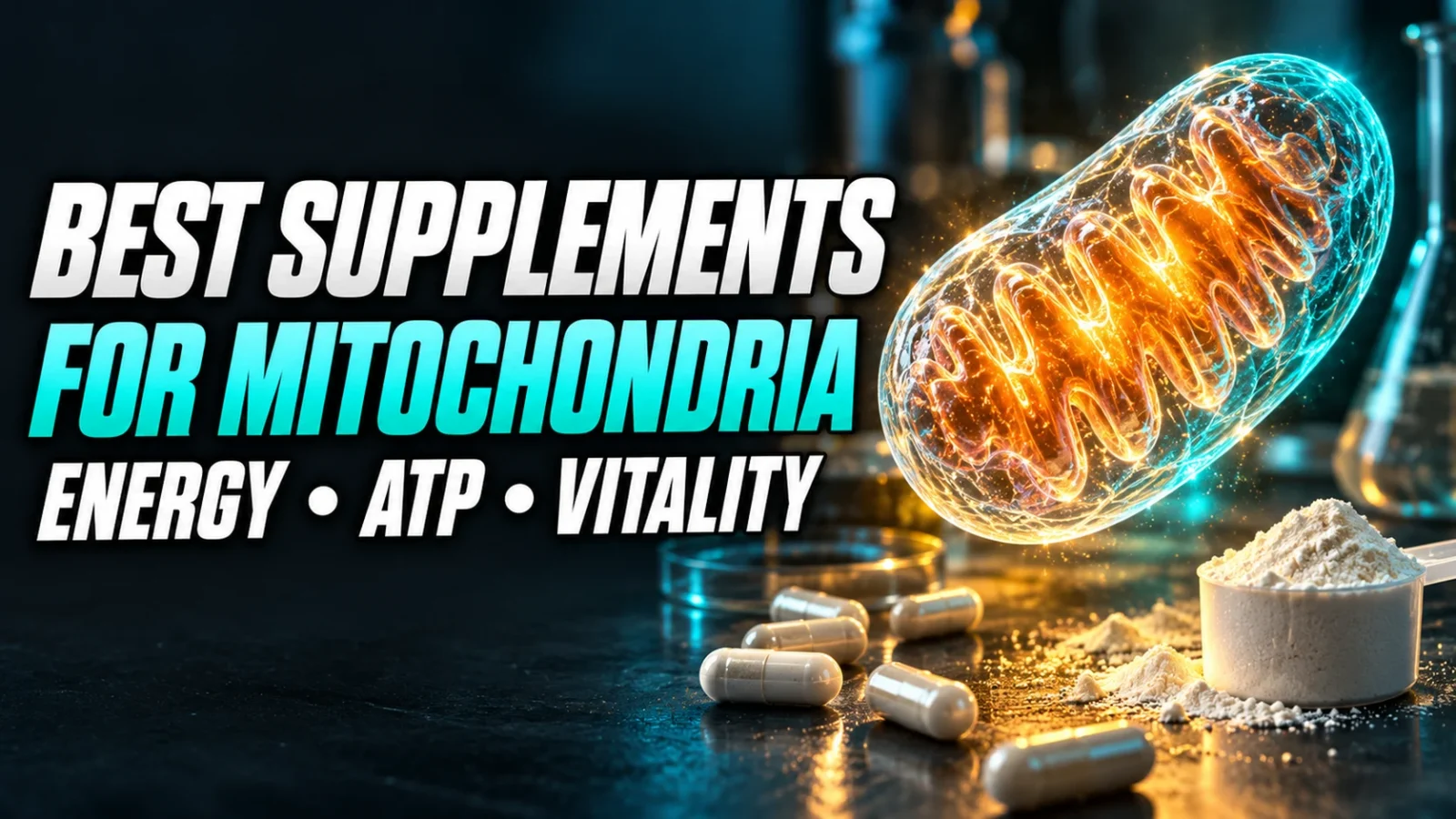
Ever hit a wall mid-afternoon, even after a full night’s sleep? Low energy has many causes, from poor sleep and stress to diet, illness and medication. One part of the picture sits inside almost every cell you have: your mitochondria.
Mitochondria make most of the ATP your body runs on. When they work less efficiently, as can happen with age, inactivity or some health conditions, fatigue and poor exercise tolerance can follow. That is why supplements aimed at mitochondrial function get so much attention.
This guide explains what mitochondria do, how supplements may support them, and what the research actually shows for six popular options: L-carnitine, NAD+, glutathione, creatine, magnesium and the experimental compound BAM-15.
Key Takeaways
- Mitochondria produce most of the ATP your cells use. When they decline, fatigue, poor exercise tolerance and brain fog can follow.
- Of the options covered here, creatine monohydrate and magnesium have the strongest human evidence and the best-known safety records.
- L-carnitine carries fatty acids into mitochondria, but healthy people make enough of it, and raising muscle levels through supplements is hard.
- NAD+ and glutathione injections are popular, but most human data come from oral precursors such as NR, NMN, NAC and glycine.
- BAM-15 is a preclinical mitochondrial uncoupler. It has only been studied in cells and animals, and there is no established safe human dose.
What Are Mitochondria and Why Are They Important?
Mitochondria sit at the center of your cellular energy network. When they work well, high-demand tissues like muscle, heart and brain get the energy they need. When they falter, the effects can show up across the whole body.
Role of Mitochondria: The Body’s Power Stations
Mitochondria are small organelles found in nearly every cell, often called the “powerhouses” of the cell. They use the oxygen you breathe and the fuel from your food to produce ATP, the energy currency that drives everything from muscle contraction to nerve signaling. They also help decide whether a cell survives or dies, and they take part in clearing out damaged cell components.
Functions of Mitochondria: Energy, Signals and Maintenance
- Making ATP: Through the Krebs cycle and the electron transport chain, mitochondria convert carbohydrates, fats and amino acids into ATP.
- Managing calcium and reactive oxygen species (ROS): They buffer calcium, which is critical for muscle and nerve signaling, and they generate ROS, which act as useful cell signals at normal levels but cause damage in excess.
- Cleaning up via mitophagy: Old or damaged mitochondria are broken down and recycled through mitophagy, a quality-control process that keeps the network healthy.
Mitochondrial Dysfunction: What Happens When the Power Plants Struggle?
Mitochondrial function can decline because of genetics, inactivity, chronic disease or aging. When cells struggle to meet their energy needs, the consequences can include:
- Brain and nervous system: Energy shortfalls are linked to brain fog and memory problems, and mitochondrial dysfunction is implicated in conditions such as Parkinson’s and Alzheimer’s disease.
- Muscle and fatigue: Low ATP supply can show up as weakness, cramps, exercise intolerance and lingering fatigue. Inherited mitochondrial diseases often affect muscle and brain most, because they use the most energy.
- System-wide effects: Dysfunctional mitochondria can produce excess ROS, disturb calcium balance and trigger the mitochondrial permeability transition pore, contributing to inflammation, cell death, insulin resistance and cardiovascular problems.
Persistent, unexplained fatigue has many possible causes, including anemia, thyroid problems, sleep disorders and depression. It is worth seeing a doctor before assuming the problem is your mitochondria.
How Do Supplements Support Mitochondrial Health?

Supplements cannot replace exercise, sleep and a decent diet, but some can support the processes mitochondria depend on. They do this in a few distinct ways, and the evidence behind each varies a lot.
Supplying Cofactors for Energy Production
The electron transport chain needs cofactors such as NAD+, coenzyme Q10 and magnesium to make ATP. Supplementing them is most likely to help when levels are low, for example because of a poor diet, a deficiency or certain medications. In people who already have enough, the benefit is usually small.
Strengthening Antioxidant Defenses
As mitochondria make ATP, they also produce ROS, which can damage mitochondrial membranes and DNA. The body’s own antioxidant systems, led by glutathione, keep ROS in check. Some supplements supply the building blocks for these systems. More antioxidants are not always better, though: ROS also act as the signals that drive some training adaptations, and very high antioxidant doses have blunted those adaptations in some exercise studies.
Optimizing Fatty-Acid Fueling
Your body relies heavily on fat for fuel at rest and during long, steady activity. Long-chain fatty acids need carnitine to get into mitochondria, where they are burned. This is the rationale for L-carnitine supplements, although healthy people normally make enough carnitine on their own.
Encouraging Mitochondrial Renewal
Mitochondrial biogenesis is the process by which cells build new mitochondria. Some compounds activate it in cell and animal studies, but the best-proven trigger in humans is exercise: both endurance training and interval training increase mitochondrial content in muscle.
Reinforcing Cellular Integrity
Mitochondrial membranes are vulnerable to oxidative damage. Nutrient precursors such as N-acetylcysteine (NAC) and glycine support the synthesis of glutathione, which helps protect these membranes and the proteins embedded in them.
Does a Combined Approach Work Better?
Mitochondrial health depends on several systems at once, so combining nutrients that target different steps makes sense in theory. In practice, few combinations have been tested head to head against single supplements. One exception is GlyNAC (glycine plus NAC): small pilot trials in older adults from one research group reported higher glutathione levels, lower oxidative stress and better mitochondrial fat burning. Promising, but not yet settled.
Best Supplements for Mitochondrial Health: Our Top Picks
SwissChems L-Carnitine (Injectable)

L-carnitine is an amino acid derivative that carries long-chain fatty acids into mitochondria so they can be burned for energy. Your liver and kidneys make it from lysine and methionine, and red meat is the main dietary source. Prescription levocarnitine is an approved treatment for carnitine deficiency, including in people on dialysis. For more detail, see our L-carnitine injection guide.
What the research shows: Healthy people usually make enough carnitine, and oral supplements raise muscle carnitine very little on their own. In a 24-week human trial, muscle carnitine rose only when L-carnitine was taken together with a large carbohydrate drink that raised insulin. Meta-analyses of randomized trials in adults with overweight report a small average weight loss compared with placebo. Injecting L-carnitine avoids poor gut absorption, but controlled studies of injections in healthy, active people are scarce.
- Form: Injectable solution (5 ml vial)
- Commonly reported dose: 200–600 mg per injection, 1–3 times weekly. Oral studies typically use 1–3 g per day.
- Side effects: Nausea, stomach cramps and diarrhea; a fishy body odor at higher oral doses; injection-site pain. Gut bacteria convert oral carnitine into TMAO, a compound linked to cardiovascular risk.
- Often stacked with: Acetyl-L-carnitine (ALCAR), CoQ10 and regular endurance exercise.
SwissChems NAD+

NAD+ (nicotinamide adenine dinucleotide) is a coenzyme, not a peptide, despite how it is often labeled. In its reduced form (NADH), it delivers electrons to the first complex of the electron transport chain. It is also consumed by sirtuins and by PARP enzymes involved in DNA repair. NAD+ levels fall with age in several tissues, which is why it attracts so much interest in longevity circles. Our NAD+ injectable profile covers the compound in more depth.
What the research shows: Most human data come from oral precursors. Nicotinamide riboside (NR) and nicotinamide mononucleotide (NMN) reliably raise blood NAD+ in human trials, but the health effects have been modest and inconsistent. In a 10-week trial, NMN improved muscle insulin sensitivity in women with prediabetes, while NR at 2 g a day for 12 weeks did not improve insulin sensitivity in men with obesity. Injected NAD+ has very little controlled research behind it, and much of it appears to be broken down outside cells into smaller precursors before cells take it up.
- Form: 100 mg vial, reconstituted before injection
- Commonly reported dose: 100 mg, about once weekly
- Side effects: Flushing, nausea, headache, cramping and chest tightness are commonly reported, especially when it is given quickly; injection-site discomfort.
- Often stacked with: CoQ10 and resveratrol, though there is no human evidence that these combinations work better.
SwissChems Glutathione (Injectable)

Glutathione is a small molecule made from three amino acids (glutamate, cysteine and glycine) and is the main antioxidant inside your cells. Mitochondria cannot make their own glutathione, so they import it from the rest of the cell to neutralize ROS and protect their membranes. Read more in our guide to glutathione injection.
What the research shows: Oral glutathione was long thought to be poorly absorbed, yet a six-month randomized trial found that daily oral doses raised glutathione stores in blood and other tissues. Cysteine is the limiting building block, which is why NAC and the GlyNAC combination are studied as a way to raise glutathione. Injectable glutathione is widely used for skin lightening and “detox”, but there are few controlled studies of injections in healthy people and none showing better energy.
- Form: Injectable solution
- Commonly reported dose: 600 mg per injection, 2–3 times weekly
- Side effects: Injection-site irritation; allergic reactions are possible. Products bought outside a clinic carry sterility and dosing risks.
- Often stacked with: NAC, glycine, alpha-lipoic acid and B vitamins.

Pros
- Exceptional purity & testing (≥98%)
- Pharmaceutical-style packaging for stability
- Broad catalog across peptides & nootropics
- Strong reputation & consistency across years
Cons
- Some items frequently out of stock due to high demand
- Limited long-term data for some compounds
Enhanced Labs Creatine Monohydrate
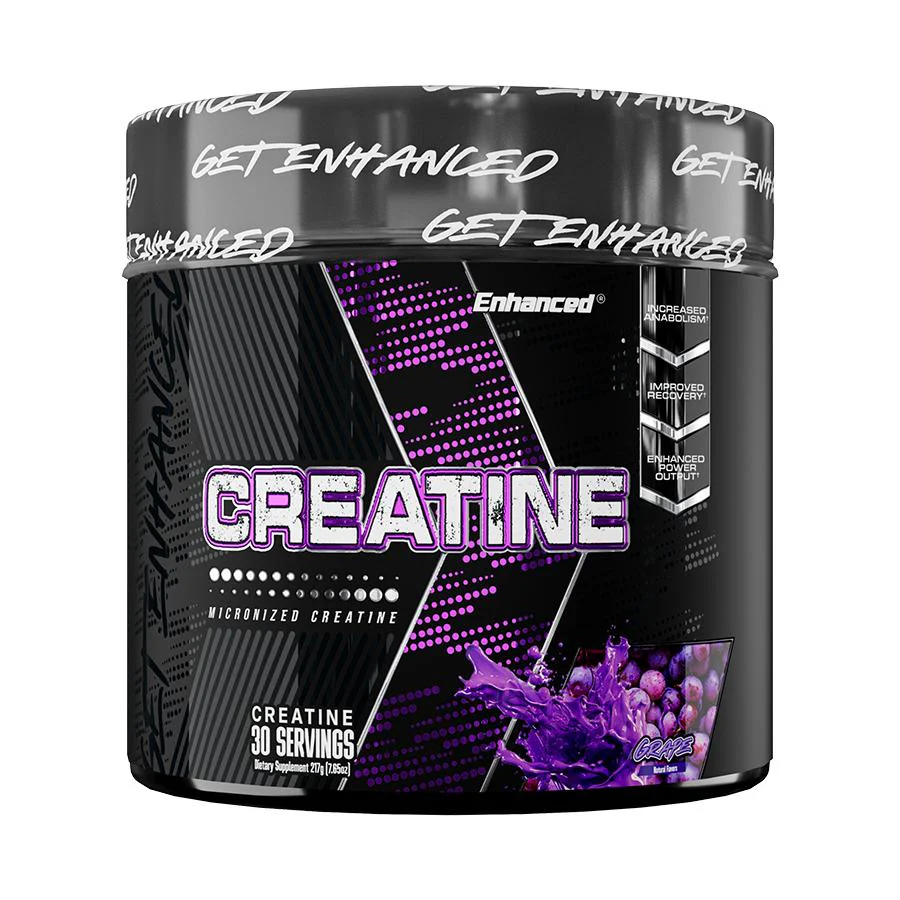
Creatine monohydrate raises the muscle’s stores of phosphocreatine, which regenerates ATP within seconds during hard efforts. It also links to mitochondria directly: mitochondrial creatine kinase uses freshly made ATP to form phosphocreatine, which carries energy to where the cell uses it. Our roundup of creatine monohydrate powders compares the main options.
What the research shows: Creatine is the most-studied sports supplement. Many controlled trials show that, combined with resistance training, it increases strength, high-intensity work capacity and lean mass more than training alone. Some studies also suggest cognitive benefits, mostly in sleep-deprived people, older adults and vegetarians. Long-term studies in healthy people have not found harm to the kidneys or liver.
- Form: Powder
- Studied dose: 3–5 g daily (one 5 g scoop). An optional loading phase of about 20 g a day, split into four doses, for 5–7 days saturates muscle faster.
- Duration: No cycling needed; daily use is the pattern that has been studied.
- Side effects: A small gain in water weight, mostly inside muscle; stomach upset with large single doses. Creatine raises blood creatinine, which can be misread as a kidney problem on routine labs.
- Often stacked with: Protein and beta-alanine for training performance.
Enhanced Labs Magnesium

Magnesium is essential for mitochondrial energy production: inside cells, ATP exists mainly bound to magnesium, and magnesium is a cofactor for more than 300 enzymes. Enhanced Magnesium combines three forms, bisglycinate, sucrosomial and L-threonate, in one capsule.
What the research shows: Dietary surveys consistently find that many adults eat less magnesium than recommended, and supplements mainly help people whose intake or levels are low. Magnesium L-threonate was developed because it raised brain magnesium and improved memory in rats; human data are still limited. Evidence for better sleep is mixed.
- Form: Capsules
- Dose: 1 capsule daily, per the label. The upper limit for magnesium from supplements is 350 mg a day for adults unless a doctor advises otherwise.
- Duration: Can be taken continuously.
- Side effects: Loose stools or stomach upset at higher doses. People with kidney disease should not take magnesium without medical advice.
- Often stacked with: B vitamins and vitamin D.

Pros
- Catalog is specifically organized around muscle building, fat loss, testosterone support, and workout performance.
- Range includes creatine, protein, EAAs, beta-alanine, and L-citrulline alongside more specialized formulas.
- Orders of $99+ qualify for free US shipping.
Cons
- Features several strong claims around muscle growth, testosterone, fat loss, and metabolic effects that should be distinguished from independently demonstrated clinical outcomes
- Heavily oriented toward bodybuilding and performance rather than broader nutritional supplementation.
BAM-15: A Preclinical Research Compound, Not a Supplement

BAM-15 is a mitochondrial uncoupler. It lets protons leak back across the inner mitochondrial membrane without passing through ATP synthase, so the energy from food is released as heat instead of being stored as ATP. To keep up, cells burn more fuel. That makes uncouplers interesting as potential obesity and diabetes drugs.
What the research shows: All published BAM-15 research is in cells and animals. In cell studies, it uncoupled mitochondria without depolarizing the cell’s outer (plasma) membrane, a key difference from older uncouplers such as DNP. In mice with diet-induced obesity, it reduced fat mass and improved insulin sensitivity without lowering food intake. Those results have not been tested in humans, and mouse doses do not translate into a safe human dose.
Why caution matters: Uncouplers as a class have a narrow safety margin. The older uncoupler DNP was sold as a diet drug in the 1930s and was withdrawn after deaths from overheating and cases of cataracts. BAM-15 appears to behave differently in animal models, but without human safety data, no dose can be called safe or “well-tolerated”. It is sold online as a research chemical, not as a dietary supplement.
Dosage Summary: Studied and Commonly Reported Doses
The table below summarizes the doses discussed above. “Commonly reported” means doses people report using, not a recommendation; only creatine and magnesium have well-established doses from human research.
| Compound | Dose | Route | Frequency | Evidence |
|---|---|---|---|---|
| L-Carnitine | 200–600 mg (commonly reported) | Injection | 1–3 times weekly | Approved for carnitine deficiency; little data in healthy people |
| NAD+ | 100 mg (commonly reported) | Injection | About once weekly | Human data mostly on oral NR and NMN |
| Glutathione | 600 mg (commonly reported) | Injection | 2–3 times weekly | Few controlled studies of injections |
| Creatine Monohydrate | 3–5 g (studied) | Oral | Daily, any time | Strong human evidence |
| Magnesium | 1 capsule (label); max 350 mg/day from supplements | Oral | Daily, often in the evening | Helps mainly when intake is low |
| BAM-15 | No human dose established | Not applicable | Not applicable | Cell and animal studies only |
Safety Considerations
Before adding any supplement to a mitochondrial health stack, put safety first. Nutrients like magnesium, CoQ10 and L-carnitine can offer metabolic benefits, but they also carry risks at high doses, alongside certain medications or with some health conditions.
Overuse or careless stacking can lead to stomach upset, electrolyte imbalances or drug–nutrient interactions, particularly for people with kidney, heart or metabolic disorders.
Choose High-Quality, Verified Products
Dietary supplements do not need approval before they are sold, so quality varies. Choose brands that use third-party testing and good manufacturing practices. Injectable products sold as research chemicals are a different category altogether: they are not approved for human use, and their purity and sterility depend entirely on the seller.
Watch for Side Effects and Overdosing
Even safe nutrients can cause problems at high doses, including stomach upset, headaches, muscle cramps, insomnia or fatigue. Fat-soluble vitamins taken in excess can build up in the body and cause harm.
Monitor Drug Interactions
Some supplements interfere with medications. High-dose antioxidants may interact with some cancer treatments, and several supplements can affect blood thinners, blood pressure drugs or diabetes medication. A well-known example: CoQ10 is structurally similar to vitamin K and may reduce the effect of warfarin.
Consider Health Status and Special Populations
People with chronic conditions such as heart disease, kidney disease or diabetes, people on prescription medication, and anyone pregnant or breastfeeding should talk to a healthcare provider before starting supplements. People with diagnosed mitochondrial disease need specialist guidance, as some drugs and nutrients can worsen symptoms.
Start Low and Go Slow
Add one product at a time, start at the low end of the dose range and watch how you respond. If side effects appear, reduce or stop and speak with a provider. Periodic blood work, such as kidney and liver function, can be sensible during long-term use.
The Bottom Line
Supplements can support mitochondrial health, but the evidence is strongest for the simplest options, and none of them replace exercise, sleep and a nutrient-rich diet.
- Creatine monohydrate and magnesium are the best-supported, lowest-risk starting points, especially if your diet is low in magnesium.
- Injectable L-carnitine, NAD+ and glutathione have a sound biological rationale but little controlled evidence in healthy people, and research-grade injectables add sterility risks.
- BAM-15 remains a preclinical compound with promising animal data and no human safety data, so it should not be treated as a supplement.
Frequently Asked Questions
Disclaimer
Please read carefully
The information on this site is for educational and informational purposes only, and is not medical advice. Always consult a qualified healthcare professional before using any supplement or medication, or making changes to your health, fitness, or nutrition routine.
Not medical advice
Content here is not a substitute for professional medical advice.
Consult your doctor
Talk to your doctor before starting any supplement or new routine.
Use at your own risk
We are not responsible for adverse effects from acting on this.
Do your research
Make informed decisions about your own health.
No guarantees
Individual results vary. No claims about outcomes.
Important — Never disregard professional medical advice or delay seeking it because of something you read here. If you think you may have a medical emergency, call your doctor or your local emergency number right away.