
Contents10 sections
Retatrutide (LY-3437943) is an investigational triple-receptor agonist developed by Eli Lilly that simultaneously targets GLP-1, GIP and glucagon receptors. No approved drug currently uses this mechanism. In the pivotal Phase 3 TRIUMPH-1 trial, people on the highest dose lost an average of 28.3% of their body weight over 80 weeks, more than has been reported for semaglutide or tirzepatide in their own trials.
Retatrutide is still not approved by the FDA, EMA or any other regulatory authority, and it is not commercially available through legitimate channels. Lilly plans to file for FDA approval in early 2027.
This article covers what retatrutide is, how its triple-receptor mechanism works, what the Phase 2 and Phase 3 evidence shows, how it compares to approved alternatives and where it stands on the road to approval.
Key Takeaways
- Retatrutide is a triple-receptor agonist targeting GLP-1, GIP and glucagon simultaneously, a mechanism no approved drug currently uses.
- In the pivotal Phase 3 TRIUMPH-1 trial, the 12 mg dose produced an average 28.3% weight loss at 80 weeks, rising to 30.3% at 104 weeks in an extension group.
- The glucagon receptor component increases basal metabolic rate and fat oxidation, meaning retatrutide reduces caloric intake and increases calorie burn simultaneously.
- Side effects are mainly gastrointestinal and dose-dependent. Phase 3 also flagged dysesthesia (tingling or burning skin sensations) in a minority of users.
- Retatrutide is not approved or commercially available as of October 2026. Lilly plans to submit it to the FDA in the first quarter of 2027.
How Retatrutide Works
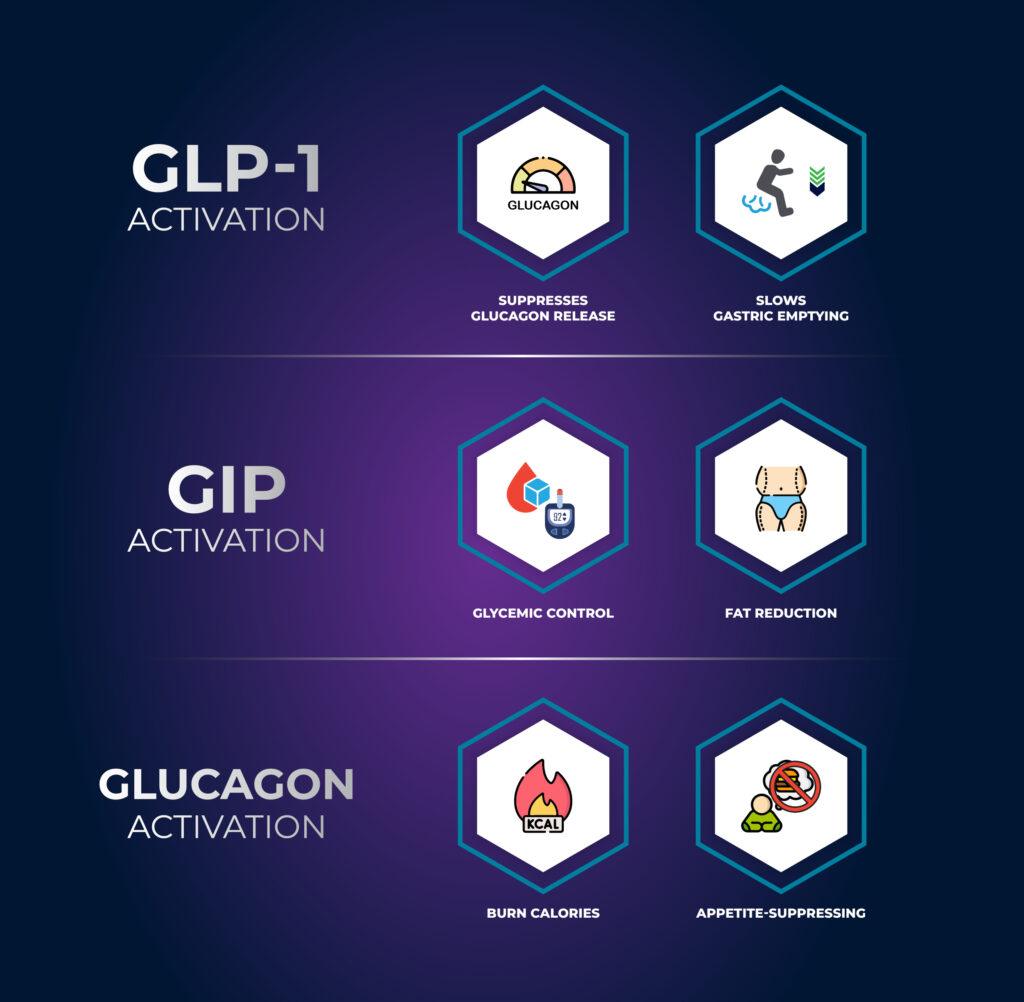
Understanding the mechanism explains why the clinical results look the way they do. Retatrutide activates three receptor pathways simultaneously.
GLP-1 Receptor Activation
This is the same pathway that made semaglutide famous. GLP-1 receptor activation stimulates insulin secretion in response to food, suppresses glucagon release, slows gastric emptying and signals satiety to the brain. The result is reduced appetite, better blood sugar control and lower postprandial glucose spikes.
GIP Receptor Activation
GIP receptor activation is the addition that tirzepatide made over semaglutide. GIP enhances insulin secretion and plays a role in lipid metabolism. On its own, its effects are modest. Combined with GLP-1, the two create a synergistic effect that amplifies both glycemic control and fat reduction beyond what either achieves alone. This is why tirzepatide generally outperforms semaglutide in head-to-head comparisons.
Glucagon Receptor Activation
This is what makes retatrutide genuinely novel. Glucagon is typically thought of as the hormone that raises blood sugar (the opposite of insulin), which makes its inclusion seem counterintuitive. But glucagon receptor activation also meaningfully increases basal metabolic rate and promotes fat oxidation. By adding this third pathway, retatrutide does not just reduce caloric intake. It simultaneously increases the rate at which the body burns calories at rest.
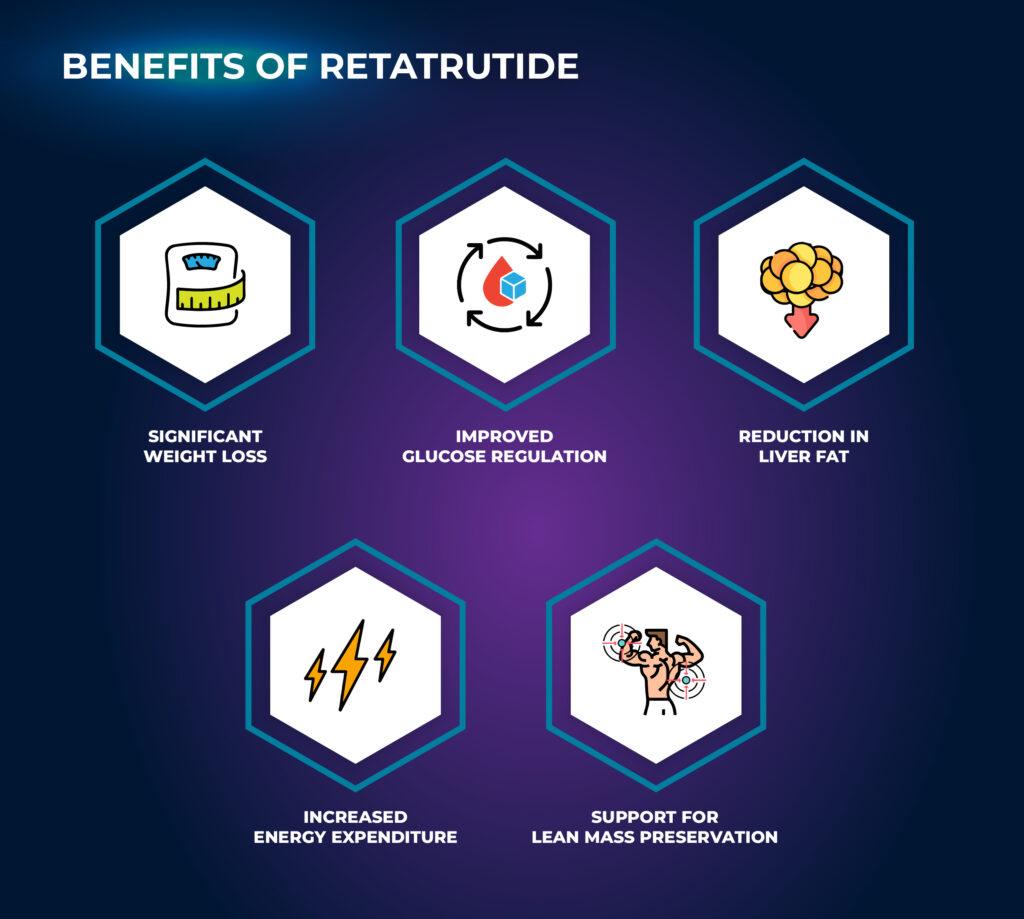
The net effect across all three pathways: reduced appetite, improved insulin sensitivity, better glucose regulation, increased energy expenditure and reduced liver fat. No approved single compound currently achieves all of that simultaneously.
What the Clinical Evidence Shows
Phase 2 Trial Results
The first major dataset was a Phase 2 trial published in the New England Journal of Medicine in 2023. It enrolled adults with obesity (BMI of 30 or higher) or overweight with at least one weight-related comorbidity, and ran for 48 weeks. At the highest dose (12 mg weekly), participants lost up to 24% of their body weight, with significant reductions in fasting glucose, insulin resistance markers and liver fat.
Phase 3 Results: The TRIUMPH Program
Phase 3 has now confirmed, and in some trials exceeded, the Phase 2 numbers. As of October 2026, Eli Lilly has reported five positive Phase 3 studies. The four headline TRIUMPH readouts:
| Trial | Population | Duration | Weight Loss (highest dose) | Placebo |
|---|---|---|---|---|
| TRIUMPH-4 (Dec 2025) | Obesity with knee osteoarthritis | 68 weeks | 28.7% (12 mg) | 2.1% |
| TRIUMPH-1 (May 2026) | Obesity or overweight without diabetes, 2,339 adults | 80 weeks | 28.3% (12 mg) | Not reported in coverage |
| TRIUMPH-2 (Jul 2026) | Type 2 diabetes with obesity, 1,152 adults | 80 weeks | 20.8% (12 mg) | 4.0% |
| TRIUMPH-3 (Jul 2026) | Severe obesity with cardiovascular disease, 1,949 adults | 80 weeks | 22.6% (12 mg) | 3.2% |
TRIUMPH-1 is the pivotal obesity trial. At 80 weeks, the 12 mg dose produced an average loss of 28.3% (70.3 lbs), with 25.9% on 9 mg and 19.0% on 4 mg. Nearly half (45.3%) of participants on 12 mg lost at least 30% of their body weight, and 65.3% reached a BMI under 30. In a blinded extension for participants with a starting BMI of 35 or higher, the 12 mg group reached an average 30.3% loss at 104 weeks, according to AJMC’s coverage of the results.
TRIUMPH-4 added a pain outcome. Beyond 28.7% weight loss, retatrutide cut knee osteoarthritis pain by up to 75.8% on the WOMAC pain score.
TRIUMPH-2 showed blood sugar benefits. In people with type 2 diabetes, A1C fell by up to 1.6 percentage points from a baseline of 7.7%, versus 0.2 with placebo. As with other incretin drugs, weight loss is smaller in people with diabetes than without.
TRIUMPH-3 did not settle the heart question. Cardiovascular event rates were similar between retatrutide and placebo, with wide confidence intervals. Dedicated cardiovascular and kidney outcome trials are still running.
These figures come from Lilly’s topline announcements and trade coverage. Full peer-reviewed publications for the Phase 3 trials are still to come, and comparisons with other drugs are across different trials rather than head-to-head.
Retatrutide vs Approved Alternatives
| Compound | Mechanism | Peak Clinical Weight Loss | Status |
|---|---|---|---|
| Semaglutide | GLP-1 agonist | ~15-17% over 68 weeks | FDA approved (Wegovy) |
| Tirzepatide | GLP-1 + GIP dual agonist | ~16-21% over 72 weeks | FDA approved (Zepbound) |
| Retatrutide | GLP-1 + GIP + glucagon triple agonist | ~28% over 80 weeks (up to 30.3% at 104 weeks) | Positive Phase 3, FDA filing planned Q1 2027, not approved |
| Cagrilintide | Amylin analog | ~8-10% as monotherapy | Phase 3 trials, not approved |
The comparison worth watching is retatrutide versus tirzepatide. Both are Eli Lilly compounds. With Phase 3 now showing average losses near 28% in people without diabetes, retatrutide looks like a significant step beyond the current gold standard rather than an incremental improvement, though no head-to-head trial has been reported.
Who Could Benefit from Retatrutide
Based on the Phase 3 populations and mechanism of action, retatrutide is being studied for:
- Adults with obesity (BMI of 30 or higher) where traditional lifestyle interventions or single-agonist therapies have been insufficient
- People with type 2 diabetes and obesity who need both weight loss and better blood sugar control
- Obesity with knee osteoarthritis, where TRIUMPH-4 showed large reductions in knee pain alongside weight loss
- Obesity with established cardiovascular disease, the TRIUMPH-3 population
- Metabolic-associated fatty liver disease (MASLD), where retatrutide’s glucagon-mediated fat oxidation may provide specific benefit, with dedicated trials ongoing
The triple-receptor mechanism addresses both appetite regulation and energy expenditure, which makes it particularly relevant for populations where caloric restriction alone has not produced adequate results.
Side Effects and Safety Profile
Retatrutide’s side effect profile in Phase 3 has been broadly consistent with other GLP-1 class therapies: mostly gastrointestinal and dose-dependent.
Most commonly reported:
- Nausea (in TRIUMPH-1, up to 42.4% on 12 mg versus 14.8% on placebo)
- Diarrhea
- Constipation
- Vomiting
- Decreased appetite
These effects were mostly mild to moderate and tended to ease as participants adjusted, particularly with gradual dose escalation.
Dysesthesia. Phase 3 identified a new signal: dysesthesia, an abnormal or unpleasant skin sensation such as tingling or burning. It occurred in roughly 4.5-7.3% of participants on retatrutide versus about 1% on placebo in TRIUMPH-2 and TRIUMPH-3. Cases were described as mild to moderate, and most resolved during treatment.
Discontinuation. In TRIUMPH-1, 11.3% of participants on 12 mg stopped treatment because of side effects, versus 4.9% on placebo. Rates were lower on the 4 mg and 9 mg doses.
What remains unknown. Long-term safety beyond about two years, cardiovascular outcomes (TRIUMPH-3 was inconclusive) and how retatrutide performs outside trial settings. Dedicated outcome trials are ongoing.
Availability
Retatrutide is not commercially available. It is not approved by the FDA, EMA, TGA or any other regulatory authority, and it is not legally available for purchase as a medication anywhere in the world as of October 2026.
Lilly has said it plans to submit retatrutide to the FDA in the first quarter of 2027, with global submissions to follow. FDA reviews typically take around a year, so approval would not come before 2028 at the earliest, and is not guaranteed.
Websites offering retatrutide for sale are selling products that are either mislabeled, unverified or of unknown purity and composition. Research chemical vendors sometimes list compounds under investigational names, but without regulatory oversight, independent third-party testing and pharmaceutical-grade manufacturing standards, there is no way to verify what is actually being provided.
For anyone interested in GLP-1 class therapies that are currently approved and available, semaglutide (Wegovy/Ozempic) and tirzepatide (Zepbound/Mounjaro) are accessible through licensed healthcare providers with proper medical supervision. That is the legitimate path for this class of treatment right now.
The Bottom Line
Retatrutide is the most clinically impressive compound in the weight loss space right now, with Phase 3 results confirming average losses near 28%, but it is not yet approved or legitimately available.
- Five positive Phase 3 trials, led by TRIUMPH-1 at 28.3% over 80 weeks, put retatrutide ahead of anything currently approved, based on cross-trial comparisons.
- The trade-offs are more gastrointestinal side effects at higher doses, a new dysesthesia signal and cardiovascular outcomes that are not yet settled.
- With an FDA filing planned for Q1 2027, approval is unlikely before 2028. Until then, semaglutide and tirzepatide through a licensed provider are the legitimate path. See our guide to weight loss peptides for the wider picture.
- This is a compound worth following closely. We will update this article as peer-reviewed Phase 3 data and the FDA decision arrive.
Frequently Asked Questions
Disclaimer
Please read carefully
Not medical advice
Content here is not a substitute for professional medical advice.
Consult your doctor
Talk to your doctor before starting any supplement or new routine.
Use at your own risk
We are not responsible for adverse effects from acting on this.
Do your research
Make informed decisions about your own health.
No guarantees
Individual results vary. No claims about outcomes.
Important — Never disregard professional medical advice or delay seeking it because of something you read here. If you think you may have a medical emergency, call your doctor or your local emergency number right away.