Contents12 sections
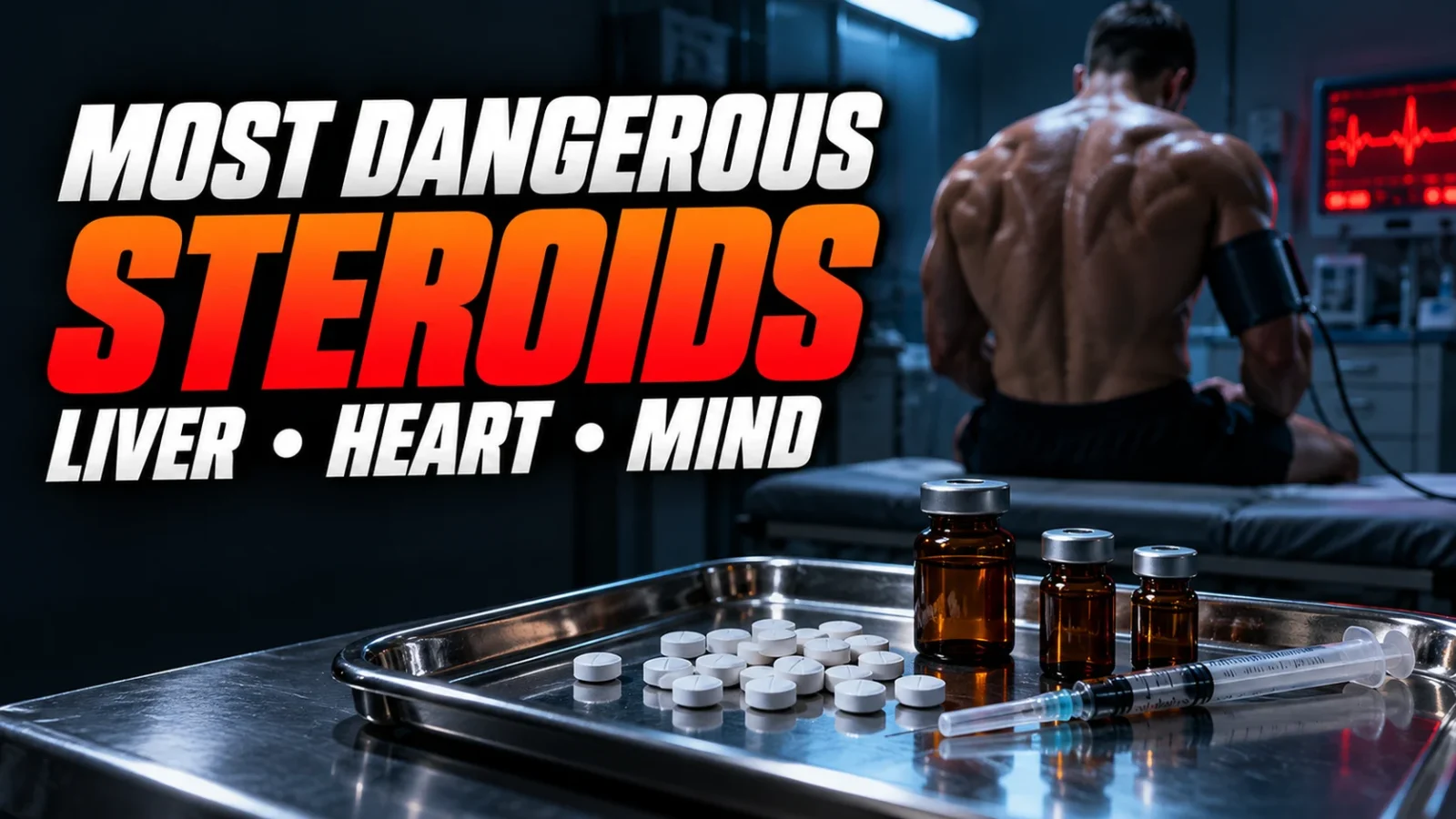
No anabolic steroid is safe, but some are clearly harsher than others. The most dangerous anabolic steroids are the strong 17-alpha-alkylated orals, such as Superdrol, Anadrol and Halotestin, which carry the highest liver risk, and trenbolone, which combines a heavy hit to cholesterol with the worst reputation for mood and sleep problems and almost no human research. In practice, the dose, the length of use and the number of compounds stacked together matter as much as which drug is in the syringe or the pill.
Anabolic steroids began as medicines. Testosterone was first synthesized in 1935, and athletes began misusing anabolic steroids in the 1950s. Most of the harm today comes from how they are used outside medicine: doses many times higher than anything tested in trials, long or back-to-back cycles, several compounds at once, and black-market products that often are not what the label says.
This guide ranks the best-known compounds by three kinds of risk: liver, heart and mental health. It also covers two drugs used alongside steroids that can kill far faster than any of them, what the deaths of well-known bodybuilders do and don’t show, and the steps that lower risk. Nothing here is a recommendation to use any of these drugs.
Key Takeaways
- No anabolic steroid is safe. High doses, long cycles, stacking and fake products drive risk as much as the choice of compound.
- Liver risk sits almost entirely with 17-alpha-alkylated oral steroids. Superdrol, Anadrol and Halotestin top that list.
- Heart risk builds with dose and years of use. In a 2017 study, long-term users had weaker heart function and more coronary plaque than non-users.
- Trenbolone has the worst reputation for anxiety, aggression and insomnia, and depression is most common after a cycle ends.
- Insulin and DNP are not steroids but are more acutely dangerous than any of them. Both can kill within hours.
What Makes One Steroid More Dangerous Than Another?
All anabolic-androgenic steroids (AAS) share a core set of risks. They lower HDL (“good”) cholesterol, raise red blood cell counts, can affect mood and switch off the body’s own testosterone and sperm production. In a 1990 World Health Organization trial of testosterone as a male contraceptive, weekly injections of 200mg testosterone enanthate stopped sperm production entirely in most of the men within six months.
Beyond that shared baseline, a few features make some compounds harsher than others:
- 17-alpha-alkylation: A chemical change that lets a steroid survive the liver when swallowed. It is also what makes most oral steroids hard on the liver and on cholesterol.
- A strong androgenic effect: Compounds such as trenbolone and fluoxymesterone are strongly androgenic, which users link to more aggression, acne and hair loss and, in women, to virilization.
- Little or no human research: Trenbolone and Superdrol were never properly studied in people, so their risks are known mainly from case reports and user experience.
- Dose and stacking: Side effects rise with the dose. In a 2001 trial, healthy young men were given 25mg to 600mg of testosterone enanthate a week for 20 weeks. The fall in HDL cholesterol and the rise in hemoglobin were largest at the highest doses.
- Fake and contaminated products: A 2022 meta-analysis of black-market testing found that 36% of samples were counterfeit and another 37% substandard, so users often don’t know what they are taking or how much.
That is why no ranking is exact. The lists below are based on each drug’s chemistry, clinical data where it exists, published case reports and consistent user reports. No head-to-head trial comparing these drugs at bodybuilding doses has ever been done.
The Most Dangerous Steroids at a Glance
| Compound | Form | Liver Risk | Heart and Cholesterol Risk | Mental Health Reports |
|---|---|---|---|---|
| Trenbolone | Injectable (veterinary) | Poorly studied | High | High |
| Superdrol (methasterone) | Oral, 17-alpha-alkylated | Very high | High | Moderate |
| Anadrol (oxymetholone) | Oral, 17-alpha-alkylated | Very high | High | Moderate |
| Halotestin (fluoxymesterone) | Oral, 17-alpha-alkylated | High | High | High |
| Winstrol (stanozolol) | Oral or injectable, both 17-alpha-alkylated | High | High | Low to moderate |
| Dianabol (methandienone) | Oral, 17-alpha-alkylated | High | Moderate to high | Moderate |
| Equipoise (boldenone) | Injectable (veterinary) | Low | Moderate to high | Low to moderate |
| Deca (nandrolone) | Injectable | Low | Moderate | Moderate |
| Testosterone, high dose | Injectable | Low | Rises with dose | Rises with dose |
The ratings are relative and assume the doses users commonly report, not medical doses. Any of these drugs becomes more dangerous in a stack, at a higher dose or over years of use.
Ranked by Liver Risk
The liver is where the choice of compound matters most. Almost all of the risk sits with 17-alpha-alkylated oral steroids. The injectable forms of testosterone, nandrolone, trenbolone and boldenone are not 17-alpha-alkylated and are much less likely to harm the liver, although trenbolone’s effects on the liver have never been properly studied.
Liver problems linked to 17-alpha-alkylated steroids range from raised liver enzymes to cholestasis (blocked bile flow, which causes jaundice and itching), peliosis hepatis (blood-filled cysts in the liver), liver adenomas and, rarely, liver cancer. US labels for these drugs, such as Anadrol-50, carry a boxed warning for peliosis hepatis, liver tumors and blood lipid changes.
- Superdrol (methasterone) and methyltrienolone: Superdrol was sold as a “dietary supplement” in the mid-2000s without ever going through drug trials. A string of published case reports of severe cholestatic liver injury followed, some needing hospital care. Methyltrienolone, an oral form of trenbolone, was tested as a cancer drug and showed liver toxicity even at very low doses, which is why it was never marketed.
- Anadrol (oxymetholone): One of the few anabolic steroids still approved in the US, for anemias caused by poor red blood cell production. Peliosis hepatis and liver tumors were reported in patients on long-term treatment, which is where its warnings come from.
- Halotestin (fluoxymesterone): A strongly androgenic oral with little muscle-building effect, used mainly by strength athletes before competition. It is hard on both the liver and cholesterol.
- Dianabol (methandienone) and Winstrol (stanozolol): Two of the most widely used orals, and both 17-alpha-alkylated. Winstrol is 17-alpha-alkylated in its injectable form too, so injecting it does not remove the liver risk.
- Anavar (oxandrolone): Usually described as the mildest of the 17-alpha-alkylated orals. It still carried the same boxed warning in the US.
Liver injury from these drugs often improves after they are stopped, but recovery can take months, and some problems, such as liver tumors, need specialist care. Alcohol adds to the load. Our Superdrol vs Anadrol comparison covers the two harshest orals in more detail.
Ranked by Heart Risk
Heart disease is the most serious long-term risk of steroid use. In a 2017 study of 140 experienced male weightlifters, long-term steroid users had weaker heart pumping function than non-users and more plaque in their coronary arteries. The more steroids a man had used over his lifetime, the more plaque he had.
Steroids strain the heart in several ways at once: lower HDL and higher LDL cholesterol, higher blood pressure, thicker blood from a rising hematocrit, and direct effects on the heart muscle that can leave it enlarged and stiff. Autopsy reports of steroid users who died young often describe enlarged, thickened hearts.
- High-dose stacks: The biggest heart risk is not one compound but several at high doses for long periods. Each compound added piles on more of the cholesterol, blood pressure and hematocrit effects.
- Oral 17-alpha-alkylated steroids: Winstrol, Anadrol, Superdrol and Halotestin hit cholesterol hardest. In a small 1989 trial, 6mg a day of oral stanozolol cut HDL cholesterol by about a third within six weeks, while 200mg a week of injectable testosterone lowered it only slightly.
- Trenbolone: Users consistently report large drops in HDL cholesterol, higher blood pressure and poorer cardio capacity. There are no controlled human studies to measure how large these effects are.
- Equipoise (boldenone): A veterinary drug made for horses. Users report large rises in hematocrit, which thickens the blood and raises the risk of clots. There is no good evidence that it raises blood pressure more than other steroids, as is often claimed.
- Dianabol and nandrolone: Dianabol converts to estrogen, and the water retention that follows pushes blood pressure up. Nandrolone is usually run in long, high-calorie bulking cycles that add body weight and blood pressure.
- Moderate-dose testosterone: The best studied and the lowest heart risk on this list, though its effects on HDL and hematocrit still rise with the dose.
What About the Kidneys?
A common claim is that every steroid cycle permanently damages the kidneys. The evidence does not show that. Kidney damage is a real risk, but it is linked mostly to heavy, long-term use, often alongside high blood pressure and very high body mass.
In a 2010 case series of 10 bodybuilders with long-term steroid use and protein leaking into their urine, kidney biopsies showed a form of scarring called focal segmental glomerulosclerosis (FSGS) in most of them. Kidney function held steady or improved in most of the men after they stopped, but one progressed to kidney failure. Severe cholestatic liver injury from oral steroids can also damage the kidneys.
Kidney blood tests can mislead in very muscular people. Creatinine, the usual marker, runs higher with more muscle mass and with creatine use, so a single high reading needs a doctor’s interpretation.
Ranked by Mental Health Risk
Mental health effects are the hardest to rank, because studies rarely separate one compound from another. What the research does show:
- Most men react mildly, but a minority react strongly. In a 2000 placebo-controlled trial, six weeks of high-dose testosterone (up to 600mg a week) had little psychiatric effect in most men, while a small number became markedly hypomanic: elevated, irritable and impulsive.
- Aggression rises with the dose. Irritability and aggression are reported far more often at high doses. “Roid rage” is real, but it is not the typical response.
- The crash after a cycle can be worse than the cycle. Natural testosterone can stay low for months after steroids are stopped. Depression, low motivation and, in some cases, suicidal thoughts are reported during this period.
- Dependence is common. About 30% of users are estimated to develop dependence: they keep using despite side effects, often to avoid the withdrawal crash.
- Long-term use is linked to brain changes. Brain-imaging studies of long-term users, mostly from one Norwegian research group, have found a thinner cortex and brains that look older than expected for their age. These studies show a link, not proof that steroids caused the changes.
Based on those findings and on consistent user reports, the compounds with the worst mental health record are:
- Trenbolone: The worst reputation by far. Users commonly report anxiety, paranoia, aggression, insomnia and night sweats. Some cell and animal studies suggest it may harm nerve cells, but there is no human data. Our trenbolone guide covers its side effects in detail.
- Halotestin: Some strength athletes take it before lifting or fighting specifically for the aggression it is said to bring, which says a lot about its effect on mood.
- High-dose testosterone and big stacks: The risk of hypomania and irritability rises with the total dose.
- Nandrolone: Commonly linked by users to low mood and sexual dysfunction, partly because it is so suppressive.
- Anadrol and Dianabol: Irritability and aggression at higher doses are frequently reported.
More Dangerous Than Any Steroid: Insulin and DNP
Two drugs used by some bodybuilders alongside steroids can kill within hours, which anabolic steroids rarely do. Neither is a steroid, and both are more acutely dangerous than anything on the lists above.
Insulin
Insulin is a prescription hormone for diabetes. Some bodybuilders inject fast-acting insulin around training to drive nutrients into muscle. Too much insulin, or too little food after it, causes hypoglycemia (dangerously low blood sugar): shaking, sweating and confusion, then seizures, unconsciousness and death if it is not treated. Severe episodes can cause lasting brain damage, and they can come on quickly, including while driving or asleep.
DNP
DNP (2,4-dinitrophenol) is an industrial chemical sold illegally as a fat burner. It makes the body burn energy as heat, so body temperature can rise out of control. It has killed people at doses they expected to be safe, and there is no antidote. The FDA declared it extremely dangerous and not fit for human consumption in 1938.
What the Deaths of Rich Piana, Dallas McCarver and Bostin Loyd Show
Several well-known bodybuilders have died young, and their deaths are often linked to steroids. Public reports cannot prove the cause in any single case, but these cases fit a pattern doctors recognize in heavy, long-term users.
- Rich Piana: The bodybuilder and fitness influencer spoke openly about decades of steroid use. He collapsed at home in August 2017 and died less than three weeks later, aged 46. Public reports of his autopsy described a heart and liver far heavier than normal.
- Dallas McCarver: The IFBB pro died in August 2017, aged 26. Early reports said he may have choked while eating, and later reports of his autopsy described a greatly enlarged heart. No official finding linked his death to steroids.
- Bostin Loyd: The bodybuilder spoke publicly about very heavy steroid use and about being diagnosed with serious kidney disease. He died suddenly in 2022, in his late twenties.
The pattern goes beyond famous names. In a Finnish study that followed 62 elite powerlifters suspected of steroid use for 12 years, 12.9% died during follow-up, compared with 3.1% of a control group. Our anabolic steroid statistics page covers what is known about use, health risks and deaths.
How to Lower the Risk
Nothing makes steroid use safe. For anyone who chooses to use them anyway, the same steps keep coming up in research and harm-reduction practice:
- Avoid the compounds at the top of these lists, especially oral 17-alpha-alkylated steroids at high doses or for long stretches.
- Use less: lower doses, one compound at a time and real time off between cycles. Risk builds with total exposure.
- Get blood work before, during and after: lipids, hematocrit, liver enzymes, kidney function and hormones, plus regular blood pressure checks at home.
- Tell a doctor. Results are far more useful with medical input, and it matters in an emergency.
- Stay away from insulin and DNP outside medical care. DNP has no safe dose.
After any cycle, the body’s own testosterone production has to restart. In a 2023 study of 641 men who had stopped steroids, only 48% had fully recovered their hormone levels, and men who had used more compounds were less likely to recover. Many users run post-cycle therapy with clomiphene or tamoxifen, drugs that are not approved for this use. Our guide to the safest steroids covers what lower-risk use looks like.
 SERMs & AIs
Overview
- Form: Oral capsules (25 mg each, 60 capsules)
- Researched Dosage: 25 mg to 50 mg daily for PCT
- Typical Cycle: 4-6 weeks
- Cost: $69.95
- Stacking Options: Tamoxifen, HCG, Enclomiphene
Pros
- A SERM that blocks estrogen at the hypothalamus, prompting the body to make more LH, FSH and its own testosterone.
- Studies in men with low testosterone found it raised testosterone while preserving sperm production, unlike TRT.
- It is oral, inexpensive and has been in medical use since 1967, so its effects are well documented.
Cons
- About a third of each dose is zuclomiphene, a long-lasting isomer linked to mood swings, irritability and low mood.
- Blurred vision, floaters and light sensitivity have been reported; visual symptoms are a reason to stop.
- It is FDA-approved only for female infertility, so use in men is off-label, and this product is sold for research use only.
The Bottom Line
There is no single most dangerous steroid: oral 17-alpha-alkylated compounds like Superdrol and Anadrol lead on liver risk, while trenbolone and high-dose stacks lead on heart and mental health risk.
- Liver risk sits almost entirely with the 17-alpha-alkylated orals. Heart risk builds with dose and years of use, and in long-term users it shows up as weaker heart function and more coronary plaque.
- Insulin and DNP are more acutely dangerous than any anabolic steroid. Both can kill within hours, and DNP has no antidote.
- Famous deaths can’t be pinned on steroids alone, but enlarged hearts in heavy users and higher early death rates in studies point the same way. Lower doses, fewer compounds and blood work reduce the risk; nothing removes it.
Frequently Asked Questions
Disclaimer
Please read carefully
The information on this site is for educational and informational purposes only, and is not medical advice. Always consult a qualified healthcare professional before using any supplement or medication, or making changes to your health, fitness, or nutrition routine.
Not medical advice
Content here is not a substitute for professional medical advice.
Consult your doctor
Talk to your doctor before starting any supplement or new routine.
Use at your own risk
We are not responsible for adverse effects from acting on this.
Do your research
Make informed decisions about your own health.
No guarantees
Individual results vary. No claims about outcomes.
Important — Never disregard professional medical advice or delay seeking it because of something you read here. If you think you may have a medical emergency, call your doctor or your local emergency number right away.