Contents14 sections
Bromantane is a synthetic compound developed in the Soviet Union and registered in Russia as a medicine under the brand name Ladasten. It belongs to a small drug class called actoprotectors: compounds meant to raise physical and mental work capacity, especially under stress, without the jitters and crash of a classic stimulant.
That profile is why the bromantane supplement has a following among lifters, students and shift workers looking for steady energy and focus. The catch is the evidence. Most of it comes from Russian animal research and a small number of Russian clinical studies in people with fatigue disorders. Bromantane is not approved by the FDA, and it is on the World Anti-Doping Agency (WADA) list of banned stimulants.
This guide covers what bromantane is, how it works, what the research does and does not show, the doses used in studies, side effects, common stacks and where it is sold.
Key Takeaways
- Bromantane is a Russian adamantane derivative classed as an actoprotector: it is meant to raise physical and mental work capacity, with mild stimulant and anti-anxiety effects.
- In rat studies it raises dopamine by increasing the brain’s production of it, rather than forcing its release the way amphetamine-type stimulants do.
- Human evidence comes from Russian clinical studies in asthenic (fatigue) disorders; the largest, in 728 patients, used 50 or 100 mg a day for 28 days.
- Bromantane is banned by WADA as a stimulant. Any athlete who is drug tested should not use it.
- Reported side effects are usually mild (insomnia when taken late, headache, nausea, irritability), but long-term safety has not been studied.
What Is Bromantane?
Bromantane (also spelled bromantan; chemical name N-(4-bromophenyl)adamantan-2-amine) was developed in the Soviet Union in the 1980s. It is an adamantane derivative, the same chemical family as amantadine and memantine, two drugs used for Parkinson’s disease and Alzheimer’s disease.
It is classed as an actoprotector, a type of drug designed to increase the body’s resistance to heavy physical and mental load. In Russia it is registered as Ladasten for asthenic disorders (asthenia or neurasthenia): conditions marked by persistent fatigue, weakness and low drive.
What sets bromantane apart is its mix of effects. It acts as a mild psychostimulant, but it is also reported to reduce anxiety. That is unusual, since most stimulants make anxiety worse. Outside Russia it is not an approved medicine. In the US it is sold online as a research chemical and often marketed as a nootropic.
| Bromantane at a glance | |
|---|---|
| Other names | Bromantan, Ladasten |
| Drug class | Actoprotector; adamantane derivative |
| Approval | Registered in Russia for asthenic disorders; not approved by the FDA |
| Main reported effects | Less fatigue, mild stimulation, less anxiety |
| Evidence | Russian animal studies; Russian clinical studies in asthenic disorders |
| Doses used in studies | 50 or 100 mg a day for 28 days |
| Status in sport | Prohibited by WADA (stimulants, class S6) |
How Bromantane Works
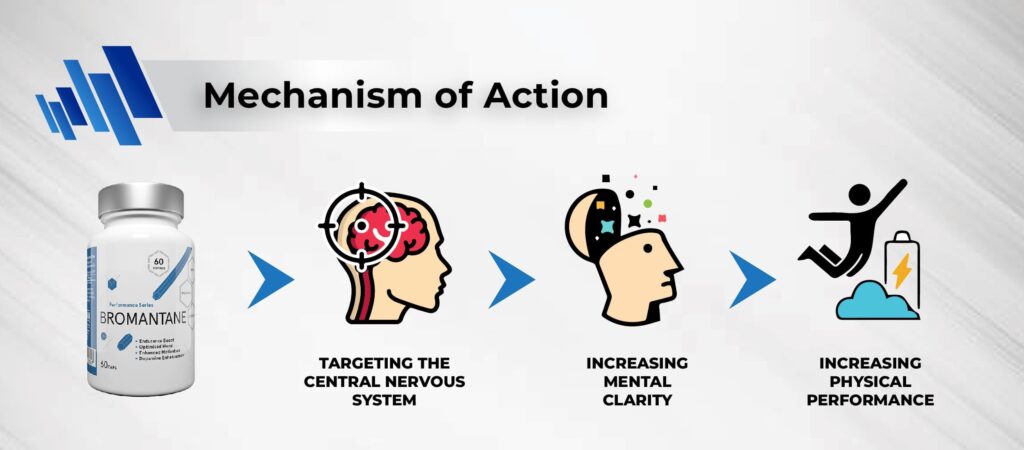
Most of what is known about bromantane’s mechanism comes from studies in rats by Russian researchers. Its main target is the brain’s dopamine system, but it works differently from classic stimulants.
Amphetamine pushes dopamine out of nerve cells, and methylphenidate blocks its reuptake; both raise dopamine quickly. Bromantane appears to increase how much dopamine the brain makes. In rat studies it increased the expression of the genes for tyrosine hydroxylase and aromatic L-amino acid decarboxylase, the two enzymes that turn the amino acid tyrosine into dopamine (via L-DOPA).
Dopamine is a neurotransmitter involved in motivation, drive, attention and movement. A gradual rise in dopamine production, rather than a sudden release, may explain why users describe bromantane’s effect as steady and why it is not reported to cause a sharp crash. Rat studies have also reported smaller effects on serotonin. How bromantane reduces anxiety is less well understood.
On the physical side, Russian animal studies describe bromantane as increasing work capacity and endurance, including under demanding conditions such as heat and low oxygen (hypoxia). These are the effects that define an actoprotector, but they have not been confirmed in controlled performance trials in healthy people.
Benefits of Bromantane: What the Evidence Shows
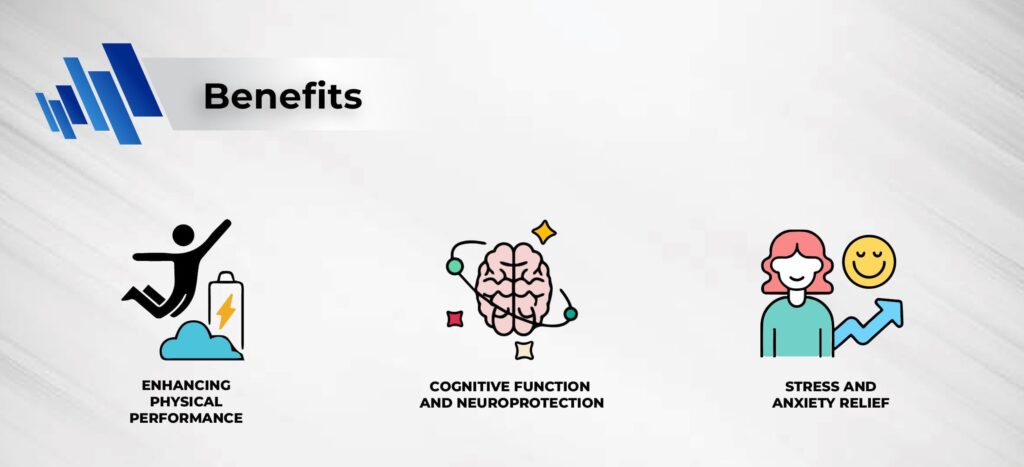
The claimed benefits of bromantane fall into four groups. They are not equally well supported, so each one below says where the evidence comes from.
1. Less Fatigue (the Anti-Asthenic Effect)
This is the only use backed by clinical studies in people. Bromantane is registered in Russia for asthenic disorders, and Russian clinical work in these patients reported less fatigue and weakness at doses of 50-100 mg a day. The largest trial is described in the research section below.
2. Physical Work Capacity and Endurance
In animal studies, bromantane increased the amount of physical work animals could do before exhaustion and helped them keep working in heat and low-oxygen conditions. There are no controlled trials of bromantane as a performance aid in healthy athletes. Its use by Russian athletes at the 1996 Olympics is what led to it being banned in sport (see below).
3. Focus, Motivation and Mood
Because it raises dopamine production in animal studies, bromantane is marketed as a nootropic for focus and motivation, and users commonly report steadier energy and better drive through long working days. Controlled studies of cognition in healthy people are lacking, so claims about better memory, learning or brain protection are not established.
4. Stress and Anxiety
Bromantane’s anti-anxiety (anxiolytic) effect is reported in Russian animal and clinical work, where it is described as reducing anxiety without sedation. This is part of its appeal compared with stimulants such as caffeine or amphetamine, which can increase anxiety at higher doses. People who are sensitive to stimulants may still feel more on edge, especially at high doses.
Bromantane Is Banned by WADA
Bromantane, listed as “bromantan”, is on the WADA Prohibited List in class S6 (stimulants), which are prohibited in competition. That covers Olympic sports, most international federations and drug-tested strength sports that follow WADA rules. A positive test can lead to a ban, whatever the reason for taking it.
Bromantane became known in sport at the 1996 Atlanta Olympics, when several Russian athletes tested positive for it. The Court of Arbitration for Sport overturned their disqualifications because the substance was not yet clearly covered by the rules, and it was added to the banned list soon after.
If you are tested, do not use bromantane. The time a substance stays detectable can outlast the effects you feel, so stopping a few days before an event is not a safe plan.
The 2 Best Bromantane Supplement Products
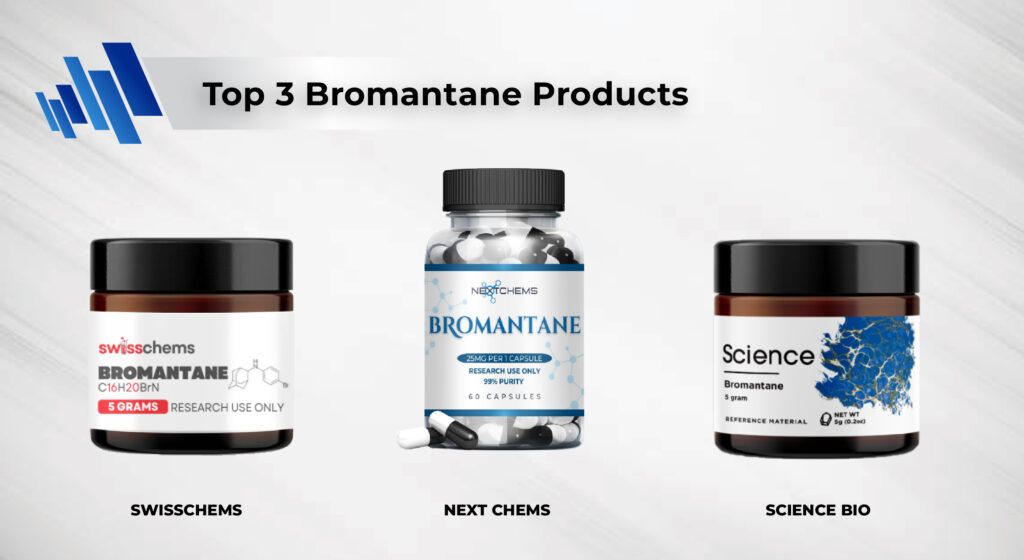
Because bromantane is not an approved medicine outside Russia, it is sold as a research chemical and its quality is not regulated. Choose a seller that publishes third-party lab tests (a certificate of analysis) for each batch, keeping in mind that a lab test confirms identity and purity, not safety. Two of the brands we cover carry bromantane, one as a powder and one as capsules.
| Product | Form | Strength | Best for |
|---|---|---|---|
| SwissChems Bromantane | Powder | 5 g per container | Flexible dosing (needs a milligram scale) |
| NextChems Bromantane | Capsules | 25 mg per capsule, 60 capsules | Fixed, convenient dosing |
1. SwissChems Bromantane, 5 Grams Powder
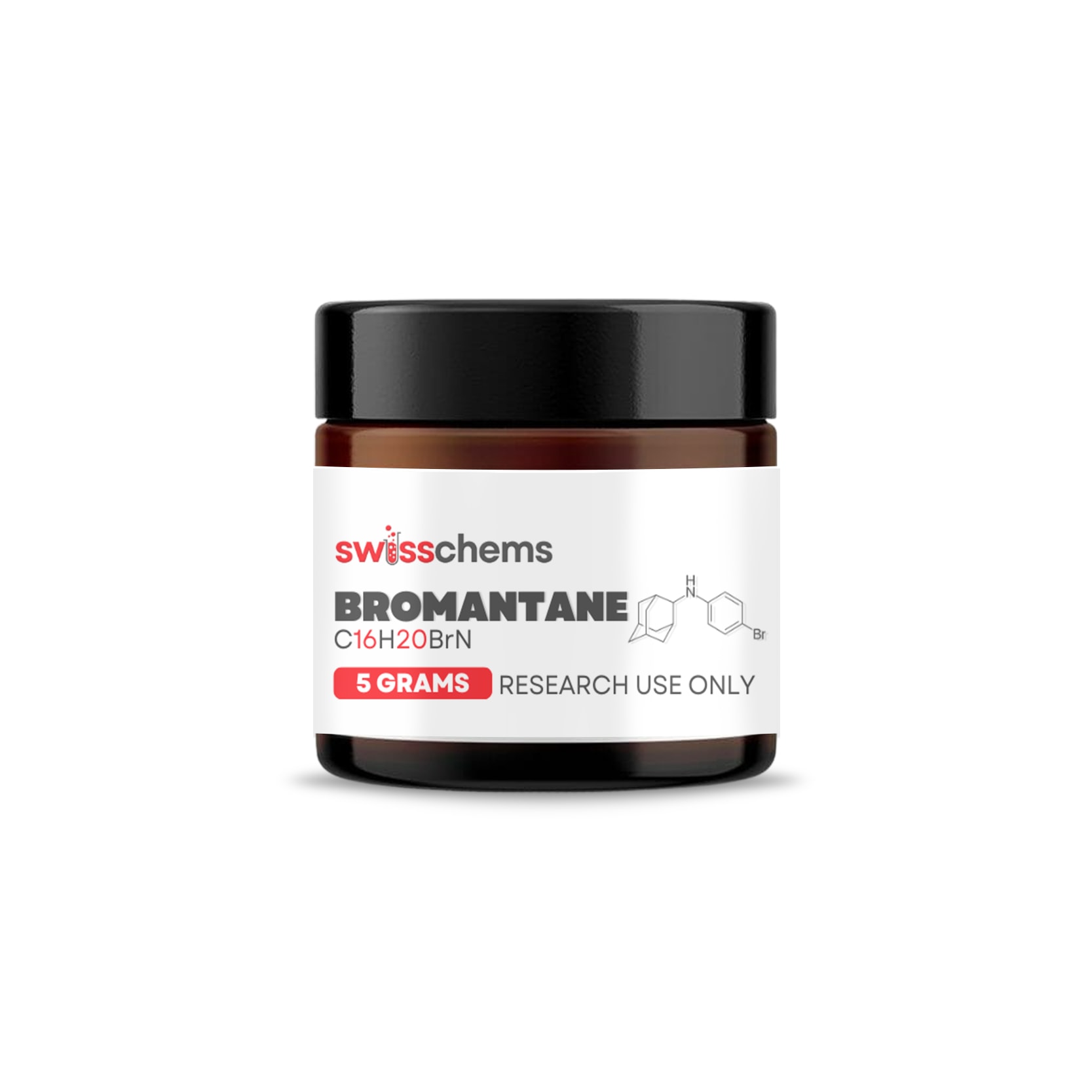
SwissChems sells bromantane as a 5-gram powder. Powder lets experienced users set their own dose and mix it into a drink, but at 25-100 mg per serving you need an accurate milligram scale; a kitchen scale is not precise enough.
- Form: powder, 5 g
- Commonly reported doses: 25-100 mg once a day, in the morning
- Commonly reported cycle: 4-6 weeks, then a break
- Reported side effects: nausea or mild headache, mostly when taken on an empty stomach
- Common stacks: Noopept for focus, or ashwagandha for stress

Pros
- Exceptional purity & testing (≥98%)
- Pharmaceutical-style packaging for stability
- Broad catalog across peptides & nootropics
- Strong reputation & consistency across years
Cons
- Some items frequently out of stock due to high demand
- Limited long-term data for some compounds
2. NextChems Bromantane, 25 mg – 60 Capsules
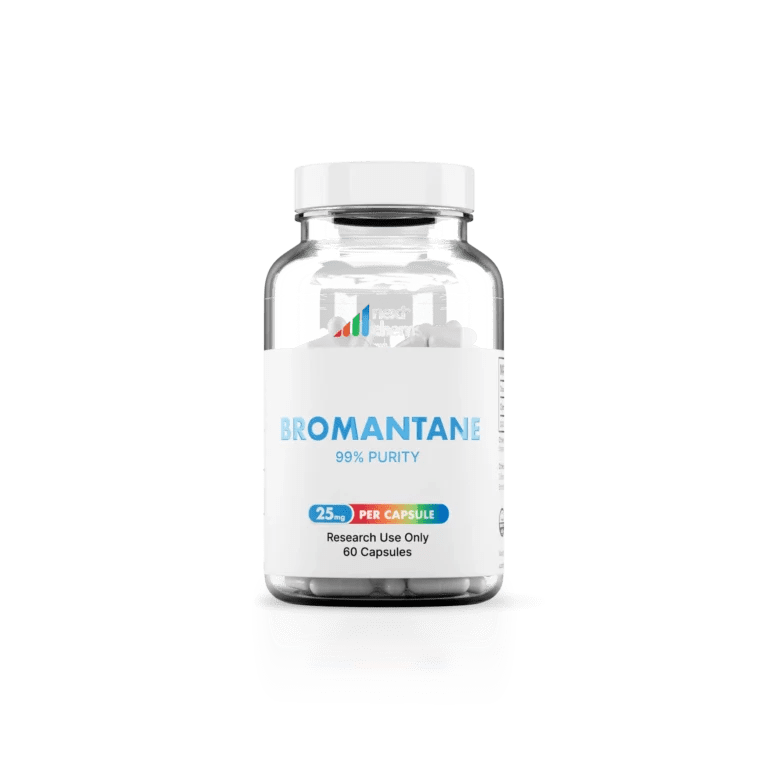
NextChems sells bromantane as 25 mg capsules, 60 per bottle. Capsules are simpler than powder: no scale, no measuring, and the dose is the same every time. The trade-off is that you can only adjust the dose in 25 mg steps.
- Form: capsules, 25 mg each
- Commonly reported doses: 1-2 capsules (25-50 mg) a day to start; most users stay at or below 4 capsules (100 mg)
- Commonly reported cycle: about 6 weeks, then a break
- Reported side effects: mild irritability or tiredness, uncommon
- Common stacks: L-theanine for calm focus, or creatine for training

Pros
- Publishes analytical reports using methods including LC-MS/MS, HPLC-UV/MS, and GC-MS.
- Shipping coverage includes the US, Canada, Europe, South Asia, the Middle East, and other regions.
- Relatively competitive pricing.
Cons
- Customer-reported concerns regarding lost or delayed international shipments.
- Smaller research catalog than other brands on the market
How to Stack Bromantane
Stacking means combining supplements whose effects are meant to complement each other. No study has tested bromantane together with other supplements, so the combinations below are ones users commonly report, not proven protocols.
- Bromantane + Noopept: Noopept is a Russian-developed nootropic taken for focus and memory. Users pair the two for long stretches of mental work. Like bromantane, Noopept is not an approved medicine in the US.
- Bromantane + L-theanine: L-theanine, an amino acid found in tea, is taken for relaxation without drowsiness. Users add it to take the edge off any stimulation from bromantane.
- Bromantane + L-tyrosine: tyrosine is the amino acid the body uses to make dopamine. Since bromantane appears to increase the enzymes that carry out this conversion, users pair them, though the combination has not been tested.
- Bromantane + creatine: creatine is one of the best-studied supplements for strength and high-intensity training, and users who take bromantane for training energy often add it. See our guide to creatine monohydrate powders.
Avoid combining bromantane with other stimulants or with prescription drugs that affect dopamine or serotonin, such as MAO inhibitors, ADHD medication or antidepressants, unless a doctor has approved it. These combinations have not been studied.
Bromantane Dosage and Administration
Bromantane has no approved dose outside Russia. The figures below are doses used in clinical studies and doses commonly reported by users. They are not recommendations.
In the largest Russian clinical trial, patients with asthenic disorders took 50 mg or 100 mg a day for 28 days. Users commonly report taking 25-100 mg once a day and starting at the low end to judge their response. Some report going as high as 200 mg, but there is no evidence that higher doses work better, and users report more insomnia and irritability at high doses.
Timing: bromantane is a mild stimulant, so users take it in the morning; afternoon or evening doses can disturb sleep. Many take it with breakfast, which users report reduces nausea.
Cycling: courses of 4-6 weeks followed by a break of at least two weeks are commonly reported. The Russian trial used a 28-day course. Long-term continuous use has not been studied.
| Source | Daily dose | Course length |
|---|---|---|
| Russian clinical trial (asthenic disorders) | 50 mg or 100 mg | 28 days |
| Commonly reported, first use | 25-50 mg in the morning | 4-6 weeks |
| Commonly reported, experienced users | 50-100 mg in the morning | 4-6 weeks, then at least 2 weeks off |
Side Effects of Bromantane
In the Russian clinical studies, bromantane was reported to be well tolerated at 50-100 mg a day. Most side effects reported by users are mild, but there are no long-term safety data and no independent trials outside Russia.
Commonly reported side effects:
- Insomnia, especially when taken in the afternoon or evening
- Headache
- Nausea, mostly when taken on an empty stomach
- Irritability or restlessness
- Tiredness as the effect wears off (less common)
Although bromantane reduces anxiety in most reports, people who are sensitive to stimulants may feel more anxious, especially at high doses, and some users report low mood at high doses.
Russian clinical reports described no withdrawal syndrome and no signs of dependence after courses of several weeks. That fits its gentler mechanism, but long-term or high-dose use has not been studied.
Bromantane may interact with other drugs, particularly stimulants and medications that act on dopamine or serotonin. Talk to a doctor before using it if you take prescription medication or have a heart condition, an anxiety disorder or a history of psychiatric illness. There are no safety data for pregnancy or breastfeeding. And because research chemicals are not regulated, the dose and purity on the label may not be accurate.
Research and Studies on Bromantane
Most bromantane research was done in Russia and published in Russian-language journals. Much of it has not been independently replicated, so it is best read as early evidence rather than settled science.
Animal Studies
Studies in rats found that bromantane increases dopamine activity, and to a lesser extent serotonin activity, in the brain. This is the basis for describing it as an atypical stimulant.
Other animal studies describe increased physical work capacity and endurance, including under heat and low-oxygen conditions. These results fit its classification as an actoprotector, but animal results often do not carry over to people.
Russian Clinical Studies
Clinical research in people has focused on asthenic disorders. The largest study was a multicentre trial in Russia reported by Neznamov and colleagues (Zhurnal Nevrologii i Psikhiatrii imeni S.S. Korsakova, 2009), in which 728 patients with asthenia took 50 mg or 100 mg of bromantane a day for 28 days. The investigators reported that it reduced asthenic symptoms such as fatigue and weakness, had anti-anxiety as well as stimulant effects, was well tolerated, and caused no withdrawal symptoms when stopped.
A review of actoprotector research summarises this Russian work on bromantane alongside other actoprotectors. What is still missing: independent placebo-controlled trials outside Russia, studies in healthy people and athletes, and long-term safety data.
Bromantane vs Other Actoprotectors
The best-known actoprotector besides bromantane is bemethyl (bemitil), also developed in the Soviet Union. Both are used to raise work capacity and speed recovery under heavy physical and mental load.
The difference is in the brain. Bemethyl is thought to work mainly by supporting protein synthesis and energy metabolism in cells, while bromantane adds a mild stimulant effect on the dopamine system and an anti-anxiety effect. That makes bromantane the more common choice for people who want mental drive as well as physical stamina.
Compared with classic stimulants such as amphetamine, bromantane is milder, and Russian reports describe no crash, dependence or withdrawal. That does not make it risk-free: long-term safety is unknown, and it is banned in sport just like stronger stimulants.
The Bottom Line
Bromantane is a Russian actoprotector with a plausible mechanism and some clinical support against fatigue, but the evidence for better performance and focus in healthy people is thin.
- The best human evidence is Russian clinical work in asthenic disorders, where 50-100 mg a day for 28 days was reported to reduce fatigue and was well tolerated.
- Claims about endurance, focus and recovery come mostly from animal studies and user reports; there are no independent trials outside Russia.
- It is banned by WADA as a stimulant, so tested athletes should not use it. Anyone else considering it should talk to a doctor first, especially if they take other medication.
Frequently Asked Questions
Disclaimer
Please read carefully
The information on this site is for educational and informational purposes only, and is not medical advice. Always consult a qualified healthcare professional before using any supplement or medication, or making changes to your health, fitness, or nutrition routine.
Not medical advice
Content here is not a substitute for professional medical advice.
Consult your doctor
Talk to your doctor before starting any supplement or new routine.
Use at your own risk
We are not responsible for adverse effects from acting on this.
Do your research
Make informed decisions about your own health.
No guarantees
Individual results vary. No claims about outcomes.
Important — Never disregard professional medical advice or delay seeking it because of something you read here. If you think you may have a medical emergency, call your doctor or your local emergency number right away.