Contents13 sections
Sermorelin and HGH both aim to raise growth hormone, but they get there in different ways. HGH (somatropin) is growth hormone itself, injected directly. Sermorelin is a short peptide copy of growth hormone-releasing hormone (GHRH) that signals your pituitary gland to make and release more of its own.
That difference drives everything else: how strong the effect is, what happens to your natural production, the side effects, the legal status, the cost and how you can get each one.
This guide on Sermorelin vs HGH compares the two side by side, with what the clinical studies actually show, the doses used in studies and in medical practice, and why one is a licensed drug while the other is now only available through compounding pharmacies.
Key Takeaways
- HGH is growth hormone itself; sermorelin is a GHRH analog that makes your pituitary release more of its own GH, so it only works if the pituitary can still respond.
- HGH is an FDA-approved prescription drug for diagnosed growth hormone deficiency in children and adults; in the US, distributing it for anti-aging or bodybuilding is illegal.
- Sermorelin’s brand, Geref, was approved for children with GH deficiency in 1997 and discontinued in 2008; today it is available only as a compounded prescription.
- HGH raises GH and IGF-1 more strongly, but it suppresses your own GH while you take it and causes more fluid retention, joint pain and blood sugar problems.
- Adult sermorelin research is small and short-term: it reliably raises GH and IGF-1 in older adults, but strong evidence for muscle, fat-loss or anti-aging benefits is lacking.
What Is HGH Therapy?
Human growth hormone (HGH) therapy, also known as growth hormone replacement therapy (GHRT), means injecting recombinant human growth hormone, also called somatropin. It is made by genetically engineered cells and is identical to the 191-amino-acid hormone your pituitary gland produces.
HGH is given as a subcutaneous injection, usually once a day; newer long-acting versions are injected once a week. Doctors adjust the dose by measuring IGF-1, the hormone the liver releases in response to GH, and by watching for side effects.
Its FDA-approved uses include growth hormone deficiency (GHD) in children and adults, plus several other conditions such as Turner syndrome, Prader-Willi syndrome, chronic kidney disease in children, HIV-associated wasting and short bowel syndrome.
How Does Human Growth Hormone Therapy Work?
HGH therapy replaces hormone the body is not making, so a doctor first has to confirm a deficiency. Because GH is released in pulses, a single blood test is not enough: adults usually need a stimulation test (such as the insulin tolerance, glucagon or macimorelin test) showing that the pituitary cannot release a normal amount of GH. But why would GH levels be low in the first place?
- Natural decline: GH output falls steadily from early adulthood, a change sometimes called the “somatopause”. This is normal ageing, not a disease, and HGH is not approved to treat it.
- Medical conditions: Pituitary tumors, pituitary surgery or radiation, and brain injury can damage the cells that make GH. These are the most common causes of GHD that starts in adulthood.
- Genetic factors: Some people have inherited defects that affect the production or release of GH, usually diagnosed in childhood.
Once a deficiency is confirmed, injected HGH acts directly on tissues and drives the liver to produce IGF-1, which carries much of growth hormone’s effect on muscle, bone and fat.
Adults with a confirmed deficiency are treated with HGH: adult GHD is an approved indication. What doctors cannot do in the US is prescribe it for ageing, athletic performance or bodybuilding. Unlike most drugs, HGH cannot legally be used off-label there: federal law makes distributing it for any use other than an FDA-authorized one a crime.
Benefits of HGH
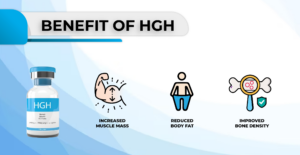
In adults with confirmed GHD, replacement therapy has well-documented benefits:
- More lean mass: HGH increases lean body mass, and some studies show modest gains in exercise capacity in deficient adults.
- Less body fat: HGH reduces body fat, particularly visceral (abdominal) fat, which is linked to cardiovascular disease and diabetes.
- Better bone density: Over the longer term, HGH increases bone mineral density in adults with GHD.
- Quality of life: Many adults with GHD report better energy and well-being on treatment.
In healthy people the picture is different. Rudman and colleagues reported in the New England Journal of Medicine (1990) that six months of HGH in men over 60 increased lean body mass and reduced fat, a study that helped launch the anti-aging HGH industry. Later work was less encouraging. A systematic review of randomized trials in healthy older adults (Liu et al., Annals of Internal Medicine, 2007) found about 2 kg more lean mass and 2 kg less fat, but no clear gains in strength or function, along with more swelling, joint pain and carpal tunnel syndrome. A second review in athletes (Liu et al., 2008) found more lean mass but no clear improvement in strength or exercise capacity.
Drawbacks of HGH
HGH’s side effects are dose-dependent, which is why doctors start low and adjust slowly:
- Fluid retention: HGH can cause swelling (edema), particularly in the hands, feet and face.
- Joint, muscle and nerve symptoms: Joint pain, muscle aches, tingling or numbness in the hands and carpal tunnel syndrome are among the most common side effects.
- Higher blood sugar: GH works against insulin. Higher doses can raise blood sugar and, in susceptible people, lead to diabetes.
- Suppression of your own GH: Injected GH feeds back on the hypothalamus and pituitary, so your own GH release falls while you use it. Natural production usually recovers after stopping in people without a true deficiency, but during treatment you depend on the injection.
- Long-term excess: Chronic GH excess, as seen in acromegaly, enlarges the hands, feet, jaw and organs, including the heart. Doctors also avoid HGH in people with active cancer, because GH and IGF-1 promote cell growth.
What Is Sermorelin Therapy?
Sermorelin (also called GRF 1-29) is a synthetic peptide made of the first 29 amino acids of human growth hormone-releasing hormone (GHRH). The natural hormone has 44 amino acids, but this short fragment carries its activity. Sermorelin stimulates the pituitary gland to produce and release growth hormone.
Under the brand name Geref, it was FDA-approved in 1997 to treat children with growth hormone deficiency, given as an injection at bedtime. It was never approved as a treatment for adults, so adult use has always been off-label.
The manufacturer stopped selling Geref in 2008, and the FDA later determined that it was not withdrawn for reasons of safety or effectiveness. Today sermorelin reaches patients in the US only as a compounded drug: a doctor writes a prescription and a compounding pharmacy makes it. Compounded drugs are not FDA-approved, so their quality depends on the pharmacy.
How Does Sermorelin Therapy Work?
Sermorelin binds to GHRH receptors on the growth hormone-producing (somatotroph) cells of the pituitary. This activates adenylate cyclase and raises cyclic AMP (cAMP) inside the cells, which triggers the release of stored growth hormone and the production of new GH.
Because sermorelin works through the pituitary, the body’s normal brakes stay in place. Somatostatin and rising IGF-1 still limit GH release, so GH comes out in pulses rather than as a constant high level, and it is hard to push GH far above the normal range.
This has two practical consequences. First, sermorelin needs a pituitary that can still make GH, so it does little for someone whose GH-producing cells have been destroyed by a tumor, surgery or radiation. Second, its effect is smaller and shorter than injected HGH. Sermorelin is cleared from the blood within minutes, which is why it is usually injected at bedtime, when the body’s largest natural GH pulse occurs during deep sleep.
Benefits of Sermorelin
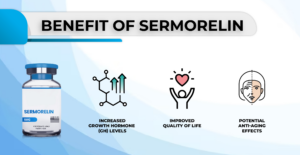
The human evidence for sermorelin and GHRH(1-29) is real but small:
- Raises your own GH and IGF-1: Corpas and colleagues (Journal of Clinical Endocrinology & Metabolism, 1992) found that twice-daily GHRH(1-29) injections raised GH and IGF-1 in older men to levels typical of young men.
- Growth in children: In children with GH deficiency, once-daily sermorelin at bedtime increased growth rate during the first year of treatment (Thorner et al., Journal of Clinical Endocrinology & Metabolism, 1996). Recombinant HGH remained the standard treatment.
- Modest body-composition changes: In a 16-week study of a close GHRH(1-29) analog in men and women aged 55 to 71 (Khorram et al., Journal of Clinical Endocrinology & Metabolism, 1997), nightly injections raised GH and IGF-1, and lean body mass increased in the men but not clearly in the women.
- Milder side-effect profile: Because GH stays within the body’s feedback limits, the swelling, joint pain and blood sugar problems typical of HGH are less common. Large head-to-head trials against HGH have not been done.
A 2006 review by Walker in Clinical Interventions in Aging argued that sermorelin may suit age-related GH decline better than HGH because it preserves the pituitary’s feedback controls. That is a rationale, not proof of better outcomes.
Claims that sermorelin improves skin, wrinkles, mood, memory or sleep come mostly from clinic marketing and indirect evidence. GHRH helps regulate deep sleep, and a 20-week trial of tesamorelin, a related GHRH analog, found improved executive function in older adults (Baker et al., Archives of Neurology, 2012). Sermorelin itself has not been shown to deliver these benefits in good-quality trials. For what people actually report, see our guide to sermorelin before and after.
Drawbacks of Sermorelin
- No approved product: Since Geref was discontinued, sermorelin is available only as a compounded drug. Quality varies between pharmacies, and insurance rarely covers it.
- Side effects: Sermorelin is generally well tolerated. The most common side effects are pain, redness or swelling at the injection site, flushing, headache, dizziness and nausea. Allergic reactions are rare.
- Smaller, less predictable effect: The response depends on how well your pituitary still works, and it requires nightly injections.
- Limited long-term data: There are no long-term safety studies in adults. Because it raises GH and IGF-1, the same theoretical concerns apply as with HGH, including blood sugar and people with active cancer.
Sermorelin vs HGH Side by Side
| Factor | Sermorelin | HGH (Somatropin) |
|---|---|---|
| What it is | GHRH(1-29) analog, 29 amino acids | Recombinant growth hormone, 191 amino acids |
| How it works | Signals the pituitary to release your own GH | Replaces GH directly |
| Your own GH production | Stimulated; normal feedback stays in place | Suppressed while you take it |
| Size of effect | Moderate rise in GH and IGF-1 | Strong, dose-dependent rise |
| Needs a working pituitary | Yes | No |
| FDA status | Brand (Geref) discontinued in 2008; compounded only | Approved prescription drug for GHD and other conditions |
| Usual dosing | Subcutaneous injection at bedtime | Daily subcutaneous injection (weekly forms exist) |
| Main side effects | Injection-site reactions, flushing, headache | Fluid retention, joint pain, carpal tunnel, higher blood sugar |
| Relative cost | Lower | Much higher |
| Tested sport (WADA) | Prohibited at all times | Prohibited at all times |
Sermorelin vs HGH Dosing
The figures below are doses from labels, guidelines and studies, plus commonly reported doses. They are not dosing advice: both drugs should only be used under medical supervision with blood work.
HGH Dosing
For adults with confirmed GHD, the Endocrine Society’s 2011 guideline recommends starting at 0.2-0.4 mg per day for patients under 60 and 0.1-0.2 mg per day for those over 60, then adjusting every one to two months based on IGF-1 levels and side effects. One milligram is about 3 IU, so these starting doses equal roughly 0.3-1.2 IU per day; our HGH IU to mg converter does the math.
Doses commonly reported by bodybuilders are several times higher, often 2-6 IU per day or more. That is the range where swelling, numbness in the hands and blood sugar problems become common.
Sermorelin Dosing
The Geref dose for children was 30 mcg per kilogram of body weight, injected under the skin once a day at bedtime. There is no approved adult dose.
Commonly reported doses in compounded clinic protocols are around 200-300 mcg injected under the skin at bedtime, often five to seven nights a week, with IGF-1 rechecked after a few months. Clinics usually advise injecting on an empty stomach, because high blood sugar blunts GH release.
Where Can I Get HGH and Sermorelin Treatment?
HGH: Cost and Access
Legitimate HGH comes from an endocrinologist after a confirmed diagnosis. Brand-name HGH costs thousands of dollars a year even at adult replacement doses, and insurers usually cover it only for approved conditions after stimulation testing.
Outside that route, HGH is sold on the black market to bodybuilders and people looking to slow ageing. Distributing it for those uses is illegal in the US, and black-market products can be counterfeit, underdosed or contaminated.
Sermorelin: Cost and Access
Sermorelin is easier to get. Many men’s health, anti-aging and telehealth clinics prescribe compounded sermorelin after blood work, usually as an out-of-pocket monthly program. Prices vary by clinic and dose, but compounded sermorelin generally costs a fraction of brand-name HGH. A clinic should check IGF-1, blood sugar and other baseline labs before you start and recheck IGF-1 during treatment.
Research suppliers also sell sermorelin as a freeze-dried research peptide labelled not for human use. These products are not FDA-approved drugs, quality varies by supplier, and a certificate of analysis does not establish that a product is safe for any purpose.
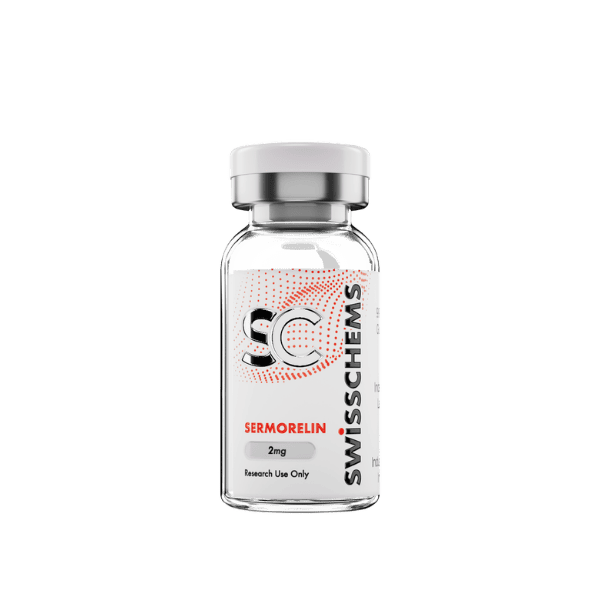

Overview
- Form: Lyophilized powder
- Researched Dosage: 200 mcg to 500 mcg daily, usually taken before bed
- Typical Cycle: 8-12 weeks, with some protocols running 3-6 months
- Cost: $25.95
- Stacking Options: Ipamorelin, GHRP-2, GHRP-6
Pros
- A copy of the first 29 amino acids of natural growth hormone-releasing hormone, so it prompts the pituitary to release its own growth hormone.
- Keeps the body’s normal growth hormone pulses and feedback loop working, unlike taking synthetic growth hormone directly.
- Was once FDA-approved as Geref for children with growth hormone deficiency, so it has more human data than most peptides in this group.
Cons
- Half-life is very short, about 10-20 minutes, so it usually needs a daily injection.
- Reported side effects include flushing, headache, dizziness and redness or swelling where it’s injected.
- Approved version was taken off the US market in 2008 (the maker cited business reasons), and WADA bans it for tested athletes.
Sermorelin vs HGH for Bodybuilding
Among bodybuilders, HGH is far more popular than sermorelin. Injected HGH can push GH and IGF-1 well above the normal range, which is what users are after, while sermorelin stays within the body’s feedback limits and produces a smaller effect. Bodybuilders who prefer to stimulate their own GH more often use longer-acting or combined secretagogues, such as an ipamorelin and CJC-1295 stack, than sermorelin.
That does not make HGH the better choice. Studies in healthy adults show HGH adds lean mass (part of it water) without clear strength gains, and the higher doses used for physique goals bring more swelling, nerve compression, joint pain and blood sugar problems. Both are prohibited at all times by the World Anti-Doping Agency, which names sermorelin among its banned growth hormone-releasing factors.
Which One Makes More Sense?
For a confirmed growth hormone deficiency, HGH is the established, approved treatment, with decades of outcome data. It works even when the pituitary is damaged, and doctors can titrate it precisely against IGF-1.
Sermorelin’s role today is mostly in clinics treating age-related GH decline off-label. Its gentler effect, preserved feedback and lower cost are the selling points, but the evidence for meaningful benefits in that group is thin.
For healthy people chasing muscle or anti-aging effects, neither has strong evidence of benefit beyond modest body-composition changes, and both carry real costs and risks. Your choice should depend on a proper diagnosis and on a doctor’s advice.
The Bottom Line
HGH is the stronger, proven treatment for diagnosed growth hormone deficiency; sermorelin is a gentler, cheaper, compounded-only option whose benefits in adults are far less proven.
- HGH replaces growth hormone directly and raises GH and IGF-1 strongly, but it suppresses your own production and causes more fluid retention, joint pain and blood sugar problems, especially at bodybuilding doses.
- Sermorelin stimulates your own pituitary, keeps the body’s feedback controls in place and is generally well tolerated, but it needs a working pituitary and its adult evidence comes from small, short studies.
- Geref was discontinued in 2008, so sermorelin is now prescribed only as a compounded drug. HGH for anti-aging or bodybuilding is illegal to distribute in the US, and both are banned in tested sport.
Frequently Asked Questions
Disclaimer
Please read carefully
The information on this site is for educational and informational purposes only, and is not medical advice. Always consult a qualified healthcare professional before using any supplement or medication, or making changes to your health, fitness, or nutrition routine.
Not medical advice
Content here is not a substitute for professional medical advice.
Consult your doctor
Talk to your doctor before starting any supplement or new routine.
Use at your own risk
We are not responsible for adverse effects from acting on this.
Do your research
Make informed decisions about your own health.
No guarantees
Individual results vary. No claims about outcomes.
Important — Never disregard professional medical advice or delay seeking it because of something you read here. If you think you may have a medical emergency, call your doctor or your local emergency number right away.