
Contents13 sections
Most people think of a multivitamin as a general wellness product: something you take in the morning and mostly forget about. For bodybuilders, the calculation is a little different.
Hard training raises demand for the nutrients involved in energy metabolism and muscle repair, and sweat carries away small amounts of minerals. A long cut makes it harder still: when calories drop, the variety and volume of your food drop with them, and so does your intake of vitamins and minerals.
The right multivitamin will not replace smart training or solid nutrition, but it can fill real gaps and support recovery when your diet cannot cover everything.
This guide covers what multivitamins for bodybuilders can and cannot do, which nutrients matter most, how to read a label, the upper limits worth knowing, and how to judge quality without getting lost in marketing.
Key Takeaways
- Hard training, long cuts and restrictive diets raise the risk of micronutrient gaps, most often in vitamin D, magnesium, zinc and iron. Lifters who eat enough varied food may not need a multivitamin at all.
- A good multivitamin covers the B vitamins, vitamin D, magnesium, zinc and vitamins C and E at doses close to the recommended amounts, not mega-doses.
- Mineral form matters somewhat (citrate or glycinate tend to beat oxide), while methylated B vitamins are optional: folic acid and cyanocobalamin work well for most people.
- Stay under the adult upper limits, such as 3,000 mcg of preformed vitamin A, 4,000 IU of vitamin D, 40 mg of zinc and 45 mg of iron, counting everything you take. Most men do not need extra iron.
- If you are drug tested, choose NSF Certified for Sport or Informed Sport products. USP Verified confirms label accuracy but does not screen for banned substances.
Why Bodybuilders Can Have Higher Micronutrient Needs
The daily values on supplement labels are based on intakes set for healthy people in general, not specifically for athletes. Hard training can raise the need for some nutrients, but for most of them the recommended amounts are still the right target. More is not automatically better.
When you train hard, a few things change. Very active people may need somewhat more of certain B vitamins, such as riboflavin and B6, because these vitamins help turn carbohydrate, fat and protein into energy. Small amounts of zinc, magnesium and iron are lost in sweat. Vitamin D is often low in people who train indoors or get little sun.
Add a cutting phase and the risk grows. The joint sports nutrition position of the American College of Sports Medicine, the Academy of Nutrition and Dietetics and Dietitians of Canada names the athletes most at risk of poor micronutrient status: those who restrict energy intake or use severe weight-loss practices, those who cut out one or more food groups, and those who eat unbalanced, low-nutrient diets. That describes many bodybuilders in contest prep.
The International Society of Sports Nutrition (ISSN) takes a similar line: vitamins and minerals have not been shown to boost performance in athletes who are not deficient, but a low-dose daily multivitamin can be a prudent way to make sure the basics are covered. The goal is not mega-doses. It is making sure a missing nutrient is not quietly holding back your recovery.
The Nutrients That Matter Most
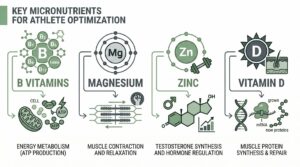
Not every nutrient in a multivitamin is equally relevant to a bodybuilder. The NIH Office of Dietary Supplements has an evidence-based fact sheet on supplements for exercise and athletic performance; the nutrients below carry the most weight for training and recovery.
The B Vitamin Complex
B vitamins are the workhorses of energy metabolism. Thiamine (B1), riboflavin (B2), niacin (B3), pantothenic acid (B5) and B6 help convert carbohydrate, fat and protein into usable energy. B12 and folate (B9) are needed to make red blood cells and DNA, and B12 also supports the nervous system. A shortfall in either can cause anemia and fatigue that hurt your training, but extra amounts in someone who is not deficient do not boost performance. Our guide to energy vitamins covers how these nutrients work in more detail.
B12 deserves a note for anyone on a plant-based diet: it occurs naturally only in animal foods, so vegans need a supplement or fortified foods.
Vitamin D3 and K2
Vitamin D is one of the nutrients most often low in the general population, and gym-goers who train indoors are no exception. It supports calcium absorption, bone health and normal muscle function. In people who are deficient, correcting it may improve muscle strength, and low vitamin D is associated with a higher risk of stress fractures. Evidence that extra vitamin D improves performance in people who already have adequate levels is weak.
The testosterone claim needs a caveat. Observational studies link low vitamin D with lower testosterone, but randomized trials in men with normal levels have generally not found that vitamin D supplements raise it.
Vitamin K (K1 and K2) is needed to activate proteins involved in bone mineralization and in keeping calcium out of blood vessel walls. That is why D3 and K2 are often paired, but clinical evidence that the pairing improves outcomes in healthy young adults is limited. Many standard multivitamins contain only modest amounts of vitamin D, so check the amount on the label, ideally alongside a blood test. If you take warfarin, do not change your vitamin K intake without talking to your doctor.
Magnesium
Magnesium is a cofactor in more than 300 enzyme systems, including those involved in energy production, muscle contraction and relaxation, and protein synthesis. Many adults eat less than the recommended amount, and small amounts are also lost in sweat.
Low magnesium intake has been linked with poorer sleep and muscle function, but supplements help most when intake is actually low, and trials in people with ordinary muscle cramps have not shown much benefit. Forms such as magnesium citrate and glycinate appear to be absorbed better than magnesium oxide. Oxide packs a lot of magnesium per gram, but it has shown lower absorption in some studies and is more likely to cause loose stools at higher doses. Our comparison of magnesium bisglycinate and magnesium glycinate looks at the glycinate forms in more detail.
Zinc
Zinc supports immune function, protein synthesis and wound healing, and it is needed for normal testosterone production. Athletes who sweat heavily, restrict calories or eat little meat may be at higher risk of low zinc status.
Zinc deficiency can lower testosterone, and correcting a deficiency can restore it. In men who already get enough zinc, extra zinc does not appear to raise testosterone further, so treat “testosterone-boosting” zinc claims with caution. If you are worried about your levels, a blood test is the only way to know where you stand; our guide to average testosterone levels by age explains the ranges.
Zinc citrate, gluconate and bisglycinate appear to be absorbed better than zinc oxide. More is not better: the adult upper limit is 40 mg a day, and long-term intake above that can lower copper levels, which is why well-designed formulas include a little copper. High-dose iron supplements can also reduce zinc absorption.
Vitamins C and E
Both act as antioxidants. Vitamin C is also needed to make collagen, which supports tendons, ligaments and other connective tissue under load (see our guide to joint supplements for more on joint health). Vitamin E helps protect cell membranes from oxidative damage.
The key here is moderation. Several trials that gave around 1,000 mg of vitamin C a day together with vitamin E found that the supplements blunted some training adaptations, likely by interfering with the signaling role of the reactive oxygen species produced during exercise. The amounts in a typical multivitamin are much lower and are unlikely to have this effect.
What to Look for on the Label
The supplement market is crowded, and multivitamins are not all created equal. Knowing what to look for saves money and gets you a product that does its job. In the United States, supplements do not need FDA approval before they are sold, so the label and independent testing are your main quality checks.
Doses Close to the Recommended Amounts
For most vitamins and minerals, a well-designed multivitamin provides roughly 100% of the daily value, sometimes more for B vitamins and vitamin D. Very high percentages look impressive but rarely add benefit, and they can push you toward the upper limits once you add other products.
Mineral Forms
The form of a mineral tells you something about how well it is absorbed. Chelated minerals, where the mineral is bound to an amino acid such as glycine, and organic salts such as citrate are often absorbed better than oxides, though the size of the difference varies by mineral and by study. Magnesium oxide and zinc oxide are common in cheap multivitamins because they are inexpensive and compact.
Iron is an exception to the “cheap means poor” rule. Ferrous sulfate is the standard, well-absorbed form, although gentler forms such as ferrous bisglycinate may cause less stomach upset.
Methylated vs. Standard B Vitamins
Many premium formulas use methylfolate instead of folic acid and methylcobalamin instead of cyanocobalamin. These are fine choices, but they are not required. Folic acid and cyanocobalamin are stable, well studied and effective at raising folate and B12 levels in most people.
Variants in the MTHFR gene are common and reduce how efficiently the body converts folate to its active form, but the CDC notes that people with these variants can still process folic acid. If you prefer methylated forms, that is a reasonable choice. It is not a reason to dismiss a well-made formula that uses folic acid.
Serving Size and Split Dosing
A one-a-day tablet cannot physically hold meaningful amounts of everything. Magnesium and calcium in particular are bulky, which is why products with two to four capsules per serving usually provide more of them. Check the serving size so you compare like with like.
Splitting the serving between two meals is optional. The body does not store large amounts of most water-soluble vitamins (B12 is the exception), and vitamin C is absorbed less efficiently at high single doses, so splitting may smooth things out. There is little evidence that it changes results, though. Taking your multivitamin every day with food matters more.
Third-Party Testing
For drug-tested athletes, third-party testing is non-negotiable. NSF Certified for Sport screens products for substances banned in sport and also checks label accuracy and contaminants. Informed Sport tests every batch for banned substances. Both publish searchable lists of certified products.
USP Verified confirms that a product contains the listed ingredients in the stated amounts, does not contain harmful levels of specified contaminants and was made under good manufacturing practices. It is a strong quality signal, but it is not a banned-substance screen. For recreational lifters, any of the three is a meaningful sign of quality.
Upper Limits and Safety Notes
Most water-soluble vitamins are hard to overdo, but several nutrients in multivitamins can cause harm in excess, including B6 and niacin. The risk grows when you stack a multivitamin with fortified foods, pre-workouts, greens powders and single-nutrient supplements.
The tolerable upper intake levels below come from the NIH Office of Dietary Supplements fact sheets. They are the highest daily intakes unlikely to cause harm in healthy adults: ceilings, not targets. Unless noted, they count food and supplements together.
| Nutrient | Adult RDA | Adult upper limit | What too much can do |
|---|---|---|---|
| Vitamin A (preformed retinol) | 900 mcg RAE men, 700 mcg RAE women | 3,000 mcg RAE (10,000 IU) | Liver damage and birth defects; beta-carotene does not count toward the limit |
| Vitamin D | 15 mcg (600 IU); 20 mcg (800 IU) over 70 | 100 mcg (4,000 IU) | High blood calcium; test before going higher |
| Vitamin E | 15 mg | 1,000 mg from supplements | Higher bleeding risk, especially with blood thinners |
| Vitamin C | 90 mg men, 75 mg women | 2,000 mg | Diarrhea and stomach upset |
| Vitamin B6 | 1.3-1.7 mg | 100 mg | Nerve damage with long-term high doses |
| Niacin (B3) | 16 mg men, 14 mg women | 35 mg from supplements and fortified foods | Skin flushing; liver damage at very high doses |
| Folic acid | 400 mcg DFE (folate) | 1,000 mcg from supplements and fortified foods | Can mask a B12 deficiency |
| Iron | 8 mg men, 18 mg women aged 19-50 | 45 mg | Stomach upset; iron overload in people with hemochromatosis |
| Zinc | 11 mg men, 8 mg women | 40 mg | Low copper and weaker immune function over time |
| Magnesium | 400-420 mg men, 310-320 mg women | 350 mg from supplements | Diarrhea and cramping |
| Selenium | 55 mcg | 400 mcg | Hair and nail loss, garlic breath |
Iron needs special care. Men and postmenopausal women need only 8 mg a day and rarely benefit from extra iron unless a blood test shows they are low, which is why many formulas for men leave it out. Iron can build up to harmful levels in people with hereditary hemochromatosis, and accidental overdose of iron-containing products is a leading cause of fatal poisoning in children under 6, so keep supplements out of reach.
Vitamin A deserves the same attention. Preformed vitamin A (retinol, retinyl acetate or retinyl palmitate) is stored in the liver, and high intakes during pregnancy can cause birth defects. Many multivitamins supply part of their vitamin A as beta-carotene, which the body converts only as needed. Smokers should avoid high-dose beta-carotene supplements, which raised lung cancer risk in two large trials.
If you take medication, are pregnant or trying to conceive, or have kidney or liver disease, check with your doctor or pharmacist before adding a multivitamin.
How to Choose the Best Multivitamin for You
There is no single best multivitamin for every bodybuilder, and formulas change, so judge any product against this checklist rather than a brand name:
- Third-party certified: NSF Certified for Sport or Informed Sport if you compete in a tested federation; USP Verified or one of those two otherwise.
- Sensible doses: around 100% of the daily value for most nutrients, with nothing that pushes your total intake past an upper limit.
- Absorbable mineral forms: magnesium citrate or glycinate and zinc citrate, gluconate or bisglycinate rather than oxides only.
- Vitamin A in check: some or all of it as beta-carotene, and preformed vitamin A well under 3,000 mcg.
- Iron only if you need it: most men do better with an iron-free formula; premenopausal women usually need it.
- A serving you will actually take: the best formula is the one you take every day.
Whole-Food vs. Synthetic Multivitamins
This is a debate worth understanding rather than dismissing in either direction.
Whole-food multivitamins are made from concentrated food sources. The theory is that nutrients arrive with their natural cofactors, enzymes and phytonutrients intact, which may help the body use them. There is little research showing that this makes a meaningful difference, but some people find food-based products easier on the stomach.
The trade-off is that whole-food multivitamins are harder to standardize, often provide lower doses per capsule and tend to cost considerably more. For bodybuilders who want reliable, consistent doses of specific nutrients, a high-quality synthetic formula with well-absorbed forms usually gives more predictable results.
For most people, the best approach sits in the middle: a quality synthetic multivitamin alongside a diet rich in whole foods covers both bases.
What a Multivitamin Cannot Do
A multivitamin is not a performance enhancer. It will not directly add mass, speed up fat loss or replace the stimulus of training. What it does is support the underlying processes that make those outcomes possible.
Think of it as removing friction. If your magnesium intake is low, your sleep may suffer, and poor sleep slows recovery. If you are deficient in zinc, testosterone production can drop. If B12 or iron runs low, anemia and fatigue follow. Fixing these gaps does not produce dramatic headline effects, but over months of training it removes limits you may not know you had.
It also does not justify a poor diet. Whole foods supply fiber, phytonutrients and other compounds that no capsule can replicate. The supplement fills gaps; it does not replace the foundation.
When to Take Your Multivitamin

Timing matters less than consistency, but a few simple rules help.
Vitamins A, D, E and K are fat-soluble and are absorbed better with dietary fat. Take your multivitamin with a meal that contains some fat rather than with a fat-free protein shake. Taking it with food also reduces the nausea some people get when they take a multivitamin on an empty stomach.
If you also take separate calcium, iron or zinc supplements, spread them across the day. Large doses of calcium can reduce iron absorption, and high-dose iron can reduce zinc absorption. The smaller amounts inside a single multivitamin are formulated to be taken together.
Common Mistakes
When a multivitamin seems to do nothing, there is usually an identifiable reason.
Buying on price alone. Budget multivitamins often use the cheapest mineral forms, include token amounts of key nutrients to hit a low price and skip third-party testing.
Taking it on an empty stomach. Taking a multivitamin with only water or a fat-free drink reduces absorption of the fat-soluble vitamins and can cause nausea, which then discourages consistent use.
Stacking overlapping products. A multivitamin plus a pre-workout plus a greens powder plus a “test booster” can push vitamin A, B6, niacin, zinc or iron past their upper limits. Fat-soluble vitamins such as A and D build up in the body in a way most water-soluble ones do not, so add up the totals across everything you take.
Taking it inconsistently. This is probably the most common problem. A multivitamin taken three days a week fills fewer gaps. Daily use is the point.
Guessing instead of testing. If you suspect a specific problem, such as low vitamin D or iron, a blood test tells you more than any label, and a targeted supplement will usually fix it faster than a multivitamin.
The Bottom Line
A multivitamin is inexpensive insurance against the nutrient gaps that hard training and dieting can create, not a muscle builder.
- Choose a formula with doses close to the recommended amounts and well-absorbed forms of magnesium and zinc, and keep your total intake of vitamin A, vitamin D, zinc and iron under the adult upper limits.
- Pick a third-party certified product; if you are drug tested, choose NSF Certified for Sport or Informed Sport.
- Take it every day with a meal that contains fat, and get blood work for suspected deficiencies instead of stacking high-dose single nutrients.
- The fundamentals still carry the most weight: protein, total calories, sleep and progressive training. A good multivitamin simply makes sure a preventable nutrient gap is not holding them back.
Frequently Asked Questions
Disclaimer
Please read carefully
The information on this site is for educational and informational purposes only, and is not medical advice. Always consult a qualified healthcare professional before using any supplement or medication, or making changes to your health, fitness, or nutrition routine.
Not medical advice
Content here is not a substitute for professional medical advice.
Consult your doctor
Talk to your doctor before starting any supplement or new routine.
Use at your own risk
We are not responsible for adverse effects from acting on this.
Do your research
Make informed decisions about your own health.
No guarantees
Individual results vary. No claims about outcomes.
Important — Never disregard professional medical advice or delay seeking it because of something you read here. If you think you may have a medical emergency, call your doctor or your local emergency number right away.