Contents18 sections
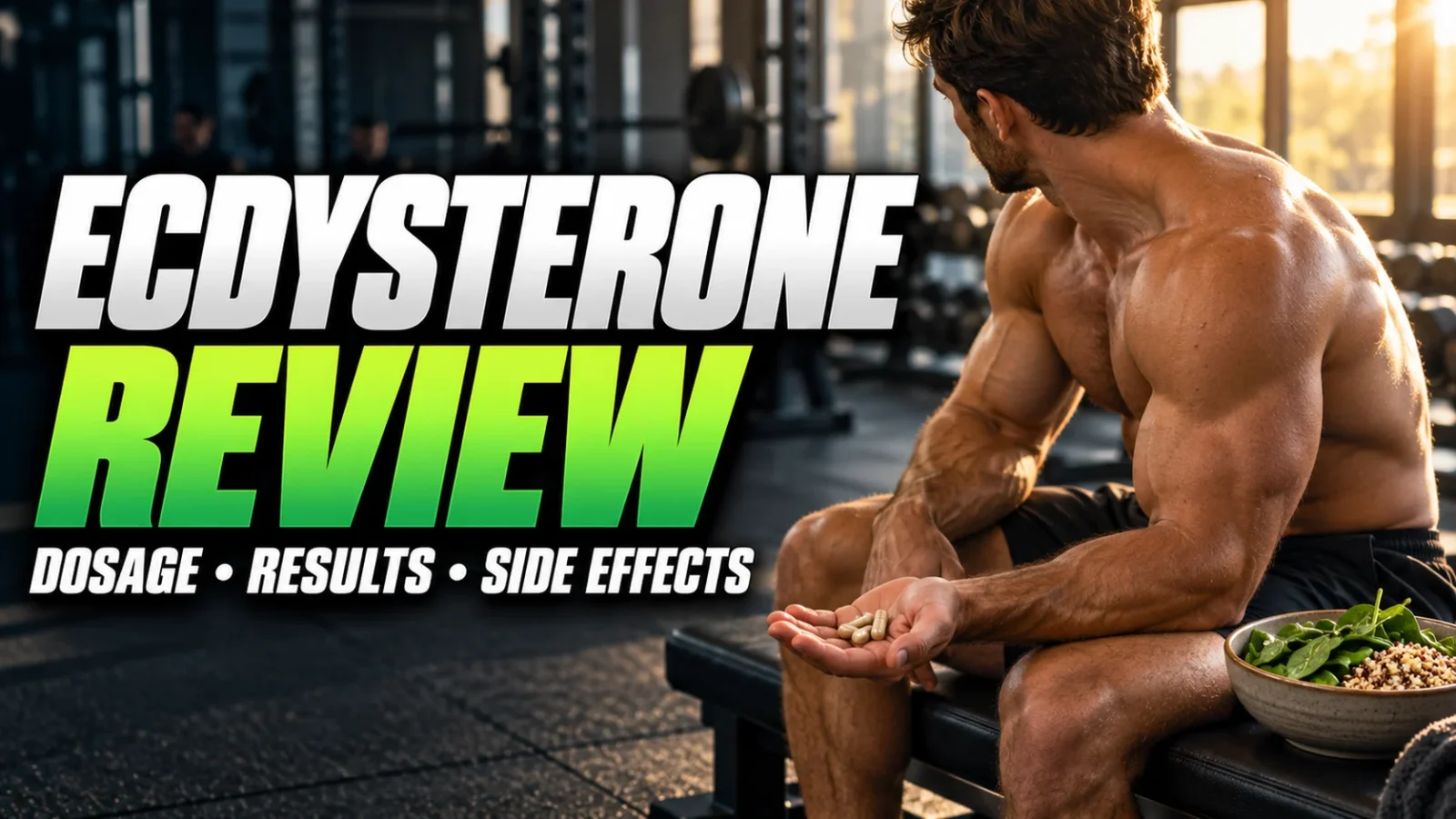
Ecdysterone (20-hydroxyecdysone) is a plant ecdysteroid sold as a natural muscle-building supplement. Small amounts occur in foods such as spinach and quinoa, while supplements use concentrated plant extracts. Its reputation rests mostly on one 2019 trial in 46 young men, in which those taking ecdysterone during 10 weeks of strength training gained more muscle mass and bench-press strength than those on placebo.
That trial is real and worth knowing about. But ecdysterone is not an anabolic steroid, it does not deliver steroid-like results, and claims of “zero risk” go well beyond the data. Most of the eye-catching findings come from rats, mice and cell cultures, not people.
This review explains what ecdysterone is (and how it differs from ecdysone and turkesterone), how it is thought to work, which evidence is human and which is animal, the doses used in studies, side effects, and its status with WADA.
Key Takeaways
- Ecdysterone (20-hydroxyecdysone) is a plant ecdysteroid, not an anabolic steroid. It shares the basic steroid ring structure but does not appear to act through the androgen receptor.
- The main positive human evidence is one 10-week trial in 46 young men (Isenmann et al., 2019): the ecdysterone groups gained more muscle mass and bench-press strength than placebo, with no rise in liver or kidney markers.
- An earlier 8-week trial in resistance-trained men found that 200mg a day did not change body composition, strength or hormone levels, so the human data are thin and mixed.
- The most striking claims, such as beating a steroid on muscle fiber growth or improving blood sugar, come from rat, mouse and cell studies, not human trials.
- Ecdysterone is sold legally as a supplement and has been on WADA’s Monitoring Program since 2020. Labels often overstate how much ecdysterone a product contains.
What Is Ecdysterone?
Ecdysteroids are steroid hormones that control molting (“ecdysis”) in insects, crustaceans and other arthropods. Many plants make closely related compounds, called phytoecdysteroids, which are thought to help protect them against insects that feed on them. Spinach and quinoa are the best-known food sources.
The similar-sounding names cause most of the confusion:
- Ecdysone: the insect molting hormone, which the insect’s body converts into its more active form, 20-hydroxyecdysone.
- Ecdysterone: another name for 20-hydroxyecdysone (often shortened to 20E, and also called beta-ecdysone). It is the most common and most studied ecdysteroid, and what most “ecdysterone” supplements contain.
- Turkesterone: a closely related ecdysteroid with one extra hydroxyl group, found mainly in Ajuga turkestanica, a plant from Central Asia.
Ecdysterone has the four-ring skeleton shared by all steroids, including testosterone and cholesterol, which is why older articles called it an “anabolic steroid”. That label is wrong. Its long side chain and many hydroxyl groups make it a very different molecule, it does not appear to bind the androgen receptor that testosterone and anabolic steroids work through, and it is not a controlled substance.
How Does Ecdysterone Work?
The exact mechanism in mammals is not known. Two lines of research are cited most often, and both come from lab and animal work:
- Estrogen receptor beta (ERβ): Cell and rat studies by a German research group (Parr et al., 2014, Molecular Nutrition & Food Research) pointed to ERβ, rather than the androgen receptor, as the receptor behind ecdysterone’s effect on muscle growth. This has not been confirmed in humans.
- PI3K/Akt signaling: In mouse muscle cells, phytoecdysteroids increased protein synthesis, and the effect disappeared when the PI3K pathway was blocked (Gorelick-Feldman et al., 2008, Journal of Agricultural and Food Chemistry).
Neither route is how testosterone works. A resemblance to testosterone’s ring structure does not mean ecdysterone has testosterone-like hormonal effects, and human studies have not shown that it raises testosterone.
Benefits of Ecdysterone: Human vs Animal Evidence
Ecdysterone research is a handful of small human trials plus a larger body of lab and animal studies. The table separates the two, because marketing often blurs them.
| Claimed benefit | What the research found | Type of evidence |
|---|---|---|
| More muscle mass with training | More muscle gained than placebo over 10 weeks (Isenmann et al., 2019); no effect at 200mg/day over 8 weeks (Wilborn et al., 2006) | Human, mixed |
| More strength | Larger one-rep-max bench press gains than placebo (Isenmann et al., 2019) | Human, one trial |
| Muscle fiber growth | Larger soleus muscle fibers in rats than with the steroid metandienone at the same dose by body weight (Parr et al., 2015) | Rat |
| Higher protein synthesis | Increased in mouse muscle cells (Gorelick-Feldman et al., 2008) | Cell culture |
| Fat loss and blood sugar | Less weight gain and lower blood glucose in mice on a high-fat diet (Kizelsztein et al., 2009) | Mouse |
| Endurance, recovery, immunity, “adaptogen” effects | Mostly older animal and lab studies; no solid controlled human trials | Animal and lab |
The 2019 Human Trial
Isenmann and colleagues (Archives of Toxicology, 2019) put 46 young men through 10 weeks of strength training. Participants took either a placebo or capsules of a commercial ecdysterone supplement at one of two daily doses. The ecdysterone groups gained significantly more muscle mass and improved their one-rep-max bench press significantly more than the placebo group. Blood markers of liver and kidney damage did not rise.
The same team saw muscle-cell growth in lab tests and, on the strength of these results, recommended that ecdysterone be added to WADA’s list of prohibited “other anabolic agents”. It is a meaningful result, but it is one small trial in young men. It says nothing about women, older adults, use beyond 10 weeks or other products.
The Earlier Negative Trial
In 2006, Wilborn and colleagues (Journal of the International Society of Sports Nutrition) gave resistance-trained men 200mg of ecdysterone a day during 8 weeks of training. Compared with placebo, it did not change body composition, strength or anabolic and catabolic hormones. Differences in the product, the amount of ecdysterone it actually contained and the participants may explain the gap between the two trials, but the human evidence is clearly not settled.
Animal and Lab Findings
In rats, ecdysterone increased muscle fiber size in the soleus muscle more than the anabolic steroid metandienone (Dianabol) given at the same dose by body weight (Parr et al., 2015, Biology of Sport). This is the source of the “stronger than Dianabol” headlines. It is a rat study, and it does not show that the same would happen in people.
In mice fed a high-fat diet, 20-hydroxyecdysone reduced weight gain and blood glucose and improved insulin sensitivity (Kizelsztein et al., 2009). A pharmaceutical-grade form of 20-hydroxyecdysone (BIO101) has been tested in people with age-related muscle loss (sarcopenia), but it is not an approved medicine. Claims that ecdysterone boosts immunity or works as an “adaptogen” against stress rest on limited lab and animal data and are unproven.
Is Ecdysterone Legal?
In the US, ecdysterone is sold as a dietary supplement, so it can be bought legally. The FDA has not approved it as a drug for any use, and, as with all supplements, it does not check products for content or effectiveness before they go on sale.
For athletes the picture is different. WADA added ecdysterone to its Monitoring Program in 2020, after the 2019 trial. Substances on the Monitoring Program are not prohibited; WADA tracks them in test samples to spot patterns of misuse. Both lists are reviewed every year, so tested athletes should check the current Prohibited List before using ecdysterone. Supplements can also be contaminated with substances that are banned.
Who Uses Ecdysterone?
Ecdysterone mostly appeals to lifters who want something with more evidence than a typical testosterone booster, without the health risks and legal problems of anabolic steroids or SARMs. Based on the human data, the most it can realistically offer is a modest boost on top of good training, enough protein and enough sleep. It does not produce steroid-like results.
It makes little sense as a replacement for the basics. Creatine monohydrate, for example, has far more human evidence for strength and muscle gain. If you are weighing natural options against enhanced ones, our Natty Plus Protocol guide covers the middle ground. There is no safety data for people who are pregnant or breastfeeding, have a hormone-sensitive condition or take prescription medication, so they should speak with a doctor first.
Forms of Ecdysterone
Most ecdysterone is sold as capsules, which make the dose easy to keep consistent. It also comes as a powder. Many products combine ecdysterone or turkesterone with cyclodextrin, a sugar-based carrier that manufacturers say improves absorption. Ecdysterone is thought to be poorly absorbed when taken by mouth, but there is little published human data showing that cyclodextrin versions work better.
Follow the directions on the label. Powders are dosed in milligrams, so they need a milligram scale rather than a kitchen spoon.
Ecdysterone Dosage: What Studies Used
There is no official or medically established dose of ecdysterone. The figures below are doses used in studies, not dosing advice.
| Study | Participants | Dose | Length | Result |
|---|---|---|---|---|
| Isenmann et al., 2019 | 46 young men doing strength training | A low and a high daily dose of a commercial ecdysterone supplement, vs placebo | 10 weeks | More muscle mass and bench-press strength than placebo |
| Wilborn et al., 2006 | Resistance-trained men | 200mg per day, vs placebo | 8 weeks | No difference from placebo |
Online, commonly reported doses range from a few dozen to several hundred milligrams a day, and some guides suggest building up to 500mg. No trial has tested those escalating plans, and there is no evidence that higher doses work better.
What is actually in the capsule matters as much as the number on the label. When researchers from the same group as the 2019 trial analyzed ecdysterone supplements, several contained much less ecdysterone than their labels stated (Ambrosio et al., 2020, Journal of Pharmaceutical and Biomedical Analysis). The dose on the bottle may not be the dose you get.
Ecdysterone Cycling
The human trials gave ecdysterone every day for 8 to 10 weeks. Users commonly report runs of 4 to 12 weeks followed by a break, but no research shows that cycling is needed or how long a break should be. Ecdysterone has not been shown to suppress natural testosterone the way anabolic steroids do, and there is no evidence that it calls for post-cycle therapy (PCT).
Ecdysterone Stacks
Ecdysterone is usually taken on its own or alongside everyday supplements such as creatine and protein. Some products blend it with turkesterone or other plant extracts. No published trial has tested these combinations. Adding it to anabolic steroids or SARMs brings their risks with no evidence of extra benefit.
Ecdysterone Reviews: What Users Report
User reviews are mixed. Some users say they noticed better stamina, recovery or lean gains; others report no change at all. Reviews cannot separate the supplement’s effect from changes in training and diet, expectation, or a product that contains less than its label says, so they are no substitute for controlled trials.
Best Time to Take Ecdysterone
No study has compared timing. The trials gave it daily alongside regular training. Many users take it with a meal or after a workout; taking it at the same time each day is the simplest approach.
Ecdysterone Side Effects
No serious side effects were reported in the short human trials, and the 2019 trial found no rise in liver or kidney markers over 10 weeks. That is reassuring but limited: the trials were small, short and mostly in young, healthy men, so rare or long-term effects would not show up. The main unknowns:
- Long-term safety: there is no data beyond a few months of use.
- Hormonal effects: the proposed ERβ mechanism has not been studied for effects on fertility or hormone-sensitive tissues in people.
- Pregnancy and breastfeeding: no safety data, so it should be avoided.
- Product quality: mislabeled or contaminated products are the more likely real-world problem, especially for tested athletes.
Ecdysterone looks low-risk compared with anabolic steroids. Calling it risk-free, or saying it has no side effects, goes beyond what has been studied.
Where to Buy Ecdysterone
Ecdysterone and turkesterone are sold by supplement brands online and in stores. Because labels are not always accurate, look for a brand that publishes third-party lab results (a certificate of analysis) for each batch, states how much ecdysterone is in each serving rather than only the extract weight, and names the plant source.
Enhanced Labs, one of our partners, sells PhytoTurk, a turkesterone product that lists 500mg of turkesterone extract from Ajuga turkestanica, standardized to 10% ecdysteroids, with cyclodextrin. Note that it is turkesterone, not ecdysterone, and turkesterone has even less human research behind it. Our Enhanced Labs review covers the rest of the range.

Pros
- Catalog is specifically organized around muscle building, fat loss, testosterone support, and workout performance.
- Range includes creatine, protein, EAAs, beta-alanine, and L-citrulline alongside more specialized formulas.
- Orders of $99+ qualify for free US shipping.
Cons
- Features several strong claims around muscle growth, testosterone, fat loss, and metabolic effects that should be distinguished from independently demonstrated clinical outcomes
- Heavily oriented toward bodybuilding and performance rather than broader nutritional supplementation.
Prices vary widely between brands. Compare the cost per milligram of ecdysteroids stated on the label, not the price per bottle.
Ecdysterone vs Other Compounds
Ecdysterone vs Turkesterone
Turkesterone is a close chemical relative of ecdysterone. Much of its reputation traces back to older rat studies, and it has even fewer controlled human trials than ecdysterone. It is often assumed to work through the same pathways, but this has not been shown directly. Claims that turkesterone works by “modulating the endocrine glands” or helps manage blood pressure are not supported by human research.
Ecdysterone vs Anabolic Steroids
| Ecdysterone | Anabolic steroids | |
|---|---|---|
| What it is | Plant ecdysteroid sold as a supplement | Testosterone and synthetic derivatives |
| Main target | Not the androgen receptor; ERβ proposed | Androgen receptor |
| Human evidence for muscle gain | One positive and one negative small trial | Large, dose-dependent effects in many trials |
| Suppresses natural testosterone | Not shown | Yes |
| Legal status (US) | Dietary supplement | Controlled substances |
| WADA status | Monitoring Program | Prohibited at all times |
The difference cuts both ways. Ecdysterone carries far fewer known risks, and it also delivers far smaller and less certain results. Anyone promising steroid-like gains from it is overselling. For a sense of what drug-free progress realistically looks like, see our guide to steroids vs natural bodybuilders.
Pros and Cons
Pros
- Some human evidence for extra muscle and strength gains alongside training
- No serious side effects and no rise in liver or kidney markers in short trials
- Legal to buy as a supplement; WADA monitors it rather than prohibiting it
Cons
- Human evidence is thin and mixed: one positive and one negative trial
- Most of the striking claims come from rats, mice and cell cultures
- Labels are often inaccurate, and long-term safety is unknown
The Bottom Line
Ecdysterone is one of the few “natural anabolic” supplements with a positive human trial behind it, but that evidence is a single small study, and it is not a steroid alternative with steroid-like results.
- Treat it as an optional extra on top of solid training, enough protein and sleep, and expect modest gains at best.
- Keep the human data (one positive 10-week trial, one negative 8-week trial) separate from the rat, mouse and cell studies behind most marketing claims.
- Choose a product with batch lab testing, and if you compete in tested sport, check WADA’s current lists first.
Frequently Asked Questions
Disclaimer
Please read carefully
The information on this site is for educational and informational purposes only, and is not medical advice. Always consult a qualified healthcare professional before using any supplement or medication, or making changes to your health, fitness, or nutrition routine.
Not medical advice
Content here is not a substitute for professional medical advice.
Consult your doctor
Talk to your doctor before starting any supplement or new routine.
Use at your own risk
We are not responsible for adverse effects from acting on this.
Do your research
Make informed decisions about your own health.
No guarantees
Individual results vary. No claims about outcomes.
Important — Never disregard professional medical advice or delay seeking it because of something you read here. If you think you may have a medical emergency, call your doctor or your local emergency number right away.