What Is Dihydroxyflavone (7,8-DHF)?
Dihydroxyflavone, commonly known as 7,8-DHF, is a naturally occurring flavonoid that’s gained serious traction in the neuroscience, longevity, and performance-enhancement world. Unlike basic herbal extracts, 7,8-DHF acts as a direct BDNF mimetic, meaning it can activate the same key pathways the brain uses to grow, repair, and optimize neural performance. In simpler terms, it’s a compound that supports the brain’s ability to learn, adapt, recover, and stay sharp.
Originally studied as a potential therapy for neurodegenerative conditions, 7,8-DHF quickly caught the attention of athletes, lifters, and high-performance individuals because of how strongly the brain influences strength, coordination, recovery, and mental drive. When your nervous system fires more efficiently, everything from explosive lifts to endurance sessions benefits.
At its core, dihydroxyflavone is best understood as a neurotrophic-performance hybrid, a compound that supports cognitive resilience, mood balance, and neural efficiency while indirectly helping you train harder, recover smarter, and stay mentally locked in.
Key Takeaways
- Dihydroxyflavone (7,8-DHF) is a potent BDNF mimetic that boosts brain function and neural efficiency. 🧠
- By enhancing neural drive and coordination, it indirectly improves strength, focus, and training performance. 💪
- It supports faster recovery, mental resilience, and stress management for high-intensity athletes. ⚡
- 7,8-DHF is generally safe when used responsibly, though long-term human data are limited. ✅
- Ideal for serious lifters and high-performance individuals looking to train smarter and maximize results. 🏋️♂️

How Dihydroxyflavone Works: Mechanism of Action
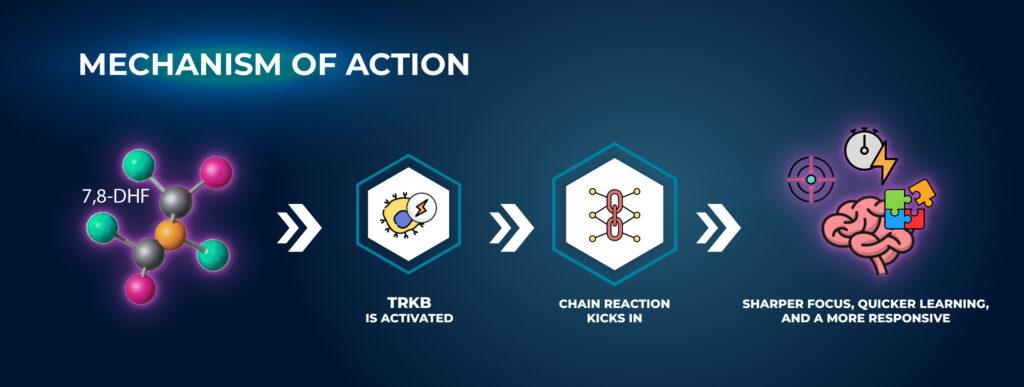
Dihydroxyflavone stands out because it doesn’t just support brain health; it directly activates the TrkB receptor, the same pathway triggered by Brain-Derived Neurotrophic Factor (BDNF). BDNF is often called the brain’s “growth-and-repair switch,” and 7,8-DHF functions as a potent BDNF mimetic, meaning it can stimulate this switch even when natural BDNF levels are low.
Once TrkB is activated, a powerful chain reaction kicks in: enhanced neuroplasticity, stronger neural connections, better communication between brain and muscle, and improved stress resistance. This translates into sharper focus, smoother motor control, quicker learning, and a more responsive nervous system, all crucial for strength training, coordination-based movements, and high-intensity work.
The result is a compound that works at the center of performance: the brain. By optimizing neural signaling and supporting the pathways responsible for recovery and adaptation, dihydroxyflavone helps you train harder, push longer, and stay mentally locked in during demanding sessions.
Where To Buy Dihydroxyflavone?
Dihydroxyflavone
7,8-Dihydroxyflavone (1g Powder) is a naturally occurring flavonoid compound studied for its selective interaction with TrkB (tropomyosin receptor kinase B) receptors — the primary receptors for Brain-Derived Neurotrophic Factor (BDNF). Research models suggest 7,8-DHF may mimic BDNF-like activity, influencing pathways related to neuronal survival, synaptic plasticity, and cognitive resilience.
In experimental settings, 7,8-DHF has been examined for its antioxidant profile, potential neuroprotective properties, and its ability to support memory formation, learning capacity, and cellular recovery under neurological stress conditions.
SwissChems supplies 7,8-DHF in 1-gram powder form, verified for ≥98% purity and sealed in controlled, tamper-proof containers for optimal stability. Trusted by researchers for consistency and precision, SwissChems remains a leading provider of advanced nootropic research compounds.
Disclaimer: 7,8-DHF is a research compound not approved by the FDA for human consumption. All information is for educational use only and is not medical advice.
7,8-Dihydroxyflavone Overview
⭐ Top Benefits: Supports BDNF pathways, cognitive resilience, neural protection
🧪 Form: Powder (1 gram)
⏱ Max Time Used: 2–6 weeks (research use)
💲 Average Cost: $22.99
❤️ Side Effects: Mild headaches, GI discomfort, restlessness
⚠️ Dangers: Limited clinical data; requires precision handling
🔗 Best Stack: Lion’s Mane (research), CDP-Choline, Noopept
♂♀ Men/Women: Suitable for both (research use)
Copy Brawn20 for 20% off
- May modulate BDNF/TrkB pathways in research
- Shows neuroprotective potential in lab studies
- Supports synaptic plasticity and cognitive performance
- Potent and highly pure research-grade powder
- Very limited long-term data
- Requires precise micro-measuring
- Potential instability if not stored properly
- Research-only compound
Recommended Dosage Table
| Product | Dosage 💊 | Administration 💉 | Timing ⌚ |
| 7,8-Dihydroxyflavone | 300-500 mg | Oral | Morning |
| Creatine Monohydrate | 5 grams | Oral | Post-workout, preferred for muscle recovery |
| Ashwaganda | 2 Capsules | Oral | Morning & Evening |
Science-Backed Benefits of Dihydroxyflavone
Dihydroxyflavone isn’t your average focus enhancer; it interacts with the brain’s most powerful growth and performance pathways, giving lifters and high-output athletes a unique edge. Here are the most research-supported benefits.
Cognitive & Brain Performance
Dihydroxyflavone’s biggest strength lies in its ability to activate BDNF-driven neuroplasticity. This leads to:
- Sharper focus and faster learning during technical lifts or skill-based training
- Stronger memory retention, especially under stress or fatigue
- Greater mental resilience, supporting long workouts or mentally demanding days
By enhancing how efficiently neurons fire and communicate, 7,8-DHF helps athletes stay mentally locked in when performance matters.
Athletic Performance & Training Benefits
Most people overlook how much strength and speed depend on the central nervous system. Dihydroxyflavone supports this link by:
- Increasing neural drive, helping you recruit more muscle fibers
- Enhancing motor coordination, improving rep quality, explosiveness, and form
- Reducing mental fatigue, which often hits before physical fatigue
- Supporting recovery, thanks to better brain–muscle communication and stress tolerance
This makes it especially useful for strength athletes, hybrid athletes, and high-volume trainees.
Mood, Stress & Well-Being
Because it activates the same pathways involved in emotional balance, dihydroxyflavone may:
- Improve stress response and emotional resilience
- Support a more balanced mood over time
- Enhance the overall sense of well-being, which indirectly benefits training consistency
A stable, focused mind almost always reflects in better gym performance.
Longevity & Neuroprotection
Early research shows that 7,8-DHF may help:
- Protect neurons from oxidative stress
- Support long-term brain health
- Maintain cognitive performance as you age
For athletes who care about performance and longevity, this makes dihydroxyflavone a standout compound.
Dihydroxyflavone for Bodybuilding and Performance: What the Research Suggests
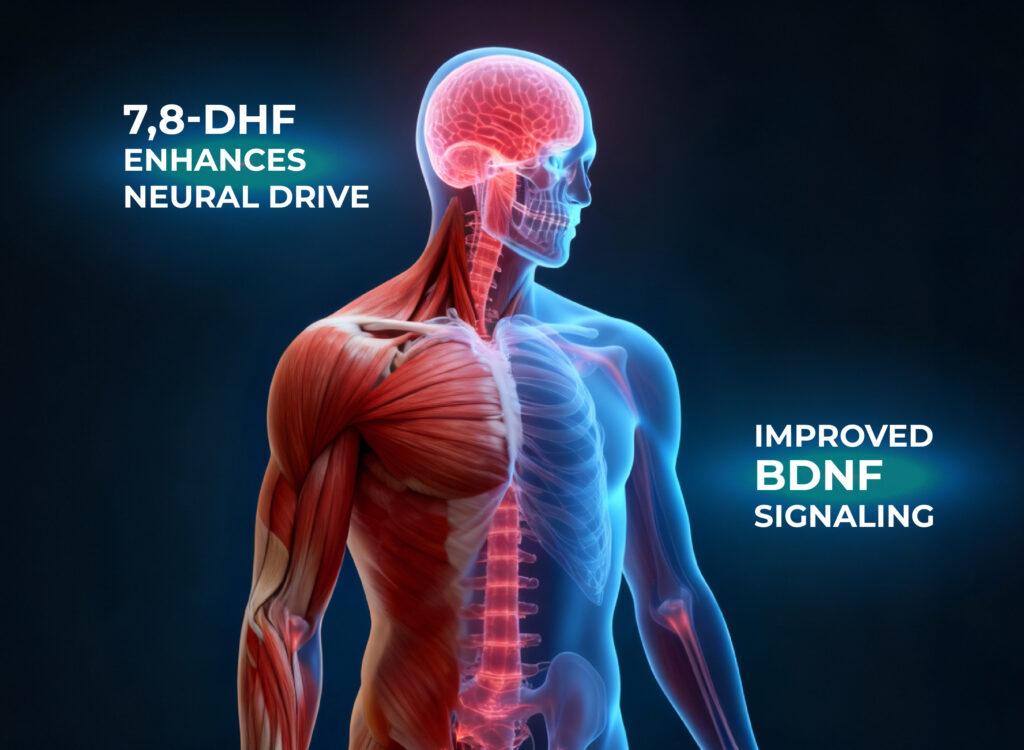
While dihydroxyflavone is primarily studied for brain health, its impact on BDNF activation and neural efficiency creates a ripple effect that athletes and lifters can take full advantage of. Training performance isn’t just about muscle tissue — it’s about how fast, hard, and accurately your nervous system can fire. That’s exactly where 7,8-DHF shines.
Research suggests that enhanced TrkB activation improves the brain’s ability to send stronger, cleaner signals to muscle fibers. In practice, this can mean better force output, more precise motor control, and a smoother mind–muscle connection. Athletes often describe the effect as feeling “more switched on”, more coordinated, more explosive, and mentally sharper during heavy or complex lifts.
Another key point: BDNF plays a role in adaptation and recovery, especially during high-volume or high-intensity phases. By supporting neuroplasticity and stress resilience, dihydroxyflavone may help reduce the mental burnout and neural fatigue that often stall progress in the gym. And while it’s not a direct anabolic agent, its indirect training benefits, better focus, faster skill acquisition, and improved session quality can contribute to better long-term strength and muscle development.
In short, the research suggests that 7,8-DHF is best viewed as a neural performance enhancer. It sharpens the system that drives strength, power, coordination, and consistency, all critical pillars of serious bodybuilding and athletic training.
Side Effects and Safety
Dihydroxyflavone is generally well-tolerated, but like any compound that influences neural pathways, it deserves respectful and informed use. Most reported side effects are mild, yet users should understand the potential risks and limitations of the current research.
Some individuals may experience headaches, restlessness, or sleep disturbances, especially when taking higher doses or using it too late in the day. Because 7,8-DHF acts on the TrkB/BDNF system, overly frequent use may overstimulate the nervous system in sensitive users, leading to irritability or heightened anxiety. Rarely, users report digestive discomfort.
Another important point is the limited long-term human research. Most studies are preclinical, meaning the long-term safety profile in healthy adults isn’t fully established. For this reason, athletes with neurological conditions, those on antidepressants or other mood-related medications, and individuals prone to anxiety should consult a professional before use.
Used responsibly at moderate doses, dihydroxyflavone appears safe for the majority of people. The key is simple: start low, monitor how you respond, and avoid excessive or unnecessary daily use until more robust human data becomes available.
Who Should Use Dihydroxyflavone?
Dihydroxyflavone isn’t a one-size-fits-all supplement, it’s best suited for athletes, lifters, and high-performance individuals who want to optimize focus, recovery, and neural efficiency. If you’re someone pushing heavy lifts, performing complex movements, or training at high intensity, enhancing BDNF signaling can help you stay sharp, coordinated, and mentally resilient.
It’s also appealing to those who prioritize cognitive longevity and stress management. Lifters who juggle demanding workouts with long workdays, mental tasks, or skill-based training may find that 7,8-DHF helps them maintain mental clarity and reduce neural fatigue over time.
However, beginners or casual gym-goers may not notice significant benefits, since the compound mainly supports neural optimization rather than directly increasing muscle mass. Likewise, individuals sensitive to stimulants, with certain neurological conditions, or on mood-regulating medications should consult a professional before use.
In short, if your performance depends on both brain and body, dihydroxyflavone could give you a subtle but meaningful edge.
Conclusion
Dihydroxyflavone (7,8-DHF) is more than just a nootropic, it’s a neural performance enhancer that bridges the gap between brain health and physical performance. By activating the BDNF-TrkB pathway, it improves focus, motor control, recovery, and mental resilience, making it a valuable tool for lifters, athletes, and anyone serious about training at their peak.
While it’s not a direct muscle builder, the indirect benefits on nervous system efficiency and session quality can translate into better lifts, faster skill acquisition, and consistent progress over time. Used responsibly, dihydroxyflavone offers a science-backed way to sharpen your mind, support recovery, and maximize the results of your training!
FAQs
What is dihydroxyflavone, and how does it work?
It’s a flavonoid that mimics BDNF to support brain function, focus, and neural efficiency.
Can dihydroxyflavone improve gym performance?
Yes, by enhancing neural drive, coordination, and recovery, it can indirectly boost training results.
Is 7,8-DHF safe to use?
Generally, yes at moderate doses, though some may experience mild headaches or restlessness.
Who should consider taking dihydroxyflavone?
Athletes, lifters, and high-performance individuals looking to optimize focus, recovery, and mind-muscle connection.
How should I dose dihydroxyflavone?
Start with a low-to-moderate dose, preferably earlier in the day, and adjust based on tolerance and response.